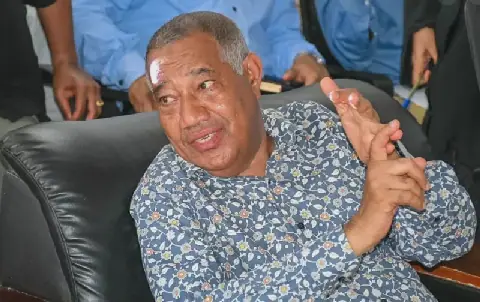
Moses Matovu, born on June 19, 1949, in Kawempe, Kampala, was a rare musician who left behind a musical institution, a generation of disciples, and a vocabulary through which Uganda continues to remember itself. He sang in the Namirembe Cathedral Choir from childhood and entered professional music with Thunderbirds Band in 1967. He later joined the Police Band in 1968 and the Cranes Band in 1969, where he recorded one of his earliest original compositions, 'Jimmy Saasira', in 1970.
In November 1975, Matovu co-founded Afrigo Band in Kampala, along with TPaul Serumaga, Jef Sewava, Charles Ssekyanzi, and Anthony Kyeyune. The band's name, Afrigo, meaning "Africa go", captured the founders' ambition to take African music forward. Their early performances developed a distinctive blend of Congolese rumba, jazz, funk, Ugandan traditional rhythms, and folk influences, predominantly through Luganda. The band's first gig was performed in 1975 at Bat Valley, now associated with Club Obligato.
Afrigo became a cultural institution, outlasting governments, political crises, changing musical fashions, and several generations of performers. Despite facing challenges, including losing equipment during the upheavals surrounding the fall of Idi Amin, the musicians returned to the stage and eventually established themselves at venues such as Little Flowers on Bombo Road. By the late 1980s, Afrigo had undergone significant personnel changes, recruited new musicians, and rebuilt its audience.
The band's ability to regroup after musicians departed was a testament to Matovu's leadership and vision. New generations of musicians joined Afrigo, including Joanita Kawalya and Rachael Magoola in 1989, who became prominent figures in Ugandan music. The personnel changed, but the institutional DNA survived, with Matovu's leadership ensuring the band's continuity and succession.
Matovu's contribution to Ugandan music was not limited to his songwriting; he helped convert ordinary Ugandan experiences into durable cultural texts. His songs, such as "Jimmy Saasira", "Katonda Yakola Omukwano", and "Teri Mubi", illustrated different facets of his artistic imagination, including family responsibility, faith, culture, and love. In 2019, Afrigo released the album Teri Mubi, which placed new material alongside older compositions, demonstrating Matovu's philosophy of musical continuity.
Afrigo's influence extended beyond its own personnel, helping sustain the live-band model in Uganda's popular music scene. The band's long-running presence demonstrated that Ugandan music could be professionally arranged, instrumentally sophisticated, and commercially viable without abandoning local language and cultural identity. As the band approaches its golden jubilee in 2025, its history represents five decades of Ugandan popular music.
Moses Matovu's legacy is larger than his music; it lies in the institution he helped establish, the standards he defended, and the generations he connected. His passing has brought together musicians from different generations, who gathered around his memory to celebrate his life and contributions to Ugandan music. The saxophone may have fallen silent, but the sound of Afrigo and Matovu's music continues to resonate in Uganda and beyond.
Key points
- Moses Matovu co-founded Afrigo Band, a cultural institution that has outlasted governments and musical fashions.
- Matovu's leadership ensured the band's continuity and succession, with new generations of musicians joining Afrigo.
- Afrigo's influence extended beyond its own personnel, helping sustain the live-band model in Uganda's popular music scene.