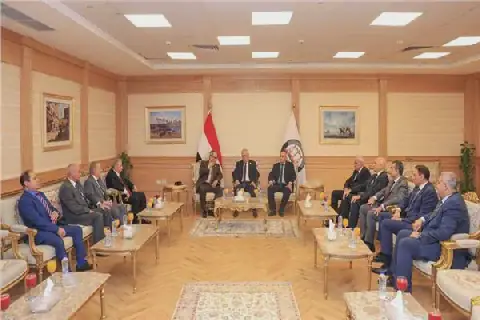
Moroccan Foreign Minister Nasser Bourita recently spoke at a UN Security Council meeting in Arria format, emphasizing that Morocco considers the management of straits a responsibility, not ownership. He called for an initiative to draft a code of conduct for nations bordering these strategic waterways. This meeting, organized by Bahrain, focused on "Safe Seas, Shared Security: Protecting Freedom of Navigation in a Changing Security Environment."
As a coastal state and a nation directly responsible for managing the Strait of Gibraltar, one of the world's most important waterways, Morocco takes its duties seriously. Approximately 100,000 ships pass through the strait annually, equivalent to 300 vessels per day or one ship every five minutes. This significant maritime traffic underscores Morocco's crucial role in ensuring the safety and stability of this vital route.
The volume of traffic in the Strait of Gibraltar far exceeds that of other major waterways. It surpasses the traffic in the Suez Canal by five times and is eleven times greater than that in the Panama Canal. The strait's traffic density is also nearly three times that of the Strait of Hormuz. These statistics highlight the strategic importance of the Strait of Gibraltar and Morocco's responsibility in its management.
Bourita stressed that Morocco does not view its geographical position as a privilege or a tool for pressure and blackmail. Instead, it sees its location as an international responsibility and a catalyst for promoting international cooperation, stability, and development. In line with this approach, Morocco has proposed the idea of drafting an international code of conduct for the freedom of navigation.
The proposed code of conduct aims to ensure that international maritime routes remain open, safe, and stable. Morocco has suggested hosting an international forum in coordination with Bahrain to strengthen commitment to international law, exchange best practices, and reduce polarization among nations that claim ownership of these strategic waterways and those that use them for blackmail.
Bourita emphasized that oceans and seas are essential global infrastructure, but they are also fragile and vulnerable to malicious plans and ambitions. As a result, it is crucial to protect these vital waterways and ensure their safety and stability for the benefit of all nations.
In conclusion, Morocco's approach to managing strategic waterways is centered on responsibility, cooperation, and international law. By promoting a code of conduct and hosting an international forum, Morocco aims to contribute to the safety and stability of these vital routes and foster greater cooperation among nations.
Key points
- Morocco considers the management of straits a responsibility, not ownership.
- The Strait of Gibraltar is one of the world's most important waterways, with 100,000 ships passing through it annually.
- Morocco has proposed drafting an international code of conduct for the freedom of navigation.