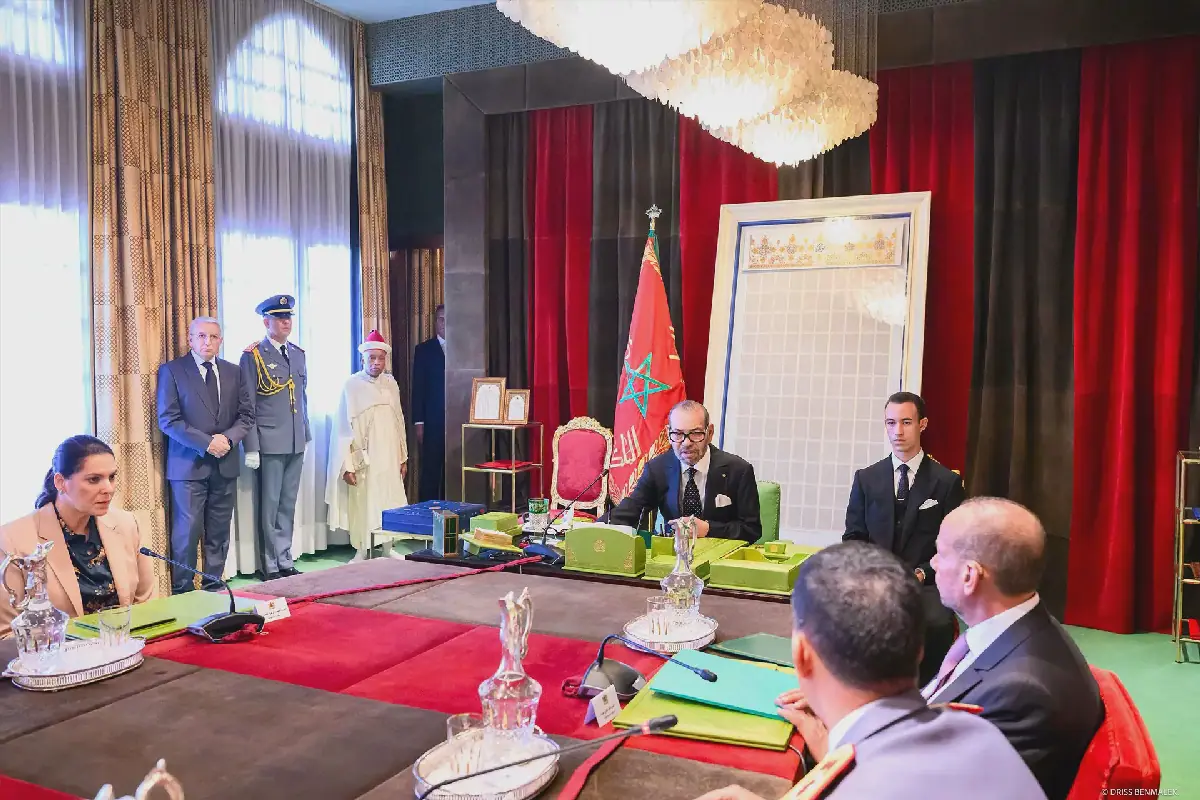
Moroccan King Mohammed VI recently chaired a working session at the Royal Palace in Rabat, where he launched the "Moroccan Offer" and a national roadmap for developing the defense and security industry. The initiative aims to accelerate Morocco's emergence as a producer of defense equipment and programs, with a focus on creating a comprehensive industrial system covering the entire value chain. This includes design, production, maintenance, testing, and storage.
The project aligns with royal directives to capitalize on Morocco's gains in civilian industries such as aviation, automotive, and electronics. By 2035, the goal is for Morocco to become a major player in the global defense industry. The roadmap identifies priority sectors, including drones, autonomous systems, land and sea systems, defense electronics, cybersecurity, and artificial intelligence. These areas are expected to drive innovation and export opportunities.
To ensure effective implementation, the roadmap relies on a new governance structure centered around a specialized strategic agency responsible for executing the national strategy and supporting investors. A industrial holding company will also be established to structure industrial systems, mobilize public and private capital, and encourage the emergence of local leading companies.
In addition to the two existing defense industry acceleration zones, the "Moroccan Offer" includes the creation of a new large-scale zone in Ben Guerir and another in Benslimane. The King was briefed on the progress of the first zones and ongoing projects, as well as the interest of international investors in establishing export-oriented projects.
The roadmap prioritizes the training of highly qualified skills and the development of research and innovation through the creation of a specialized academy providing advanced training in partnership with industry players. It also relies on strategic partnerships to strengthen Morocco's integration into global value chains and develop its export capabilities.
The expected outcomes of this industrial and technological base are ambitious. By 2035, it is anticipated to create 50,000 direct and indirect jobs, cover 40% of the Royal Armed Forces and security agencies' needs, and generate over 65% of its revenue from exports. This would make it a cornerstone of Morocco's strategic resilience and a reliable platform for supply and export.
Following the session, King Mohammed VI issued instructions to proceed with the rapid implementation of the roadmap, starting with the establishment of governance bodies and a financing plan. He emphasized the need to mobilize national skills in Morocco and abroad and ordered the Hassan II Fund for Economic and Social Development to contribute 4 billion dirhams to support the initiative.
Key points
- Morocco aims to cover 40% of its defense needs and generate 65% of revenue from exports by 2035.