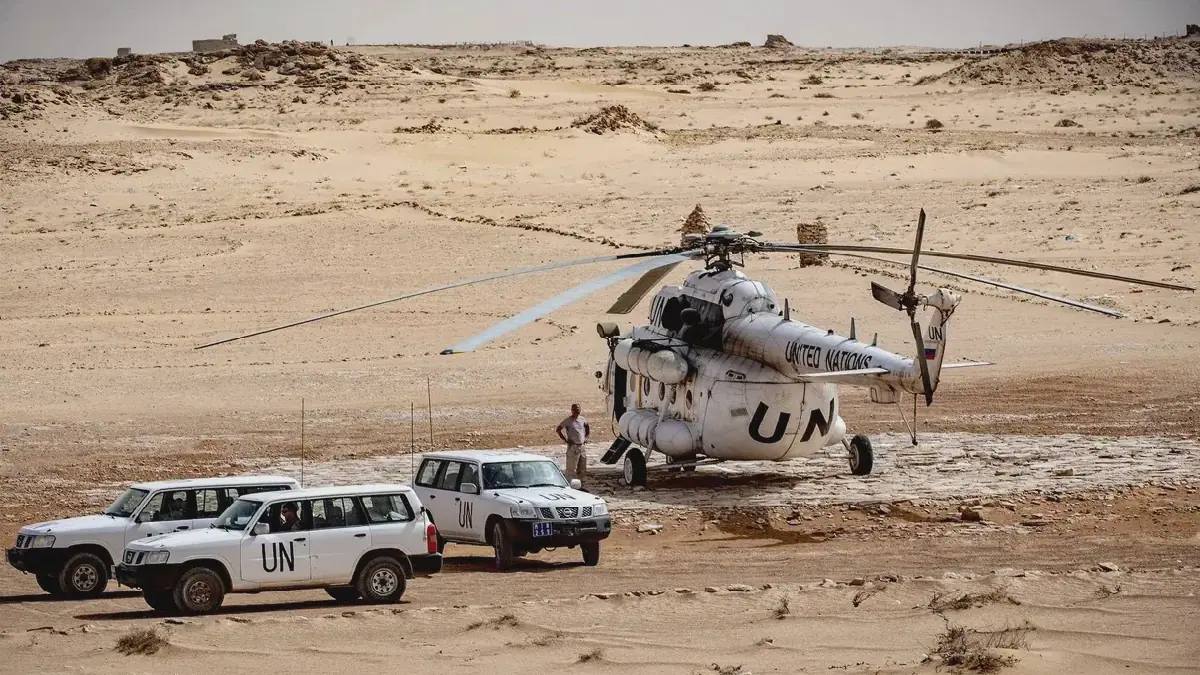
The UN Security Council voted on a resolution regarding Western Sahara, with 11 out of 15 members supporting a plan centered on Moroccan autonomy. However, the vote did not result in a new mandate for the UN's peacekeeping mission in Western Sahara, known as MINURSO, due to a Russian veto. The mission's mandate is set to expire. Morocco's government sees the vote as progress towards closing the Western Sahara file at the UN.
The Russian veto did not change the underlying dynamics of the Security Council, according to Morocco. The vote revealed a balance of power that the veto did not alter. Morocco's ambassador to the UN, Omar Hilale, rejected Algeria's claim that it should be treated as a simple observer in the Western Sahara issue. This development reflects the ongoing diplomatic efforts to resolve the Western Sahara conflict.
The US, a key player in the Western Sahara issue, maintains that autonomy is the basis for negotiations. This stance aligns with Morocco's position on the matter. The US had proposed a resolution that was rejected by Russia's veto. Morocco views the non-renewal of MINURSO's mandate as a turning point towards resolving the issue at the UN.
The Western Sahara conflict has been ongoing for decades, with Morocco and Algeria holding competing claims. Morocco's government has long sought to resolve the issue through a negotiated settlement. The recent vote at the UN Security Council reflects the ongoing diplomatic efforts to find a solution.
The Cabinet Royal, Morocco's government, sees the non-renewal of MINURSO's mandate as a significant development. This move is expected to shift the focus towards a negotiated settlement. Morocco's autonomy plan is seen as a key component of any potential solution.
Algeria, a key player in the region, has expressed concerns over the Western Sahara issue. The country has long supported the Polisario Front, a group that seeks independence for Western Sahara. However, Morocco's diplomatic efforts have gained traction, with the US and other countries supporting the autonomy plan.
The future of Western Sahara remains uncertain, with a negotiated settlement yet to be reached. Morocco views the recent UN Security Council vote as a step towards resolving the issue. The country's government is optimistic about the prospects for a negotiated settlement, with autonomy at the center of any potential solution.
Key points
- Morocco views the recent UN Security Council vote as progress towards resolving the Western Sahara issue.
- The US maintains that autonomy is the basis for negotiations in Western Sahara.
- The non-renewal of MINURSO's mandate marks a turning point towards resolving the Western Sahara issue at the UN.