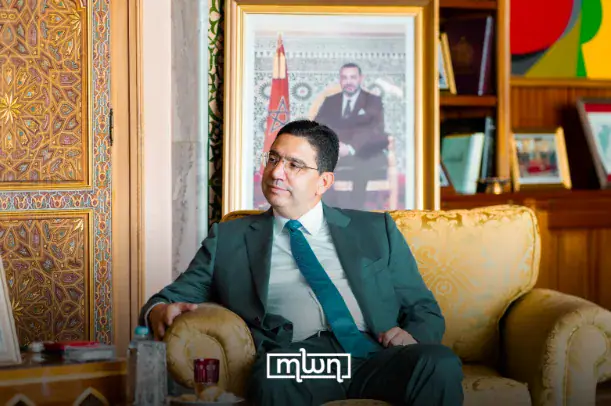
Moroccan Foreign Affairs Minister Nasser Bourita addressed the implications of the recent Security Council meeting, where Russia vetoed a US-drafted resolution that sought to rename MINURSO, remove references to a referendum, and reinforce Morocco's Autonomy Plan as the basis for negotiations. In an interview with 2M, Bourita stated that the veto was anticipated and presented an opportunity for Morocco to maintain its diplomatic momentum. He emphasized that the Kingdom had known for some time that Russia might oppose the text.
The US-drafted resolution aimed to build on Resolution 2797, reinforce Morocco's Autonomy Plan, and clarify the parameters of the UN-led political process. The draft also sought to remove references to a referendum, including through the proposed renaming of MINURSO. Russia, a strategic ally of Algeria's regime, used its veto against the draft resolution. However, some observers suggest that Russian diplomacy may have inadvertently served Morocco's momentum and worked more in favor of Rabat's position than that of Algeria's regime.
MINURSO has been present in Morocco's southern provinces for over 35 years, since 1991. The US has long questioned the mission's effectiveness and the costs associated with its continued presence. Bourita emphasized that this year's draft resolution "had to be a decisive resolution" that would build on Resolution 2797 and seek to clearly define the parameters under which the United Nations would operate. He stated that the resolution had to be clear, without ambiguity, and that was the foundation on which Morocco was working.
Instead of objecting to Russia's anticipated veto, Morocco chose an alternative approach. Bourita said that perhaps what Russia wants to do is not a threat but an opportunity to review certain rules of the game that have prevented the process from reaching its conclusion. He added that Moscow's position did not come as a surprise to Morocco. Bourita also emphasized that what does not change is the momentum behind Morocco's position, which continues to receive significant support across Africa, the Arab world, Europe, and the Americas.
Regarding MINURSO, Bourita emphasized that "there was a context that no longer exists today." He stated that Morocco has not gone back 35 years; it has turned the page. Bourita returned to Moscow's position, emphasizing that the US veto of the Russian text represented a choice between two approaches: whether the international community seeks further momentum toward a solution or wants to rely on the old rules to maintain the status quo.
Bourita stated that Morocco had not wasted time attempting to change Moscow's position and had not even tried to convince Russian officials. He addressed the Polisario Front and Algeria's longstanding narratives, emphasizing how the UN itself had acknowledged the difficulties surrounding the referendum option. Bourita instead spoke about the momentum moving toward Morocco's Autonomy Plan and the reinforcement of the Kingdom's territorial integrity.
The Moroccan minister concluded by reiterating that the Autonomy Plan remains the reference for states and for an international community seeking a solution to the dispute. He emphasized that Morocco remains committed to the ceasefire and its respect, which is a political and legal commitment. Bourita stated that the departure of the mission does not mean the end of the ceasefire.
Key points
- Morocco's Foreign Minister Nasser Bourita says Russia's veto of a US-drafted resolution on MINURSO presents an opportunity for the Kingdom to advance its diplomatic momentum.
- The veto was anticipated and did not come as a surprise to Morocco, which had known for some time that Russia might oppose the text.
- Morocco remains committed to the ceasefire and its respect, which is a political and legal commitment.