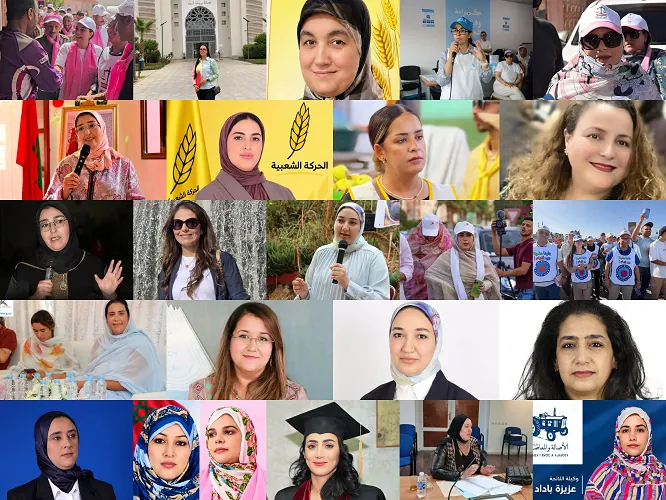
Morocco's recent parliamentary elections have witnessed a notable increase in female representation. According to the Minister of Interior, Abdelouafi Laftit, a total of 2659 female candidates participated in the elections, accounting for approximately 39% of the total nominations. This marks a significant step towards achieving greater gender equality in the country's politics. The elections, which took place on September 23, saw a considerable number of women vying for seats in both local and regional electoral districts.
The number of female candidates in the regional electoral districts stood at 1783, while 876 women candidates participated in the local electoral districts. Additionally, 120 female candidates were nominated as representatives of local lists, further highlighting the growing presence of women in Moroccan politics. This increase in female participation is a result of new electoral provisions aimed at promoting women's representation in parliament and their involvement in the decision-making process.
The new electoral system has set aside regional electoral districts exclusively for female candidates, allowing them to play a more significant role in shaping the country's politics. This move is seen as a crucial step towards increasing women's representation in parliament and promoting their participation in the decision-making process. The elections have also seen a notable presence of young women, who are eager to make their mark in Moroccan politics.
Several young women have emerged as winners in the elections, including Rym Chabbat, who has been elected as a member of parliament from the Fes constituency. Chabbat, who is known for her activism and advocacy for women's rights, has become a prominent figure in Moroccan politics. Her election is seen as a significant achievement for women's representation in the country.
Another notable winner is Zineb Shahim, who has been elected as a member of parliament from the Fes constituency. Shahim, who is a member of the National Rally of Independents party, has been actively involved in politics for several years and has worked tirelessly to promote women's rights and interests. Her election is seen as a testament to her hard work and dedication to public service.
Other notable female winners in the elections include Meryem Wahsaa, who has been elected as a member of parliament from the Beni Mellal constituency. Wahsaa, who is a member of the Progress and Socialism Party, has been actively involved in politics for several years and has worked to promote women's rights and interests. Her election is seen as a significant achievement for women's representation in the country.
The increased presence of women in Morocco's parliament is seen as a positive step towards achieving greater gender equality in the country's politics. The new electoral provisions have played a crucial role in promoting women's participation in politics, and it is expected that this trend will continue in the future. As Morocco continues to evolve and grow, the role of women in shaping its politics and future is likely to become increasingly important.
Key points
- The number of female candidates in the Moroccan parliamentary elections increased significantly, with 2659 women participating, making up 39% of total nominations.
- The new electoral system has set aside regional electoral districts exclusively for female candidates, promoting their representation in parliament.
- Several young women have emerged as winners in the elections, including Rym Chabbat, Zineb Shahim, and Meryem Wahsaa, who are expected to play a significant role in shaping Morocco's politics.