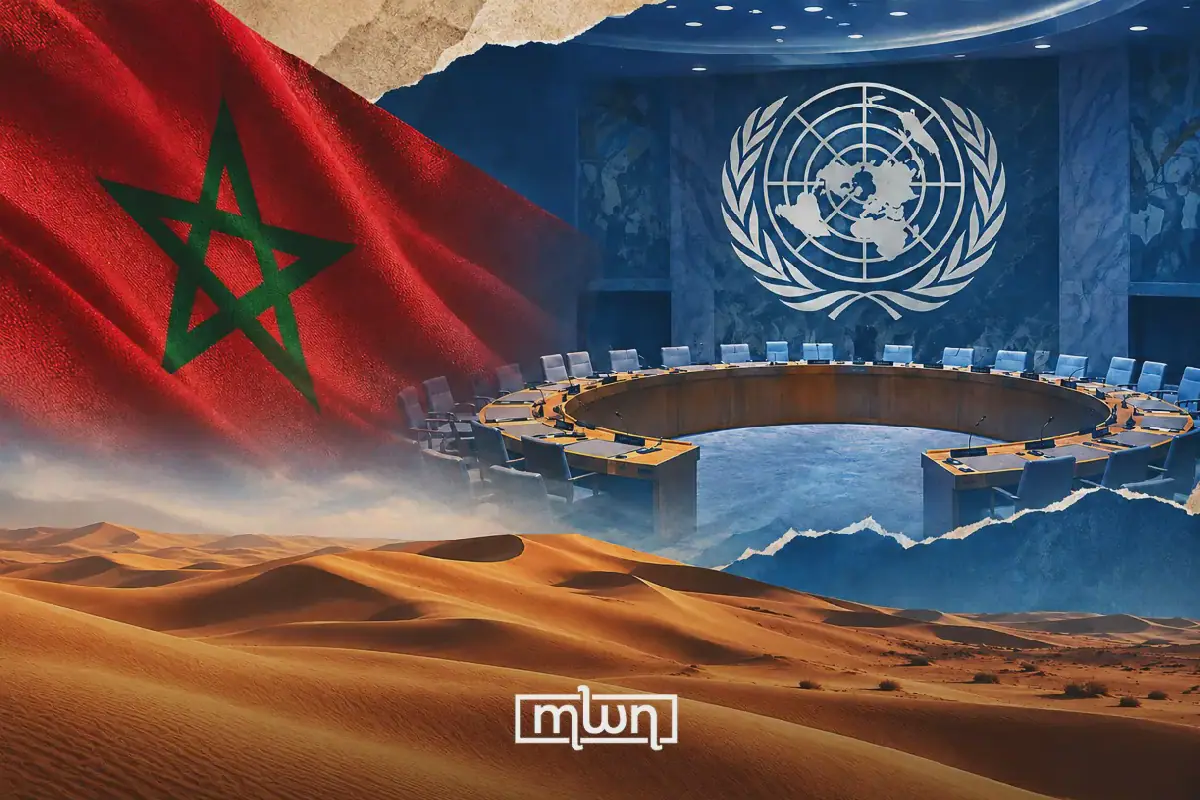
The United Nations Security Council recently recorded two vetoes from Russia and the US, thwarting the adoption of a consensual position on the future of the UN Mission for the Referendum in Western Sahara (MINURSO). The mission's mandate was set to expire, and a statement from the Royal Cabinet of Morocco delivered the final blow, declaring that MINURSO's presence in the Sahara no longer had a legal basis. This development marks a significant shift in the Northwest Africa conflict.
Morocco had made substantial concessions to facilitate the adoption of Resolution 2797 in 2025, which established the Moroccan proposal for autonomy under Moroccan sovereignty as the basis for negotiations between parties to the conflict. The expiration of MINURSO's mandate in its former shape culminates a long process that demonstrated its limitations in resolving the conflict. Morocco has reaffirmed its commitment to respecting the ceasefire and defending its national territory, indicating a new approach to addressing the issue.
The changing landscape of the Northwest Africa conflict has sparked recognition of the contributions made by scholars and diplomats who have studied the issue since the 1970s and 1980s. One notable figure is William I. Zartman, an American academic who dedicated himself to conflict resolution through dialogue and negotiation. Zartman was a friend of Morocco and maintained a balanced position between Algeria, Morocco, and Tunisia, promoting academic understanding of the Maghreb region.
Zartman's work included the creation of the American Institute for Maghreb Studies (AIMS) in 1984, which aimed to encourage scholars to challenge the intransigence of political decision-makers and help build the Maghreb. He also co-wrote "The Practical Negotiator" with Maureen P. Berman in 1982, focusing on conflict resolution through dialogue and negotiation. Zartman's approach emphasized the need for a mindset shift among decision-makers in the Maghreb.
The author of the article had a personal exchange with Zartman, who sought information on the progress of the Sahara issue during an academic tour in Belgium and Switzerland. Their discussions shed light on Zartman's approach to understanding the conflict and potential solutions. At the time, Algeria was promoting the idea of partitioning the Sahara territory, while the UN Secretary-General's personal envoy, James Baker, faced challenges in implementing his plans.
Zartman's ideas on autonomy as a solution to the conflict were reflected in his discussions with Azerbaijani officials in 2012, where he proposed a similar approach to resolving the Nagorno-Karabakh conflict. His commitment to intellectual honesty and his unshakable dedication to conflict resolution earned him recognition. The American Legation in Tangier, where Zartman served as chairman of the board, is a testament to his long-standing connection to Morocco.
As Morocco navigates this new era in the Northwest Africa conflict, it is clear that the country is determined to move forward, undeterred by the challenges ahead. The expiration of MINURSO's mandate marks a turning point, and Morocco's commitment to defending its national territory and respecting the ceasefire indicates a renewed focus on finding a solution to the conflict. The contributions of scholars like Zartman will continue to shape the understanding of the conflict and its potential resolutions.
Key points
- Morocco welcomes the end of MINURSO's mandate as a new era in Northwest Africa conflict resolution.