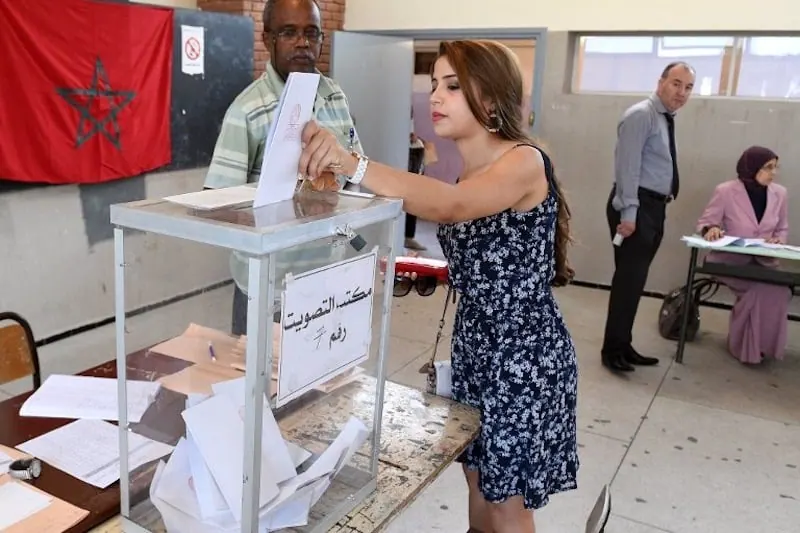
A recent report by Associated Press has highlighted the uncertain relationship between Morocco's youth and the upcoming legislative elections, set to take place on Wednesday. A significant portion of young Moroccans appear to be torn between participating in the political process and doubting the capacity of political parties to effect tangible change. This ambivalence is largely attributed to pressing socio-economic issues, including unemployment, limited job opportunities, and the quest for better living standards, education, healthcare, and public services.
The report underscores that the unemployment rate among 15- to 24-year-olds reached 37% in 2025, starkly contrasting with the national average of 13%. Furthermore, unemployment among holders of advanced degrees stood at 19%. A striking paradox in electoral participation was noted, where youth between 18 and 24 comprise around 12% of Morocco's population but make up only 4% of the 15.8 million individuals registered on electoral lists. This discrepancy raises questions about the engagement and representation of young Moroccans in the political sphere.
The Associated Press gathered insights from young Moroccans, some of whom expressed a loss of trust in the political class, while others viewed voting as a means to influence critical issues such as wages, employment, and social policies. The current electoral climate is also informed by the youth-led protests witnessed in Morocco last year and attempted mass migrations to Ceuta during the summer. These events have brought to the forefront recurring demands for employment, education, healthcare, and equitable development opportunities.
Interestingly, the criticisms voiced by the young individuals consulted in the report primarily targeted the government and political parties rather than the monarchy. This suggests a nuanced perception among Morocco's youth, distinguishing between the political establishment and the institution of the monarchy. The report also noted that Morocco has made significant strides in various industries, including automotive, aerospace, infrastructure, and high-speed rail, as well as the development of the Tangier Med port.
Despite these economic advancements, with the World Bank forecasting 4.2% economic growth in 2026, the report emphasizes that this growth has not translated into sufficient job opportunities, particularly for young people. This challenge is set to confront the government that will emerge from the elections, which will have to navigate two parallel objectives: managing extensive projects and investments in preparation for the 2030 World Cup, while addressing unemployment and inflation.
The new government's agenda will need to prioritize converting economic growth into tangible improvements in income levels and public services. This involves addressing the pressing socio-economic concerns of the youth, who are increasingly demanding tangible actions and solutions. The upcoming elections, therefore, represent a critical juncture for Morocco's political parties to regain the trust of the youth and demonstrate their capacity to drive meaningful change.
Ultimately, the outcome of the elections and the subsequent government's policies will be pivotal in determining the future trajectory of Morocco's socio-economic landscape. The challenge lies in creating an environment conducive to job creation, social equity, and sustainable development, thereby bridging the gap between economic growth and the everyday realities faced by Morocco's youth.
Key points
- Morocco's youth are skeptical about the ability of political parties to address pressing socio-economic issues.
- The unemployment rate among 15- to 24-year-olds in Morocco reached 37% in 2025.
- The new government will face the challenge of managing large-scale projects while addressing unemployment and inflation.