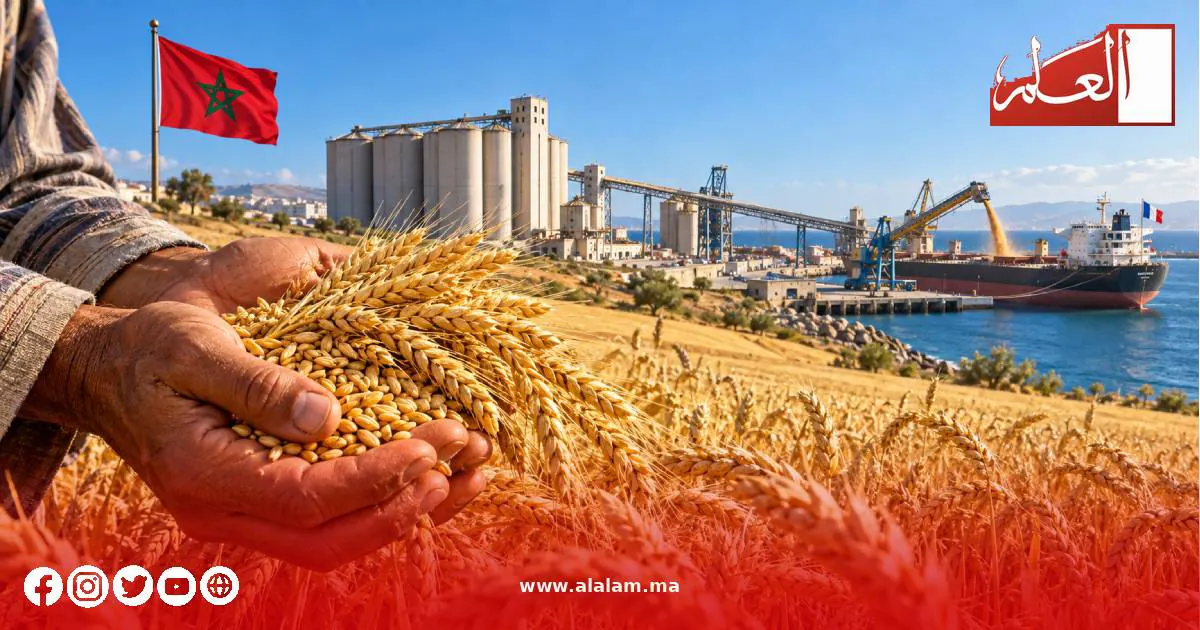
French officials anticipate a decline in wheat exports to Morocco in the 2026/2027 season, citing improved rainfall that has boosted local production in the North African country. According to Philippe Housel, an international relations official at French grain group Intercereal, France exported 3.5 million tons of wheat to Morocco in the 2025/2026 season. This was when a drought negatively impacted Moroccan production and quality.
Morocco typically ranks among the largest buyers of soft wheat, a staple in Moroccan diets. However, the country halted imports in June to protect its local crop, which had risen to over double the previous year's production, reaching around 4.4 million tons. Imports resumed in September, with Housel stating that France is likely to export lower quantities of wheat to Morocco from September 2026 to May 2027.
Despite Morocco's efforts to reduce reliance on imports and boost domestic wheat consumption, challenges persist due to low protein levels and delayed harvesting. Industry representatives have raised concerns about quality, including a protein level of around 10.5% in local wheat, below the 11.5% required for bread flour. Data shows France supplied 70% of Morocco's soft wheat imports in the previous season.
The Moroccan government had imposed a 170% tariff on soft wheat imports from June 1 to July 31 to limit imports and prioritize local production. Before the end of August, the government decided to resume imports to ensure a steady supply to the national market. This decision was made after stockpiles dwindled and local production collection did not meet expectations.
To support local production, the government implemented a system to compensate importers for price differences from September 16 to December 31, 2026. According to the National Federation of Millers' president, Moulay Abdel Kader Aloui, resuming imports became necessary due to low stockpiles and insufficient local production to meet mill requirements.
Aloui noted that only 6 million quintals of wheat were collected locally, representing 12% of the annual needs of mills. He emphasized that the three-month period for collecting local production was sufficient but the collection pace was slow. As a result, maintaining a suspension on imports was not feasible.
The resumption of imports aimed to secure a steady supply to the national market. Local production faced challenges, and importers had to be compensated to ensure a stable wheat supply. France's wheat export to Morocco may decrease, but it remains a significant player in meeting Morocco's wheat needs.
Key points
- France's wheat exports to Morocco are expected to decline due to improved local production in Morocco.
- Morocco's local wheat production reached around 4.4 million tons, over double the previous year's production.
- The country resumed wheat imports in September 2026 to ensure a steady supply to the national market.