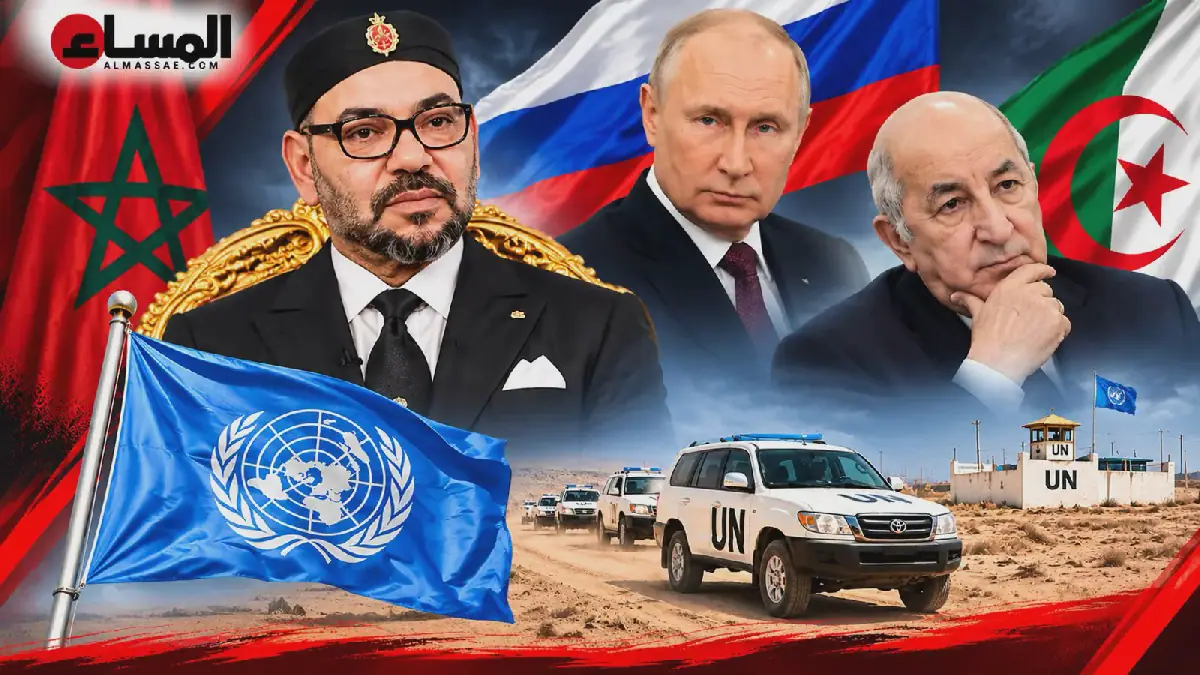
The recent veto by Russia in the UN Security Council has brought significant changes to the Western Sahara conflict. The veto was not just a diplomatic move but a revelation of the nature of the game that has been governing the Moroccan Sahara file for decades. Russia's action was not in support of a UN principle or to protect a political process but to block a draft that expressed a clear majority within the Council.
The draft resolution that was vetoed aimed to reduce the military component of the MINURSO mission and eliminate the term "referendum" from the UN vocabulary. It also sought to link any future extension to the autonomy proposal that was endorsed by the 2007 UN Security Council Resolution 1754. The US responded with a counter-veto, leading to the expiration of the MINURSO mission's mandate after 35 years.
The Russian veto was not about maintaining balance but defending Algeria's inflexible stance on the issue. Algeria is not a neutral party in the conflict but a direct participant, hosting the Polisario Front. Since the autonomy proposal gained traction, Algeria has not presented a serious initiative or realistic proposal, opting instead for rejection, incitement, and wait.
The Western Sahara conflict has now moved from the UN Security Council to the field and bilateral partnerships. Morocco has transitioned to direct sovereignty, and the file has exited the closed rooms of New York. The Moroccan government has made it clear that it will no longer finance a failed mechanism and is no longer willing to wait for a Russian or Algerian decision.
The expiration of the MINURSO mission's mandate does not automatically change the legal status of the territory or nullify previous UN resolutions. However, it signifies a defeat for the UN in managing this file. The primary responsibility for this outcome lies with those who used the veto to block the majority and those who encouraged and relied on it.
The absence of UN observers means a lack of documentation, no ceasefire mechanism, and a shift in conflict management to a logic of force and maneuver. Morocco has sent a clear message: the MINURSO page is closed, and the file should be removed from the UN Security Council's agenda. The Moroccan sovereignty over its land no longer awaits a UN decision.
Algeria seeks alternative paths to compensate for the loss of UN cover but understands that a return to the military option would be a catastrophic scenario. What has occurred is not the end of the Western Sahara issue but the end of an era of UN management. The vacuum created by the dual veto will be tested on the ground, leading to either a new consensus that restores a minimum level of stability or a complete transition to conflict management by the logic of sovereignty and force.
Key points
- The UN Security Council's failure to extend the MINURSO mission marks a significant shift in the Western Sahara conflict.
- Morocco has transitioned to direct sovereignty over the region.
- The conflict's future management will be tested on the ground, with implications for regional stability.