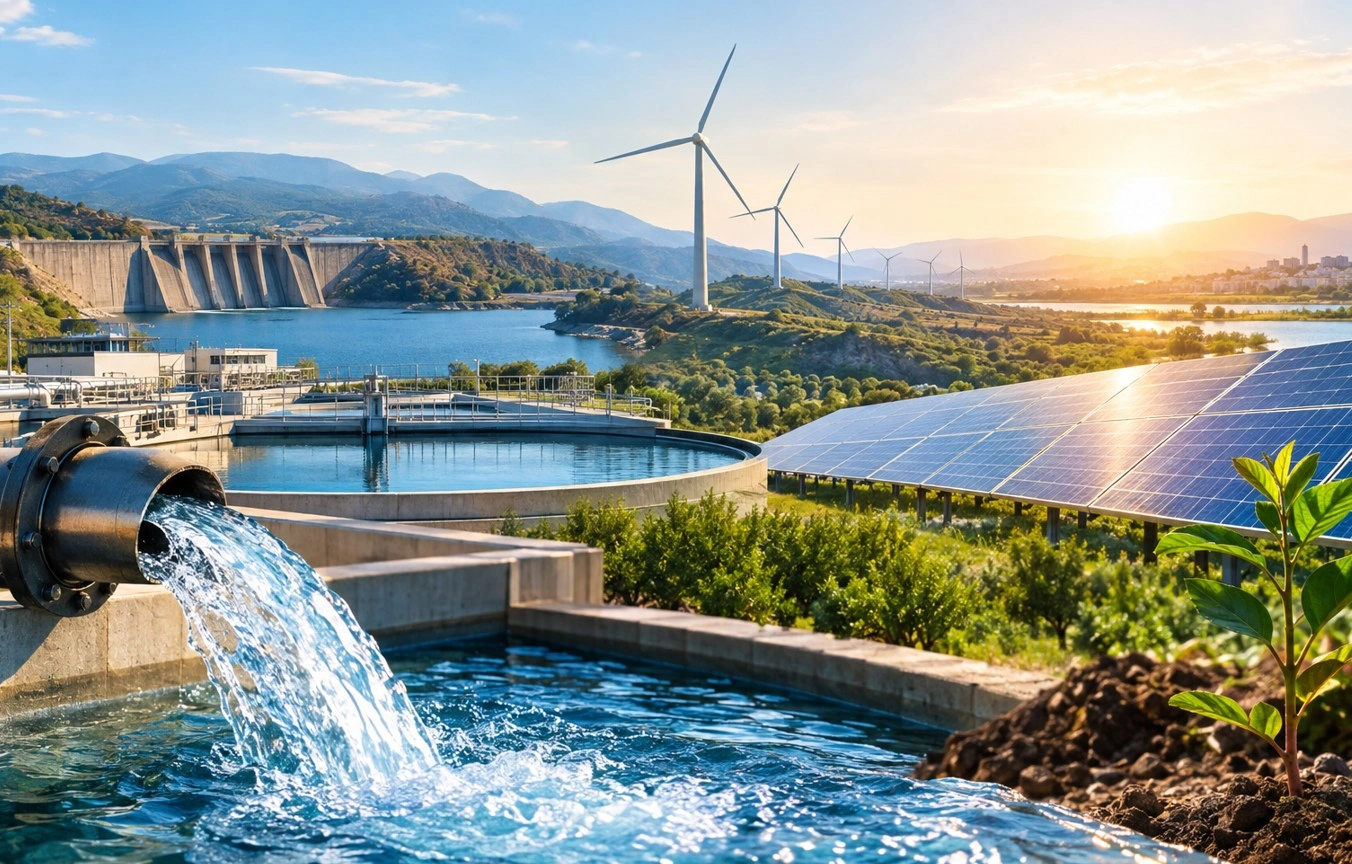
The Union Socialiste des Forces Populaires (USFP) has outlined a strategic plan to address Morocco's growing water and energy challenges. As part of its electoral program, the party emphasizes the importance of water and energy as key pillars of national sovereignty and economic development. With successive droughts, increasing demand, and climate change effects accelerating, the USFP considers these two sectors among the country's most significant strategic challenges. The plan focuses on six main areas, including water security, environmental governance, circular economy, energy sovereignty, equitable transition, and natural resource protection.
The USFP's plan prioritizes addressing Morocco's water vulnerability by accelerating the construction of seawater desalination stations, particularly in coastal areas with deficits. These stations will be connected to renewable energy projects to reduce production costs. The plan also includes the continued construction of large, medium, and small dams, as well as the acceleration of inter-basin hydraulic connection projects for a more equitable distribution of resources. Furthermore, the plan aims to strengthen distribution networks, targeting a reduction in potable water loss to below 15%. This approach treats water as a sovereignty infrastructure, rather than managing it reactively based on annual rainfall.
The plan also focuses on efficient water use, targeting the reuse of treated wastewater for irrigation, industrial purposes, and other non-domestic uses. The USFP advocates for the generalization of wastewater treatment in major cities, incentives for companies to adopt water-saving and recycling systems, and the development of separate networks for non-domestic uses. Additionally, the plan supports scientific research in treatment technologies. By reusing treated water, the plan aims to reduce the strain on existing resources.
In the energy sector, the USFP's plan, dubbed "L'énergie du Maroc 2035," aims to double investments in solar, wind, hydroelectric, and green hydrogen power. The goal is to increase the share of renewable energy in electricity production to over 60% by 2030. The plan encourages local manufacturing of equipment related to these sectors to boost industrial integration and stimulates private investment in clean energy production and storage. It also focuses on developing electricity transport networks connected to new projects, promoting energy sovereignty and industrial development.
The USFP's plan also prioritizes an equitable transition, ensuring that the shift to clean energy does not disproportionately affect low-income households. The plan includes incentives for limited-income families to access clean energy solutions, encouragement of solar panel installations in homes, public administrations, and schools, and a national program to improve energy efficiency in buildings, industry, and transportation. Additionally, the plan involves accompanying companies in their transition to a low-carbon economy.
The plan also emphasizes the protection of Morocco's natural resources, including forests, oases, and wetlands. A national plan for reforestation, desertification control, and ecosystem restoration is proposed, along with a strategy to protect biodiversity and combat environmental degradation. The USFP advocates for the involvement of local populations, cooperatives, and civil society in sustainable resource management and enhanced control over quarry exploitation and waste management.
The USFP's strategic plan concludes with a commitment to reform governance structures. This includes developing a unified national strategy for water and energy security by 2050, establishing a national observatory to monitor indicators and publish periodic reports, and strengthening coordination among relevant sectors and institutions. The plan also proposes territorial planning that accounts for regional specificities and allocates a portion of green economy revenues to climate adaptation projects. By integrating water, energy, and environmental considerations, the USFP aims to ensure a sustainable and equitable future for Morocco.
Key points
- The USFP's plan focuses on six main areas, including water security, environmental governance, and energy sovereignty.
- The plan aims to increase the share of renewable energy in electricity production to over 60% by 2030.
- The USFP prioritizes an equitable transition, ensuring that the shift to clean energy does not disproportionately affect low-income households.