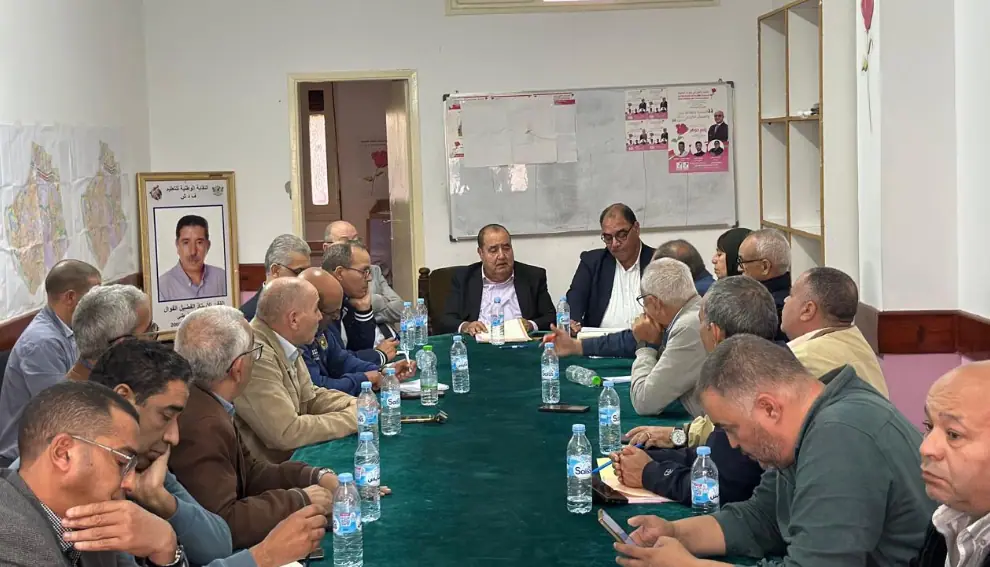
The Union Socialiste des Forces Populaires (USFP) party in Morocco recently convened a regional meeting in Fès to evaluate the results of the 2026 legislative elections and prepare for future polls. The meeting, attended by party leaders and members, aimed to assess the party's performance and define a strategy for the upcoming electoral and organizational challenges. The party's performance in the 2026 elections was described as surprising, with the party's leadership seeking to understand the reasons behind the outcome.
The USFP party has initiated a new organizational dynamic, focusing on dialogue with regional secretariats and sectors concerned with upcoming challenges. This approach aims to shift from circumstantial electoral management to anticipatory planning and permanent institutional work. Party leader Driss Lachguar emphasized the need for the party to mobilize its components according to the nature of each challenge, including collaboration with trade unions and professional organizations. The party seeks to strengthen its presence through communication with various instances, organizations, and sectors.
Driss Lachguar stressed that the party will no longer adopt a last-minute approach to addressing electoral challenges. Instead, it will establish structures capable of taking initiatives, providing guidance, and communicating with citizens. The party will also focus on training new elites to assume representative and management responsibilities. The selection of future candidates will be based on competence, leadership abilities, and the capacity to communicate with citizens and gain their trust.
The USFP party has undergone significant transformations over the past two decades, with a decline in its presence in several major cities. Lachguar noted that regaining the party's political position requires revising its working methods, abandoning practices that have contributed to its weakening, and opening up to new talents and competencies. The party's goal is to renew its political action and improve its representation and participation in the electoral process.
On the legislative front, Lachguar discussed the party's efforts to reform the electoral system. He noted that several proposals presented by the USFP have received favorable reactions, aiming to improve the electoral process and strengthen representation and participation conditions. The party's participation in the current government was also addressed, with Lachguar highlighting the convergence of the government's program with the USFP's political, economic, and social program.
The USFP party's representation in the government reflects the diversity of its members' experiences and qualifications. Lachguar praised the appointment of Youns Bjijou as Minister of Health, citing his scientific competencies and professional experience. He also welcomed the appointments of Kamal Hachoumi, Mehdi Mezouari, Abderrahim Chahid, and Aïcha Guellaâ to various ministerial positions, highlighting their contributions to public affairs management.
The USFP party's efforts to reform the electoral system and its participation in the government demonstrate its commitment to improving the democratic process in Morocco. As the party prepares for the 2027 polls, it seeks to strengthen its presence and representation, while addressing the challenges it faced in the 2026 elections. The party's focus on competence, leadership, and communication with citizens will be crucial in its future endeavors.
Key points
- The USFP party aims to shift from circumstantial electoral management to anticipatory planning and permanent institutional work.
- The party's selection of future candidates will be based on competence, leadership abilities, and the capacity to communicate with citizens and gain their trust.
- The USFP party's participation in the government reflects the diversity of its members' experiences and qualifications.