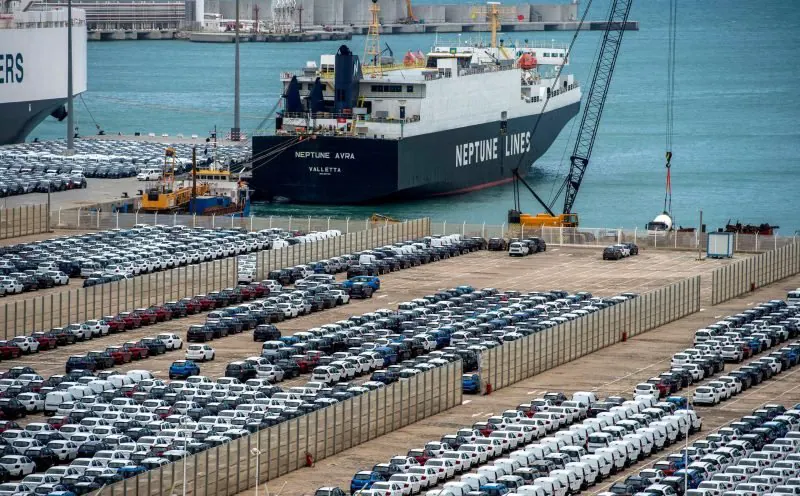
Morocco's trade deficit has widened to 282.615 billion dirhams (MMDH) in the first eight months of 2026, a 25.4% increase from the same period last year. The country's exports of goods reached 334.892 MMDH, a rise of 8.7% year-on-year, driven by the strong performance of the automotive and aerospace sectors. However, this growth in exports has not been enough to offset the increasing trade deficit.
The import bill rose to 617.508 MMDH, a 15.8% increase, mainly due to the higher energy bill, which surged by 32.6% to 96.367 MMDH, and a significant rise in raw material purchases, which jumped by 63.3% to 45.88 MMDH. The Office des changes, Morocco's foreign exchange office, recently released its monthly indicators on external trade, showing a substantial increase in imports.
Despite the widening trade deficit, the Office des changes reported a significant improvement in the surplus of the services balance, which rose by 13.4% to 118.259 MMDH. This was driven by a 12.6% increase in service exports to 229.562 MMDH and an 11.7% rise in service imports to 111.303 MMDH. The services sector has provided some respite to Morocco's trade balance.
The automotive sector has been a key driver of Morocco's export growth, with exports rising by 14.5% to 116.148 MMDH. The sector's performance was driven by increases in the "Construction", "Cabling", and "Exterior" segments. The aerospace sector also saw a significant increase in exports, rising by 21.5% to 22.969 MMDH, driven by growth in the "Assembly" and "Electrical Wiring Interconnection System" (EWIS) segments.
The agricultural and agri-food sectors also recorded export growth, rising by 8.3% to 65.119 MMDH, driven by a 13.6% increase in food industry exports to 31.143 MMDH. However, not all sectors performed well, with exports of phosphates and derivatives, textiles and leather, and electronics and electrical products declining.
The phosphate sector faced significant challenges due to a historical surge in sulfur prices, which negatively impacted its export performance. In contrast, the automotive and aerospace sectors have maintained their momentum, helping to mitigate the decline in other sectors.
The widening trade deficit poses a challenge to Morocco's economy, but the growth in exports and services provides some optimism. The authorities will likely focus on diversifying the economy and promoting non-traditional exports to address the trade imbalance.
Key points
- Morocco's trade deficit increased by 25.4% to 282.615 billion dirhams in the first eight months of 2026.
- The country's exports of goods rose by 8.7% to 334.892 billion dirhams, driven by the automotive and aerospace sectors.
- The import bill increased by 15.8% to 617.508 billion dirhams, mainly due to higher energy and raw material costs.