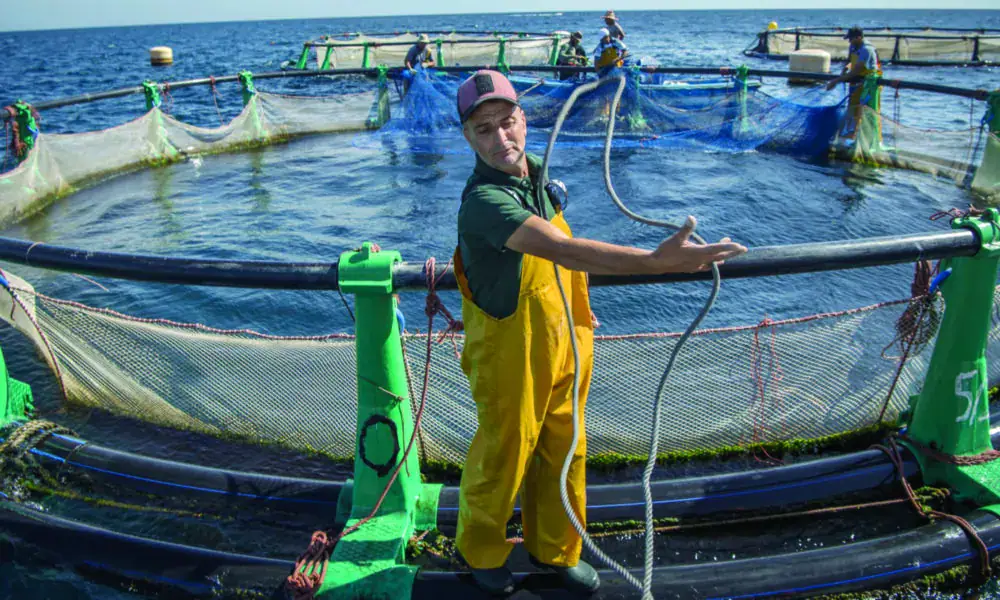
The Souss-Massa region in Morocco has taken a significant step towards diversifying its economy with the launch of an aquaculture project. The project, initiated by the General Confederation of Moroccan Enterprises (CGEM) Souss-Massa in June 2026, aims to produce 100,000 tonnes of tilapia per year, generating 2 billion dirhams in revenue. The project has already shown promising results, with six investors producing local tilapia in agricultural basins in Chtouka Aït Baha.
The project was launched in coordination with local authorities, the National Water and Forestry Agency, and other stakeholders. The first tilapia fry were delivered in August, and the six investors, from the agricultural and maritime sectors, have successfully started production. The project's success has sparked optimism, with Driss Boutti, president of CGEM Souss-Massa, expressing his ambition to expand the project further.
The project has the support of local authorities, including Wali Said Amzazi, who emphasized the region's potential in agriculture, fishing, and infrastructure. Amzazi highlighted the need to develop innovative and integrated production models that can address the challenges of water scarcity and pressure on natural resources. The project aims to promote sustainable agriculture and improve the resilience of agricultural operations.
The project's ambition is to establish 150 aquaculture projects by 2030, with a target of producing 100,000 tonnes of tilapia per year. The region has the potential to accommodate this new activity, with 2,000 large agricultural basins available in the province of Chtouka Aït Baha. The project also aims to establish a hatchery for tilapia fry, a feed manufacturing unit, and a training center for aquaculture professionals.
The project is seen as a way to promote food sovereignty and provide additional income sources for farmers. By using existing agricultural basins, the project can valorize existing infrastructure without mobilizing new water resources. The project has been hailed as a model for sustainable development, addressing multiple challenges in the region.
The project's success has sparked interest in the region, with the aim of making tilapia the second-largest source of protein in the country by 2030. The project has also been recognized as a way to promote economic development and improve the livelihoods of local communities.
The launch of the project has marked a significant milestone in the region's economic development, with the potential to create new opportunities for farmers and investors. The project's progress will be closely watched, as it aims to become a model for sustainable aquaculture development in Morocco.
Key points
- The project aims to produce 100,000 tonnes of tilapia per year, generating 2 billion dirhams in revenue.
- The project plans to establish 150 aquaculture projects by 2030.
- The project aims to make tilapia the second-largest source of protein in Morocco by 2030.