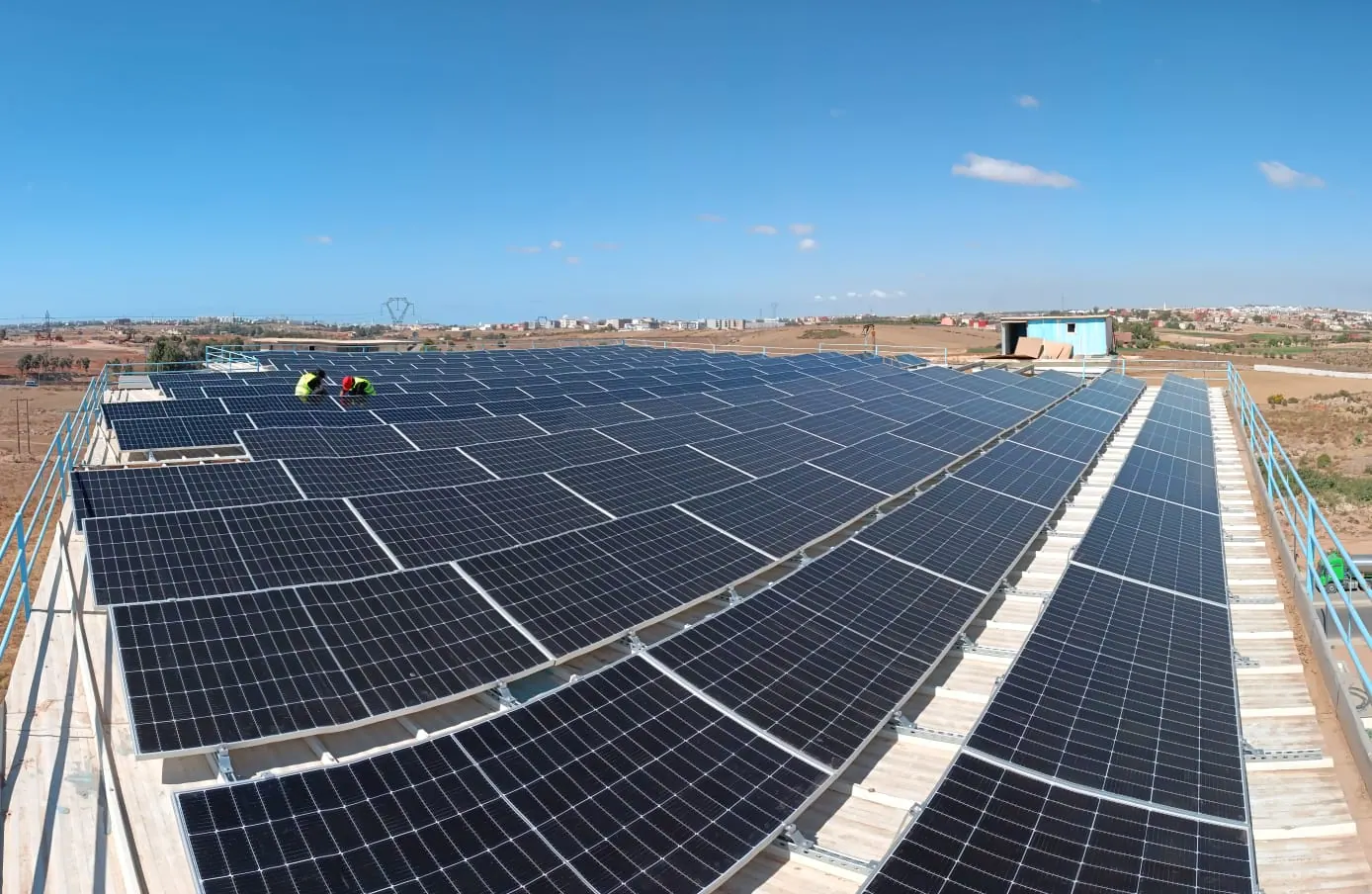
Morocco's corporate sector is reaping the benefits of solar self-production, with companies reducing costs, securing energy expenditure, and improving export competitiveness. According to Mehdi Elhark, executive director of SOLAM, solar self-production has become a crucial tool for businesses to achieve economic sustainability. This development aligns with the United Nations' Sustainable Development Goal 7, which focuses on access to clean and affordable energy. Companies are recognizing the importance of transitioning to renewable energy sources.
Solar self-production involves installing a solar panel system to meet a company's electricity needs. The economic viability of this approach depends on a company's consumption profile and the time required to amortize the investment. Businesses that consume most of their electricity during the day, such as industrial sites, hotels, and logistics platforms, stand to benefit the most. Elhark notes that the more expensive the electricity purchased from the grid and the more regular the daytime consumption, the greater the economic savings generated by the solar installation.
The cost of investment is a significant consideration, with prices ranging from 4,000 to 5,500 Moroccan Dirham (DH) per kilowatt-peak (kWc) for industrial installations. For smaller residential or commercial installations, the cost is higher, between 6,000 and 7,500 DH per kWc. Elhark estimates that a well-designed industrial installation without batteries can achieve a return on investment in three to four years. However, this period increases to six to eight years when batteries are integrated into the project.
The use of batteries in solar self-production projects is not always necessary, according to Elhark. The added expense of batteries, which are subject to high import duties, must be carefully evaluated against the specific needs and constraints of each business. A thorough feasibility study, taking into account a company's consumption patterns and site characteristics, is essential before making an investment decision.
Despite the potential benefits, many small and medium-sized enterprises (SMEs) and industrial companies in Morocco have yet to adopt solar self-production. The primary obstacle is financial, with many businesses lacking the necessary funds or access to suitable financing mechanisms to cover the initial investment. Elhark suggests that guarantees, green loans, targeted subsidies, or third-party financing models could help accelerate the market.
Administrative and regulatory procedures also pose a challenge, with Elhark calling for greater fluidity and transparency in the process. The law on solar self-production, which came into effect on June 9, 2026, has clarified the framework but introduced new procedures that require streamlining.
To unlock the full potential of solar self-production in Morocco, several key issues must be addressed. These include reducing upfront costs, improving access to financing, and simplifying administrative procedures. As the sector continues to evolve, companies that adopt solar self-production are likely to reap significant economic benefits while contributing to a more sustainable energy future.
Key points
- Companies in Morocco can reduce energy costs and boost competitiveness through solar self-production.
- The cost of solar self-production in Morocco ranges from 4,000 to 5,500 DH per kWc for industrial installations.
- Financial and administrative obstacles must be addressed to accelerate the adoption of solar self-production in Morocco.