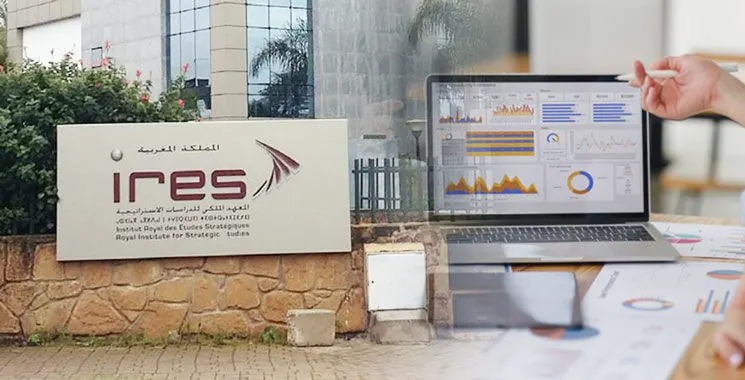
The Royal Institute for Strategic Studies (IRES) in Morocco has recently released a report highlighting the urgent need for a comprehensive approach to address soil degradation and desertification in the country. The report emphasizes that soil can no longer be viewed as a simple productive resource, but rather as a crucial element in ensuring food security, water availability, biodiversity, rural incomes, and territorial resilience in the face of climate change.
The IRES report advocates for an integrated approach to soil protection, focusing on improved governance, enhanced territorial knowledge, targeted interventions, and sustainable financing. It stresses the importance of adopting a long-term perspective, combining land restoration and risk prevention, and warns that delayed action will result in more costly losses. The report proposes a coherent chain of action, including governance, knowledge, territorialization, intervention effectiveness, sustainable financing, and result evaluation.
One of the key recommendations is the establishment of a national soil management mechanism to coordinate public policies and desertification control efforts, set priorities, monitor commitments, and mobilize available data. The IRES also suggests clarifying responsibilities among different decision-making levels, from the state to local authorities, and updating existing national frameworks with measurable objectives, clear responsibilities, dedicated budgets, and regular evaluation mechanisms.
A national long-term roadmap is proposed to integrate soil protection into a vision aligned with water security, food sovereignty, climate adaptation, and territorial resilience. The report emphasizes the need for knowledge and territorial monitoring, suggesting a national soil inventory and mapping program covering various ecosystems. This program would utilize field data, remote sensing, geographic information systems, drones, and predictive models.
The creation of a national soil observatory, accompanied by regional observatories, is also recommended to centralize data and monitor indicators such as erosion, salinity, and organic matter. A rapid alert system is proposed to detect accelerated phenomena like erosion, sand encroachment, salinization, or pasture degradation. The strategy relies on territorializing interventions, with regions, provinces, and communes developing soil conservation plans tailored to their vulnerabilities and resources.
The report suggests prioritizing areas most exposed to erosion and sedimentation, and implementing measures differentiated according to specific environments. It also emphasizes the importance of involving local populations, including farmers, breeders, associations, and rural youth, in diagnosis, intervention choices, and result monitoring. This approach should be accompanied by reinforced training and extension services.
The IRES report recommends restoring degraded lands using techniques adapted to each environment, such as terracing, stone walls, and reforestation. It also advocates for integrating soil and water management, particularly in irrigated areas and over-exploited aquifers, and promoting conservation agriculture and agroecology practices to improve soil structure and resilience.
Key points
- The IRES report stresses the need for a comprehensive approach to address soil degradation and desertification in Morocco.
- The report proposes the establishment of a national soil management mechanism to coordinate public policies and desertification control efforts.
- The strategy relies on territorializing interventions, with regions, provinces, and communes developing soil conservation plans tailored to their vulnerabilities and resources.