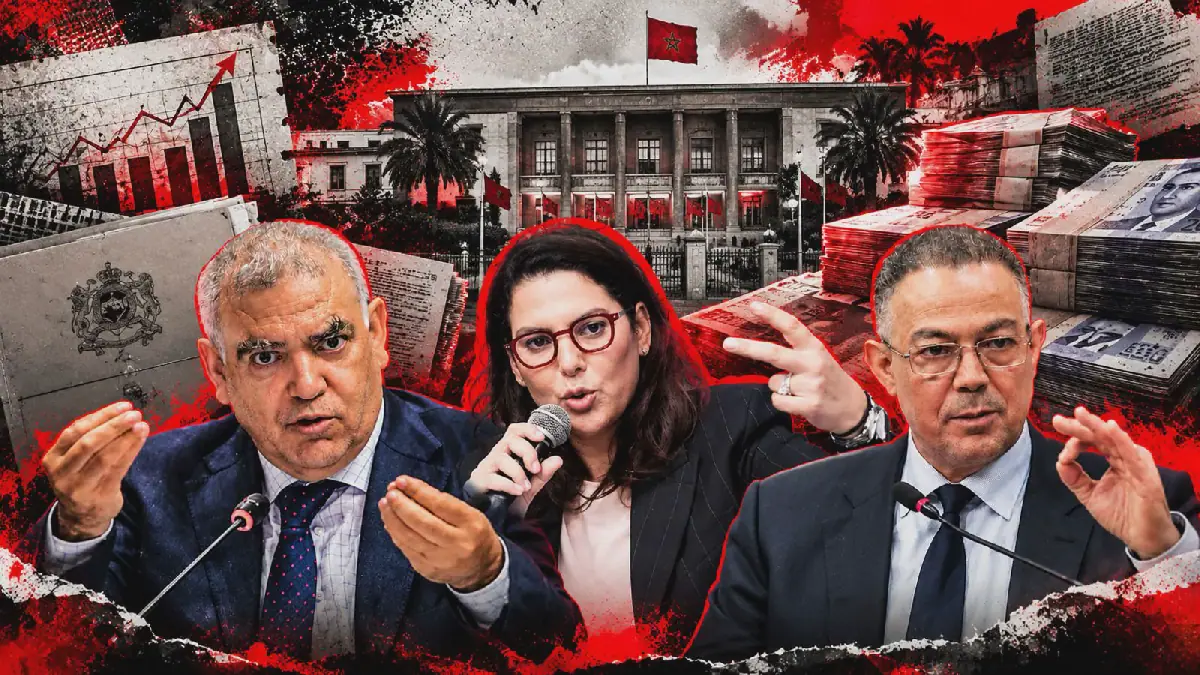
Morocco's government has been accused of lacking transparency in its management of a massive "shadow budget" worth 231 billion dirhams. According to a recent report, 70 accounts and funds managed over 176 billion dirhams in expenditures in a single year, with the same amount in carried-over balances. This has raised concerns about the lack of oversight and accountability in the management of these funds.
The report revealed that 56 accounts spent over 176 billion dirhams, with carried-over balances reaching 231 billion dirhams. This is significant, considering the government's proposed budget for 2027 is 640.5 billion dirhams. While the government claims that these accounts are part of the state's budget, critics argue that the lack of transparency and oversight is problematic.
The distribution of these funds has also raised concerns, with the Ministry of Interior receiving 71.12 billion dirhams in 2025, accounting for 40.3% of the total. The Ministry of Economy and Finance received 65.23 billion dirhams, or 37%. This concentration of funds has sparked questions about the decision-making process behind these allocations.
The report also highlighted the issue of carried-over balances, which totaled 230.93 billion dirhams in 2025. While experts argue that this does not necessarily represent free cash, it does raise questions about the lack of transparency in the management of these funds. The government has been accused of not providing sufficient information on the use of these funds or the beneficiaries.
The issue of parliamentary oversight has also been raised, with critics arguing that lawmakers lack detailed information on the use of these funds. While the law requires that project proposals be submitted to parliamentary committees, this does not necessarily mean that lawmakers have a say in the allocation of funds or the selection of beneficiaries.
The "shadow budget" has been described as a system that operates within the law but outside of effective oversight. While the number of accounts has decreased from 80 in 2007 to 70 in 2026, concerns remain about the lack of transparency and accountability. Critics argue that the system needs to be reformed to ensure that funds are managed in a more transparent and accountable manner.
To address these concerns, experts recommend that the government establish clear criteria for the creation of special accounts and ensure that they are subject to regular oversight. This includes providing detailed information on the use of funds, beneficiaries, and outcomes. Ultimately, the goal is to ensure that public funds are managed in a transparent and accountable manner.
Key points
- The Moroccan government manages a massive "shadow budget" of 231 billion dirhams, but parliament lacks detailed information on its usage.
- The concentration of funds in a few ministries has raised concerns about the decision-making process behind these allocations.
- Critics argue that the system needs to be reformed to ensure that funds are managed in a more transparent and accountable manner.