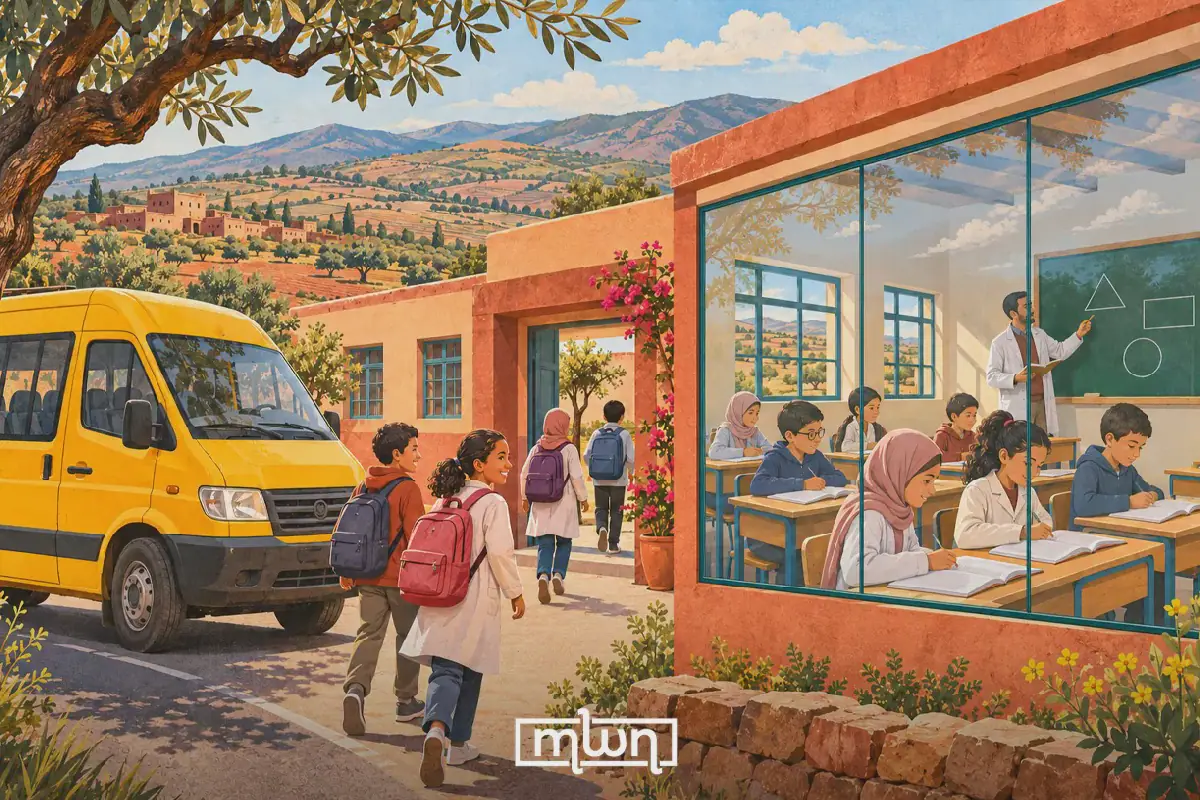
Morocco's education reforms are being hindered by the country's rural school bus system, which is often treated as a secondary logistical issue. Despite the government's efforts to improve education, better instruction, materials, and support can achieve less than intended if students miss school due to lack of transportation. The issue is particularly significant in rural areas where students rely heavily on school buses to attend classes.
A recent incident in Aoufous, Errachidia province, highlighted the problem, where children were seeking alternative transportation because school buses had not arrived on time. This issue is not isolated, with UNESCO's 2026 Global Education Monitoring Report country case study noting that Morocco has made significant gains in expanding school transport support, with around 111,000 upper-secondary transport beneficiaries by 2023-2024, mostly from rural areas.
However, the report also raises questions about the effectiveness of the transport system, particularly for students at the edge of a district, those with reduced mobility, or families who cannot afford alternative transportation. To make transport a genuine education policy, Morocco needs to address several key questions, including whether routes are confirmed before term begins, and whether families know the pickup location and what to do when a service fails.
The partnership between local authorities, school administrations, transport providers, and families is crucial to resolving these issues. Communities should receive a clear timetable and accessible contact information before the first week of term. During the term, missed services should be recorded, communicated, and corrected, with performance discussions including parents and students.
Accountability is essential in ensuring that public investment translates into reliable access to education. Schools should have procedures to support students who miss lessons due to failed transport, rather than treating them as unmotivated. Families must see that officials understand the difference between chosen and imposed absences.
The next step in improving rural education may not be a new classroom but a published route, a working phone number, a consistent driver, and a school with a clear plan for when roads are blocked. These are not minor administrative conveniences but daily conditions that allow a national commitment to learning to reach individual children.
Ultimately, Morocco's education reforms require a comprehensive approach that includes evaluating and improving rural school transport. This involves addressing the concerns of students, families, and communities, and ensuring that public investment in education translates into reliable access for all students, particularly those in rural areas.
Key points
- Morocco's rural school bus system requires improvement to ensure attendance and opportunity for students.
- The partnership between local authorities, school administrations, transport providers, and families is crucial to resolving transport issues.
- Accountability is essential in ensuring public investment translates into reliable access to education.
Reporting sources
- Read article: A Rural School Bus Is an Education Policy, Not a Side Expense · Morocco World News