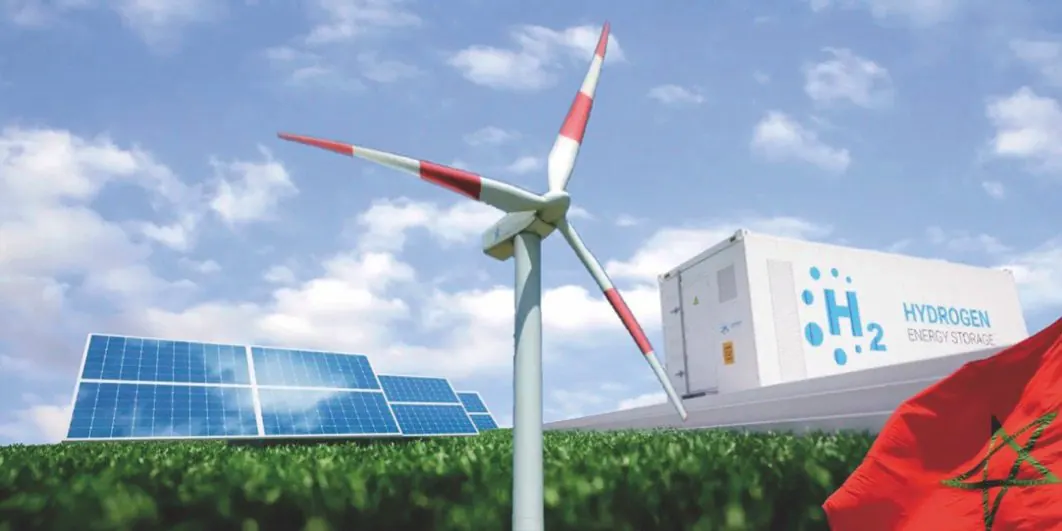
Morocco's renewable energy sector has made significant strides, with a current installed electric capacity of 12,314 MW, of which 5,630 MW comes from renewable sources. This represents 46.1% of the country's total installed capacity. However, despite this progress, Morocco's overall energy dependence remains high, with 87.9% of its energy consumption relying on imported sources. The country's energy mix is still dominated by fossil fuels, highlighting the need for further efforts to achieve energy sovereignty.
The Moroccan government's strategy to increase renewable energy capacity was launched in 2009, with a focus on large-scale solar and wind projects. The results have been concrete, with the installed electric capacity almost doubling over the past 15 years. The number of project authorizations has also accelerated significantly since 2021, with a 4.2-fold increase in authorized capacity and a 2.65-fold increase in associated investments. These efforts have contributed to a growth in renewable energy production, but the intermittency of these sources and the state of the transport network remain significant challenges.
Despite the progress made, Morocco's energy demand continues to grow rapidly, with an average annual increase of 4.3% since 2009. This growth is expected to accelerate further, reaching 7.2% between 2025 and 2030, driven by industrialization, water desalination, electric mobility, and the establishment of gigafactories. To address this growing demand, the government has set ambitious targets, including increasing the share of renewables in the energy mix to over 52% by 2030.
To achieve these goals, the Moroccan government has introduced new legislation, including Law 82-21, which aims to promote decentralized energy production. The law lowers the threshold for accessing the national grid to 5 MW and allows any individual or entity to produce their own energy. It also authorizes the sale of excess production to the grid manager, up to 20% of the annual reference production. This new framework is expected to encourage the development of decentralized energy projects, particularly in industrial zones, agricultural areas, and on rooftops.
The implementation of Law 82-21 is supported by Decree 2.25.100, which outlines the operational framework for autoproduction installations. The decree establishes three distinct regimes, calibrated according to power and connection mode. These regimes include a declaration regime for isolated installations or those connected to the low-voltage grid, an agreement regime for installations connected to the low- or medium-voltage grid, and an authorization regime for installations with a power of 5 MW or more.
The success of Morocco's energy transition will depend on the effective implementation of these new policies. The government has committed significant investments, including 120 billion dirhams for the 2025-2030 equipment plan, which aims to increase the country's renewable energy capacity to 27,646 MW by 2030. However, the impact of these efforts on energy sovereignty remains limited, and further work is needed to address the country's structural dependence on imported energy sources.
The next stage of Morocco's energy transition is likely to involve a shift towards decentralized energy production, with a focus on industrial zones, agricultural areas, and rooftops. The effect of this transition on energy sovereignty will depend entirely on the execution of these new policies and the level of investment in decentralized energy projects. Key players in the sector will need to work together to ensure a successful transition and reduce Morocco's reliance on imported energy sources.
Key points
- Morocco's renewable energy capacity has reached 46.1%, but the country still relies heavily on imported energy sources.
- The government has introduced new legislation to promote decentralized energy production and increase the share of renewables in the energy mix.
- Effective implementation of these policies will be crucial to achieving energy sovereignty and reducing Morocco's dependence on imported energy sources.