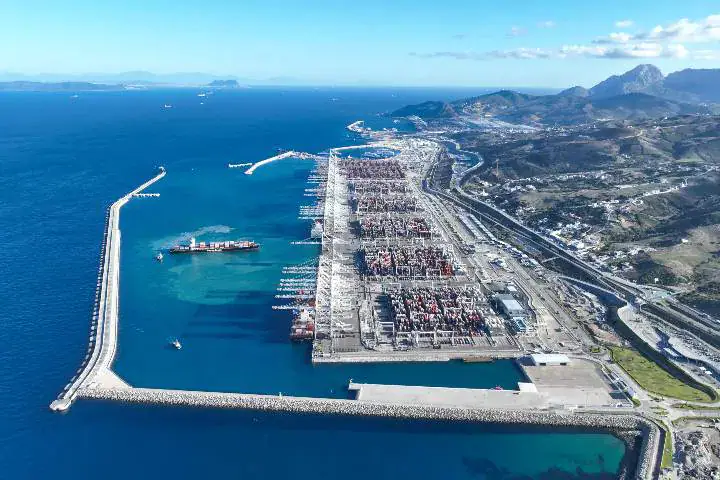
The recent developments in the Western Sahara conflict have coincided with growing debate in Spain about Morocco's increasing economic and port presence on the Atlantic coast. This has raised questions about the future of trade and logistics in the region, particularly in the Canary Islands. The concerns come as Morocco continues to invest in its port infrastructure, including the development of the Dakhla Atlantic port.
The Spanish government is currently evaluating a deal that would see Morocco's Merysse company acquire a 45% stake in the capital of Boluda Maritime Terminals, a subsidiary of the Spanish Boluda group, for €80 million. The deal, announced in December 2025, has sparked concerns among local officials who fear the impact of Moroccan competition on local ports and trade.
The deal involves nine port terminals, five of which are located in the Canary Islands, including Las Palmas, Tenerife, La Palma, Lanzarote, and Fuerteventura. Local officials, including the president of the Gran Canaria council, Antonio Morales, have expressed concerns about the entry of a regional competitor into the capital of a company that manages port terminals in the archipelago.
The concerns in Spain are also driven by the development of Morocco's port infrastructure, including the Dakhla Atlantic port, which is expected to have an initial capacity of 2.2 million tons of goods and 950,000 tons of fishing products per year. The project is seen as a key part of Morocco's strategy to boost trade with Africa and strengthen its position in Atlantic shipping.
The Boluda group has stated that the partnership with Merysse does not imply a transfer of control over the terminals to Morocco, as the Spanish company will retain a 55% stake and responsibility for operational and strategic management. However, the deal is still subject to government approval and evaluation by Spanish authorities.
The development of Morocco's port infrastructure has significant implications for the region's trade and logistics landscape. The Dakhla Atlantic port is expected to play a key role in Morocco's efforts to increase trade with Africa and strengthen its position as a major player in Atlantic shipping.
The concerns in Spain about Morocco's growing port presence reflect the complex and competitive nature of trade and logistics in the region. As Morocco continues to invest in its port infrastructure, it is likely that tensions will remain between Morocco and Spain over issues of competition and trade balance.
Key points
- Morocco's growing port presence is raising concerns in Spain about competition and trade balance.
- The development of Morocco's port infrastructure, including the Dakhla Atlantic port, is a key part of its strategy to boost trade with Africa and strengthen its position in Atlantic shipping.
- The deal between Merysse and Boluda Maritime Terminals is subject to government approval and evaluation by Spanish authorities.