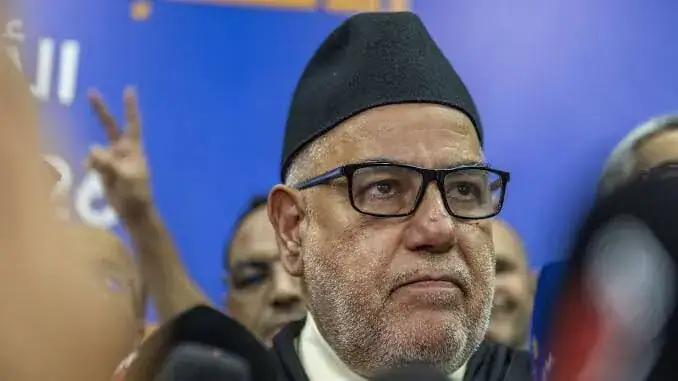
Morocco's Parti de la justice et du développement (PJD) has announced it will not participate in the next government. The party, led by Abdelilah Benkirane, secured 54 seats in the recent elections, a significant increase from the 13 seats it held previously. Benkirane attributed the party's success to its strong campaign and the public's desire for change.
According to Benkirane, the PJD is the true winner of the elections, despite the Parti Authenticité et Modernité (PAM) securing the most seats. Benkirane expressed concerns that participating in a government led by the PAM would result in an unbalanced configuration and questioned the executive's reliability. He also raised concerns about irregularities during the voting process, alleging that partisan actors interfered with the proceedings.
Benkirane's decision not to participate in the government has significant implications for the country's coalition negotiations. The PJD's participation would have required a rapprochement between the party and the PAM, which have fundamentally different ideologies. Without the PJD, the negotiations will focus on the parties that make up the current majority.
The PJD's decision is not unprecedented, as the party has previously adopted a similar stance. Between 2011 and 2021, the PJD led two governments before being reduced to 13 seats. Its resurgence to 54 seats makes it the fourth-largest parliamentary force, allowing it to structure an opposition without being responsible for government action.
Benkirane's personal relationships with other politicians were also addressed. He described his relationship with Fouzi Lekjaa as cordial, but emphasized that his opposition to the PAM is based on ideological differences. The PJD's council will meet to evaluate the election results and determine the party's future orientations.
The announcement has simplified the coalition equation, as the PJD's participation was the only scenario that would have required a rapprochement between two ideologically opposing parties. The negotiations will now focus on the parties that make up the current majority, with the PAM likely to play a key role in forming the next government.
The PJD's decision to boycott the government has raised questions about the party's future role in Moroccan politics. As the fourth-largest parliamentary force, the PJD will play a significant role in shaping the country's opposition. The party's decision will also have implications for the country's coalition dynamics and the formation of the next government.
Key points
- The PJD party, led by Abdelilah Benkirane, has ruled out participating in the next Moroccan government despite winning 54 seats in recent elections.
- Benkirane cited concerns about irregularities during the voting process and the party's ideological differences with the PAM.
- The PJD's decision has simplified the coalition equation and will likely lead to a government led by the PAM.
Reporting sources
- Benkirane exclut toute participation du PJD au gouvernement · La Nouvelle Tribune