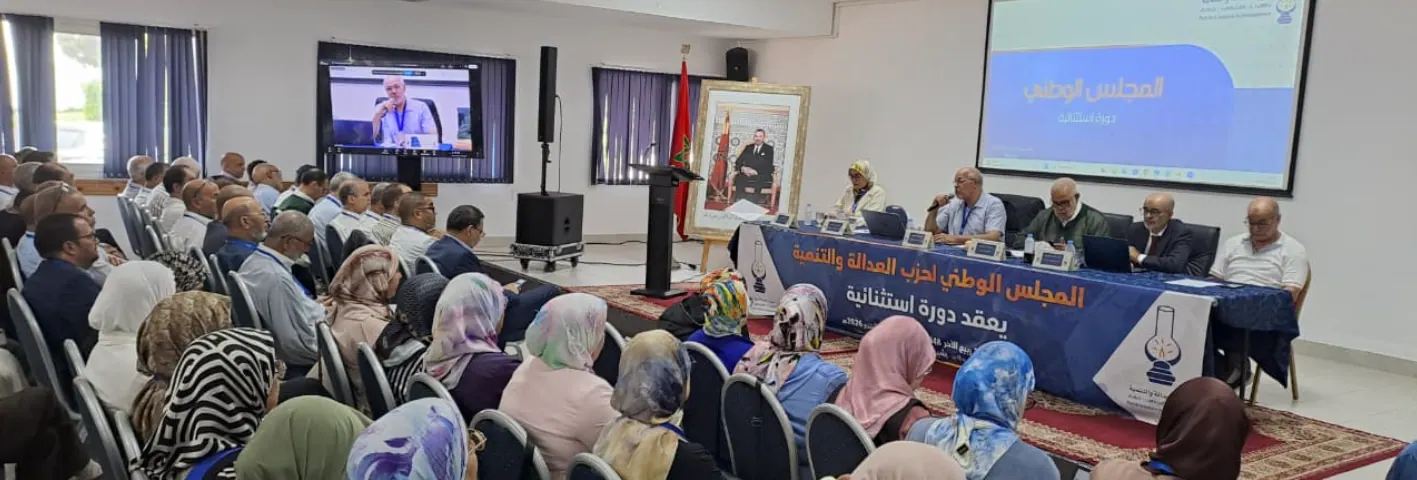
The Parti de la Justice et du Développement (PJD) in Morocco has decided to maintain its opposition stance, choosing not to participate in the upcoming government. This decision was made during an extraordinary session of the party's Conseil national held on September 26 in Bouznika. The party secured 54 seats in the legislative elections held on September 23, marking a significant increase from the 13 seats it obtained in 2021.
The PJD's Conseil national voted unanimously to continue its role in the opposition, exercising its constitutional and political roles from this position. This stance was proposed by the party's secrétariat général following the election results and was approved by the Conseil national, the body responsible for making key decisions on participation in government. The party described its opposition as "nationale, responsable et forte" (national, responsible, and strong).
The decision to remain in opposition was made after analyzing the election results, which saw the PJD rank fourth behind the Parti Authenticité et Modernité (PAM) with 97 seats, the Rassemblement National des Indépendants (RNI) with 66 seats, and the Parti de l’Istiqlal with 65 seats. This outcome represents a notable increase in the PJD's parliamentary representation compared to previous elections.
The PJD's president, Jamaâ Mouatassim, welcomed the election results, describing them as "bons" (good). He attributed the party's success to its strong political presence and clear positions, which resonated with citizens' demands. Similarly, the party's secrétaire général, Abdelilah Benkirane, expressed satisfaction with the results, viewing them as a confirmation of the PJD's regained significance in Morocco's political landscape.
Benkirane had previously stated his opposition to the PJD participating in a government led by other parties. His stance was confirmed during the Conseil national's meeting, where the party ultimately decided against joining the government. This decision suggests that the PJD will play a critical role in the opposition, potentially influencing policy discussions and holding the government accountable.
The PJD's choice to remain in opposition may have implications for Morocco's political dynamics, particularly given its increased parliamentary presence. With 54 seats, the party is well-positioned to contribute to legislative debates and potentially collaborate with other opposition groups. This development could lead to a more pluralistic and dynamic political environment in Morocco.
The party's decision reflects its strategic priorities and vision for its role in Moroccan politics. By choosing to remain in opposition, the PJD aims to maintain its independence and continue advocating for its policy agenda. This approach may enable the party to strengthen its base and prepare for future electoral challenges, potentially positioning itself for a more significant role in future governments.
Key points
- The PJD's decision to remain in opposition was made unanimously by its Conseil national.
- The party increased its parliamentary representation from 13 seats in 2021 to 54 seats in the recent elections.
- The PJD's choice may contribute to a more pluralistic political environment in Morocco.