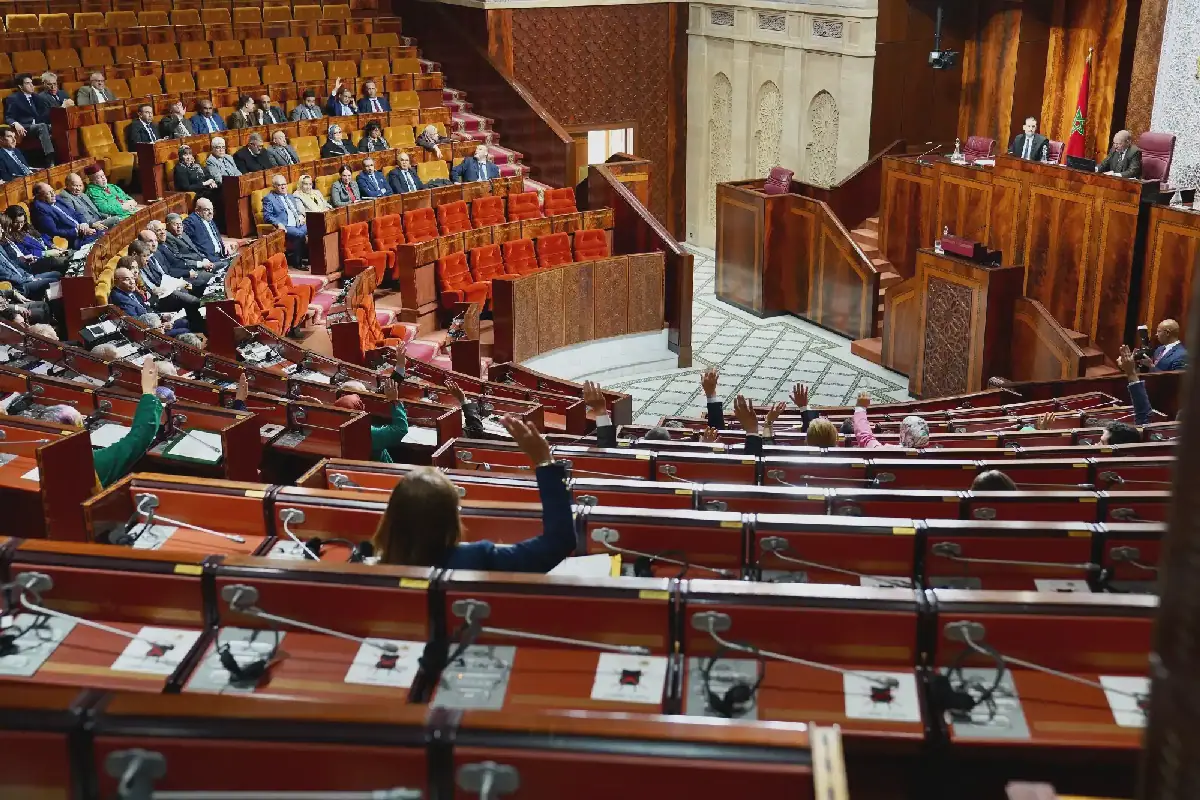
Morocco's two legislative chambers, the House of Representatives and the House of Councillors, will convene a special joint session on November 2 at 1 p.m. to review the latest developments in the Western Sahara dispute. The session was announced by the speakers of both chambers, who urged lawmakers to attend. This development comes after the UN Security Council meeting on October 30, where members did not renew the mandate of the UN mission in Morocco's Western Sahara, MINURSO, before its expiry on October 31.
The UN Security Council considered two competing drafts during the meeting. A US-backed text, supported by 11 of 15 members, proposed a one-year extension of the mission, renaming it to MINUSO, and emphasizing Moroccan autonomy as the sole basis for negotiations. The draft also suggested a reduced military component. However, Russia used its veto power, describing the text as a "unilateral approach" that exceeded the Council's authority on sovereignty. A Russian counter-draft for a technical extension failed to gain support, securing only three votes.
The Royal Cabinet of Morocco responded to the outcome, calling it "an important evolution and a significant step toward the definitive closure of the Moroccan Sahara file at the United Nations." The Cabinet stated that the mission's presence in the southern provinces, including personnel, vehicles, equipment, and symbols, should cease in the coming days. This move marks the end of a 35-year presence of MINURSO in the region. The Cabinet also emphasized that more than two-thirds of UN members support autonomy under Moroccan sovereignty as the only framework for a solution.
Various Moroccan political parties have expressed their support for the Royal Cabinet's communiqué. The Istiqlal Party's Executive Committee voiced "full and absolute support" for the statement, calling it a historic moment in consolidating the kingdom's territorial unity. The party also argued that the non-extension of MINURSO's mandate means the effective end of its presence in the southern provinces. The Authenticity and Modernity Party (PAM) and the Justice and Development Party (PJD) also backed the Cabinet's statement, reiterating their support for autonomy under Moroccan sovereignty.
The US Ambassador to the UN, Mike Waltz, had earlier described MINURSO as a mission that had "become the immutable symbol of a project doomed to failure." He pointed out that the mission spends about 80% of its time resupplying and highlighted the humanitarian situation in the Tindouf camps, where "two-thirds of children under five suffer from anemia." Waltz concluded that it is time to try a new approach. The US draft had proposed a shift in focus from managing the conflict to resolving it.
The non-renewal of MINURSO's mandate has been seen as a significant development in the Western Sahara dispute. The Socialist Union of Popular Forces (USFP) hailed the Royal Cabinet's communiqué and affirmed its full alignment behind King Mohammed VI. While the party had hoped for a resolution advancing the practical implementation of autonomy, it noted the initiative's broad international support. The party also argued that the Council's meeting exposed a deep crisis in the UN approach that had perpetuated the dispute.
The Moroccan Parliament's joint session is expected to discuss the implications of the non-renewal of MINURSO's mandate and the future of the Western Sahara dispute. The session will likely address the Royal Cabinet's statement and the positions of various political parties. The outcome of the session may provide insight into Morocco's next steps in the dispute and its approach to the UN's role in the region.
Key points
- Moroccan parliament to convene joint session on Western Sahara developments
- MINURSO mandate not renewed by UN Security Council
- Morocco's autonomy plan gains international support