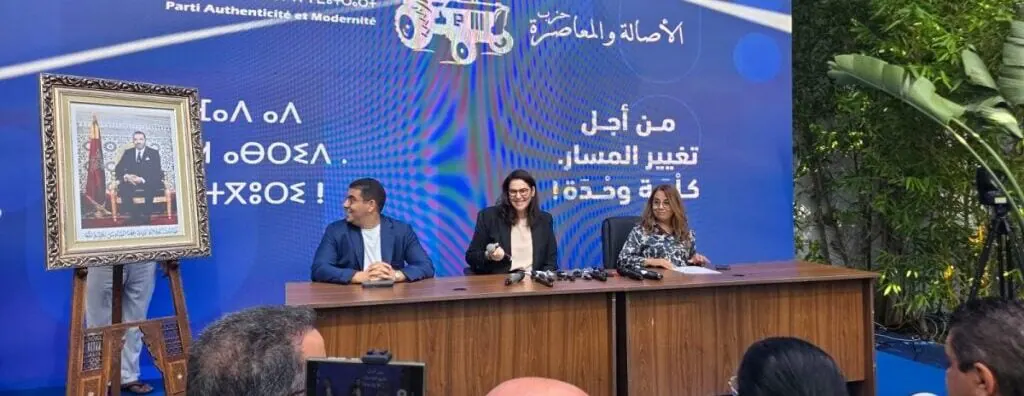
Five days after the elections, Morocco's PAM party, which emerged as the leading party, has not yet announced its candidate for the prime ministership. This delay has led to internal divisions and negotiations with potential coalition partners. Several names have been floated in public discussions, including Minister of Budget Fouzi Lekjaa, Minister of Justice Abdellatif Ouahbi, and Fatima Ezzahra El Mansouri, the coordinator of the party's collegial leadership.
The PAM party's collegial leadership structure, adopted after the party's congress, has complicated the identification of a natural candidate for the prime ministership. This has led to differences within the party on the strategy to follow and the profile to present. Some party cadres have questioned the absence of certain leaders at the party's headquarters when the election results were announced.
According to Morocco's Constitution, Article 47, the King appoints the head of government from the party that won the most seats in the House of Representatives. The King then appoints the government members on the proposal of the head of government. The Constitution does not specify which party personality should be chosen, leaving the decision to the King.
Coalition talks have not formally begun, as the PAM party has not yet designated a prime minister candidate. However, other parties are positioning themselves for potential coalition negotiations. The National Rally of Independents, with 66 seats, and the Istiqlal Party, with 65 seats, are seeking to maintain their participation in the government and are negotiating for key portfolios.
The Union Constitutionnelle and the Democratic and Social Movement are discussing the formation of a common parliamentary bloc to increase their influence in the negotiations. The arithmetic of the election results shows that the PAM party, with 97 seats out of 395, needs to gather 198 votes to secure an investiture, which requires at least two coalition partners.
The Party of Justice and Development and the left-wing alliance have opted for the opposition, reducing the available pool of potential coalition partners. This has increased the pressure on the PAM party to designate a prime minister candidate and form a coalition government.
The designation of Fatima Ezzahra El Mansouri as the prime minister candidate would be a historic first for a woman in Morocco. However, no official announcement has been made, and the party's internal discussions are ongoing. The King's decision on the prime minister appointment is expected to play a crucial role in shaping the country's future government.
Key points
- The PAM party's delay in designating a prime minister candidate has sparked internal divisions and coalition negotiations.
- The party's collegial leadership structure has complicated the identification of a natural candidate for the prime ministership.
- The King's decision on the prime minister appointment will play a crucial role in shaping the country's future government.