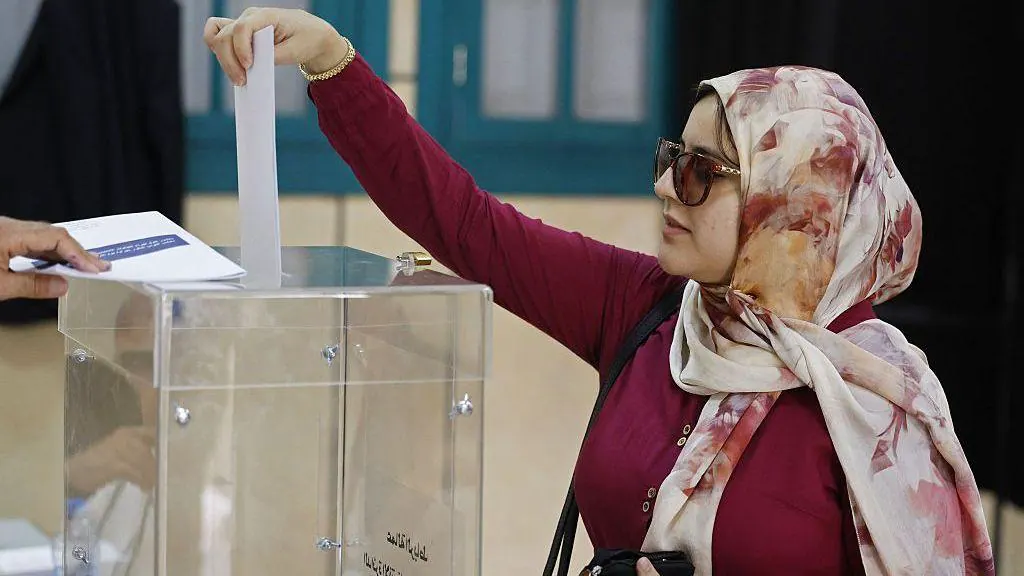
Morocco's ruling party, the Authenticity and Modernity Party (PAM), has taken the lead in the country's legislative elections, securing 97 seats, according to preliminary results announced by Interior Minister Abdelouafi Laftit. The party, which is part of the outgoing government, has emerged as the largest winner in the elections. The PAM's victory marks a significant achievement for the party, which has been part of the government's coalition.
The National Rally of Independents (RNI), the party leading the current government coalition, came in second with 66 seats, followed by the Independence Party with 65 seats. The Justice and Development Party (PJD), an Islamist party, saw a significant increase in its seats, winning 54 seats compared to 13 in the previous elections. This surge is attributed to the party's leader, former Prime Minister Abdelilah Benkirane, returning to the political scene.
The elections saw a record low voter turnout of 39%, the lowest since 2007, with only 16 million out of 36 million eligible voters participating. Over 7,000 candidates competed for 395 seats in the parliament. The low turnout has raised concerns about the legitimacy of the election results and the engagement of Moroccan citizens in the political process.
The elections were marked by the boycott of the Justice and Charity group, the largest Islamist movement in the country, which cited a lack of free and fair competition. The group's decision not to participate was based on its belief that parties are unable to implement their programs or form an independent government under the current political system.
The new government will play a crucial role in implementing a $20 billion plan to prepare for the 2030 World Cup, which Morocco is set to host. The government will also focus on addressing key issues such as unemployment, which stands at 9.5%, and youth unemployment, which is at 27%. The country's economic challenges and social issues were key themes in the election campaigns.
The PAM's election program included a $37 billion budget, promising to create one million new jobs and continue investing in healthcare and social protection. If PAM leader Fatima Zahra Mansouri is appointed as the country's first female prime minister, she will be the second woman to hold the position in the Arab region.
The election results are set to shape the country's future, with King Mohammed VI expected to appoint a prime minister from the winning party. The new government will face significant challenges, including addressing the country's economic and social issues, and navigating the complexities of the regional and international landscape.
Key points
- The PAM party leads in legislative elections with 97 seats.
- Voter turnout was a record low 39%.
- The new government will focus on implementing a $20 billion plan to prepare for the 2030 World Cup.