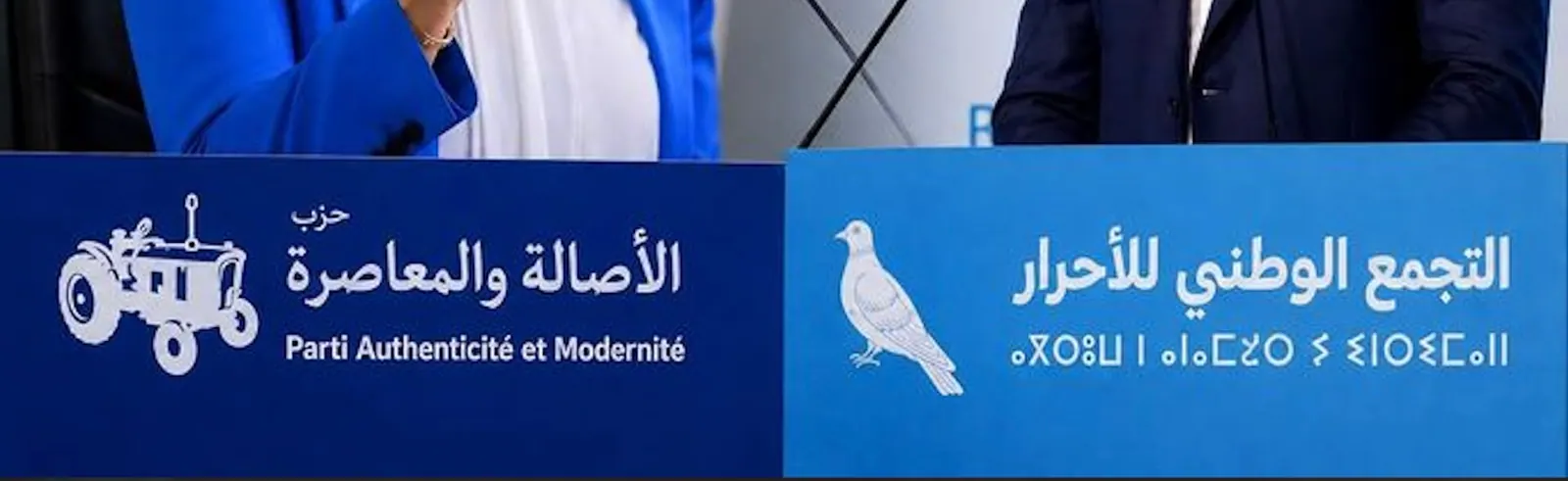
The Parti Authenticité et Modernité (PAM) has emerged as the winner of Morocco's legislative elections held on September 23. However, the party's path to forming a government coalition has become complicated. The PAM's main ally, the Rassemblement National des Indépendants (RNI), had anticipated that the PAM would win the elections but would not control the Ministry of Economy and Finance.
The RNI's President of the House of Representatives, Talbi Alami, had made a statement during the election campaign that the Ministry of Economy and Finance would remain under the control of "Lalla Nadia." This statement sparked controversy and raised questions about the PAM's ability to form a government coalition. The PAM's leader, Faouzi Lekjaa, responded by stating that his party would not give in to pressure and would not cede control of the Ministry of Economy and Finance.
The PAM won 97 seats in the elections, while the RNI secured 66 seats. The PAM's main challenge will be to form a majority coalition, as it will need to work with other parties that may not share its convictions and methods. The Parti de la Justice et du Développement (PJD) has stated that it will not form an alliance with the PAM, while the Istiqlal party has expressed its willingness to work with the winning party.
The PAM may need to form an alliance with parties such as the Union Socialiste des Forces Populaires (USFP), the Parti du Progrès et du Socialisme (PPS), or the Mouvement Populaire (MP) to achieve a majority. However, these parties may not share the PAM's vision, which could complicate the formation of a government coalition.
The RNI's loss may lead to a difficult situation, as it may not be willing to accept a secondary role in the government. The party's willingness to cooperate with the PAM and other parties will be crucial in determining the outcome of the negotiations.
Faouzi Lekjaa has demonstrated that he and his party are not willing to give in to pressure. During his election campaign, he expressed surprise at the attempts to allocate ministerial portfolios before the elections had even taken place.
The coming days will be crucial for the PAM as it navigates the complex process of forming a government coalition. The party will need to balance its own interests with the need to work with other parties to achieve a majority.
Key points
- The PAM's victory in the legislative elections has set off a complex process of coalition formation.
- The party's leader, Faouzi Lekjaa, has stated that he will not give in to pressure and will not cede control of the Ministry of Economy and Finance.
- The PAM will need to work with other parties to achieve a majority, which may be challenging given the differing convictions and methods of the various parties.