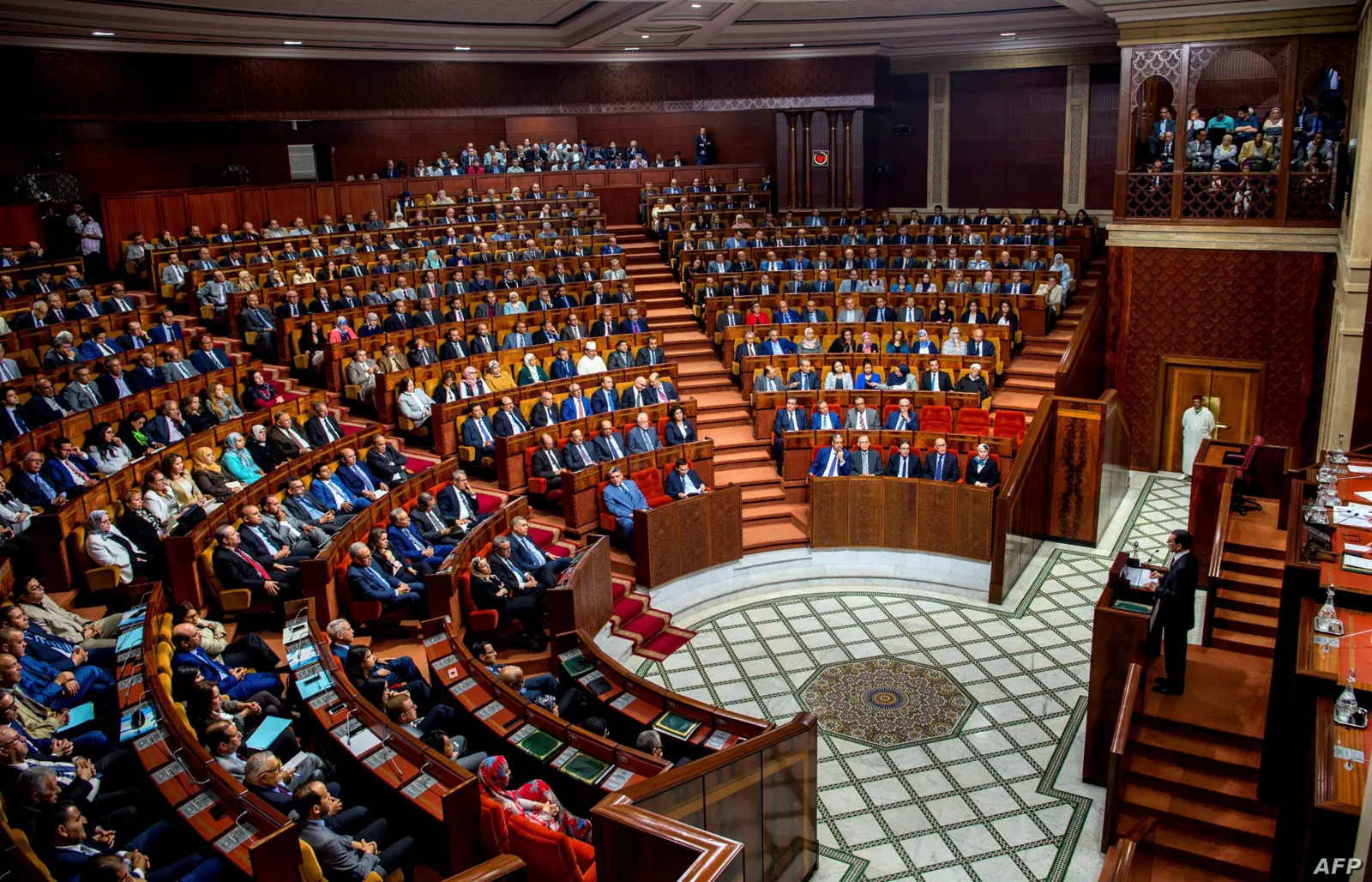
A recent report by SimSim-Participation Citoyenne, an independent Moroccan organization, has highlighted the substantial legislative backlog and uneven attendance in Morocco's outgoing House of Representatives during the eleventh legislative term (2021-2026). The report, which draws on data from official sources, including the House of Representatives website and the website of the Minister Delegate to the Head of Government, reveals that the House approved 255 legal texts, down from 337 in the tenth legislature and 383 in the ninth.
The report shows that government bills dominated the legislative output, with 237 out of 255 approved texts being government bills, and 18 being private member bills. This translates to 92.94% of the total legislative output being government initiatives, while private member proposals accounted for only 7.06%. The gap between proposed and passed legislation is also significant, with the government referring 484 bills to the House, of which only 237 were approved, leaving 247 government bills without approval.
Lawmakers submitted 483 private member bills, with the Haraki (Mouvement Populaire) Group leading the effort with 143 proposals, followed by the Socialist Group-Federal Opposition with 109 and the Justice and Development (PJD) parliamentary group with 68. However, only 18 private member bills were approved, while 46 were rejected in plenary sessions, and 32 were rejected in committee, leaving 388 without approval. Attendance during voting sessions varied widely, with the highest turnout reaching 273 of 395 MPs, or 69.11%, and the lowest falling to 46 lawmakers, or 11.65%.
The report also highlights the issue of unanswered questions, with lawmakers posing 32,093 written questions, of which the government answered 19,871, or 61.92%, leaving 12,222, or 38.08%, unanswered. The opposition accounted for 63.21% of written questions, while the majority accounted for 36.79%. The Haraki Group filed the most written questions, with 6,197, followed by the Socialist Group with 5,387 and the PJD group with 5,027.
Oral questions drew a far lower response rate, with the government answering only 3,969 out of 18,240 oral questions, or 21.76%, leaving 14,271 without a reply. The Authenticity and Modernity (PAM) Group led with 6,784 oral questions, followed by the National Rally of Independents (RNI) with 2,593 and the Socialist Group with 2,531. The report also notes that the Head of Government made 24 appearances before the House in monthly sessions reserved for general-policy questions.
The report concludes that government initiative prevailed over the texts that became law, and that the government's engagement with parliamentary accountability tools was uneven. It also highlights the need for better access to reports and data, and for clarifying why figures diverge across official sources. The report's findings raise concerns about legislative productivity, government responsiveness, and the effectiveness of parliamentary oversight.
As Morocco opens a new legislative chapter, with King Mohammed VI chairing the opening of the first session of the new legislative year, and Head of Government-designate Fatima Ezzahra El Mansouri preparing to lead the next government, the report's findings are likely to be taken into consideration. The House is set to hold a plenary session to elect its president, and the new legislative term is expected to bring changes to the country's parliamentary landscape.
Key points
- The Moroccan parliament's outgoing House of Representatives left 12,222 questions unanswered and 247 government bills unpassed during the 2021-2026 term.
- Government bills dominated the legislative output, accounting for 92.94% of approved texts.
- The report highlights the need for better access to reports and data, and for clarifying discrepancies in official sources.