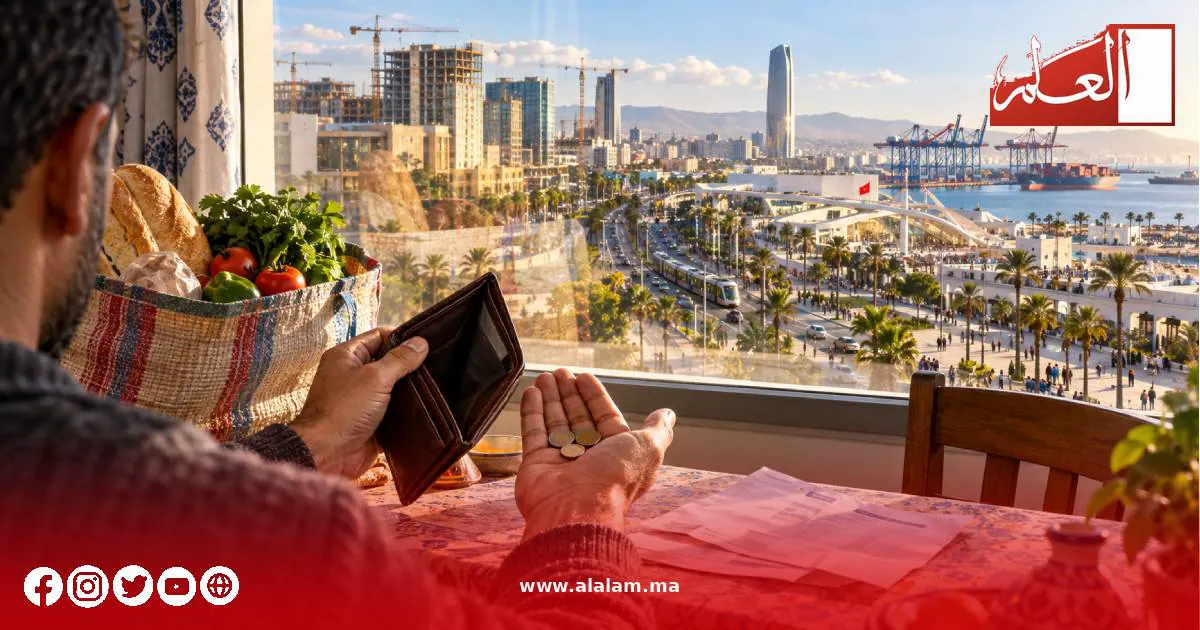
Morocco's economy is facing a critical challenge as citizens' purchasing power continues to decline. According to the High Commission for Planning, the consumer price index rose by 0.8% in August 2026 compared to July, with food prices increasing by 0.9%. The prices of fish and seafood, milk, cheese, eggs, and meat all saw significant monthly increases. This has put a strain on households, with 78.3% of Moroccan families reporting a decline in their living standards over the past 12 months.
The decline in living standards is reflected in the decreasing confidence of households, with the confidence index dropping to 60.1 points from 64.4 points in the previous quarter. The situation has been exacerbated by the fact that wages have not kept pace with inflation, leaving many Moroccans struggling to make ends meet. The issue of purchasing power is likely to be a key challenge for the next government, which will need to address the root causes of the problem rather than just its symptoms.
Previous governments have implemented various measures to mitigate the effects of economic hardship, including social protection programs and investments in infrastructure. However, these efforts have not been enough to address the scale of the problem. The next government will need to take a more comprehensive approach, including measures to boost employment, improve education and training, and support small businesses and entrepreneurs.
One of the key issues that the next government will need to address is the question of support for vulnerable populations. While social protection programs are essential for those who are unable to work, they should not be seen as a permanent solution. Instead, the government should focus on creating opportunities for people to work and earn a decent living. This will require a range of measures, including investments in education and training, and support for small businesses and entrepreneurs.
Another critical issue is the need for greater transparency and accountability in the management of public finances. The next government will need to take steps to ensure that wealth is not accumulated unfairly, and that those who have the means to pay contribute to the public purse. This will require a range of measures, including the implementation of a robust system for monitoring and tracking wealth, and the introduction of more progressive taxation.
The issue of tax fairness is also likely to be a key challenge for the next government. While Morocco's tax system is designed to be progressive, there are concerns that those with high incomes and wealth are not contributing their fair share. The next government will need to take steps to address this issue, including the introduction of more progressive taxation and measures to crack down on tax evasion.
Ultimately, the next government will need to take a comprehensive approach to addressing the challenges facing Morocco's economy. This will require a range of measures, including investments in education and training, support for small businesses and entrepreneurs, and a more progressive tax system. By taking these steps, the government can help to improve the purchasing power of Moroccan citizens and create a more equitable and sustainable economy.
Key points
- The next government will need to address the root causes of Morocco's economic challenges, including stagnant wages and rising prices.
- Social protection programs are essential for vulnerable populations, but they should not be seen as a permanent solution.
- The government will need to take steps to ensure greater transparency and accountability in the management of public finances.