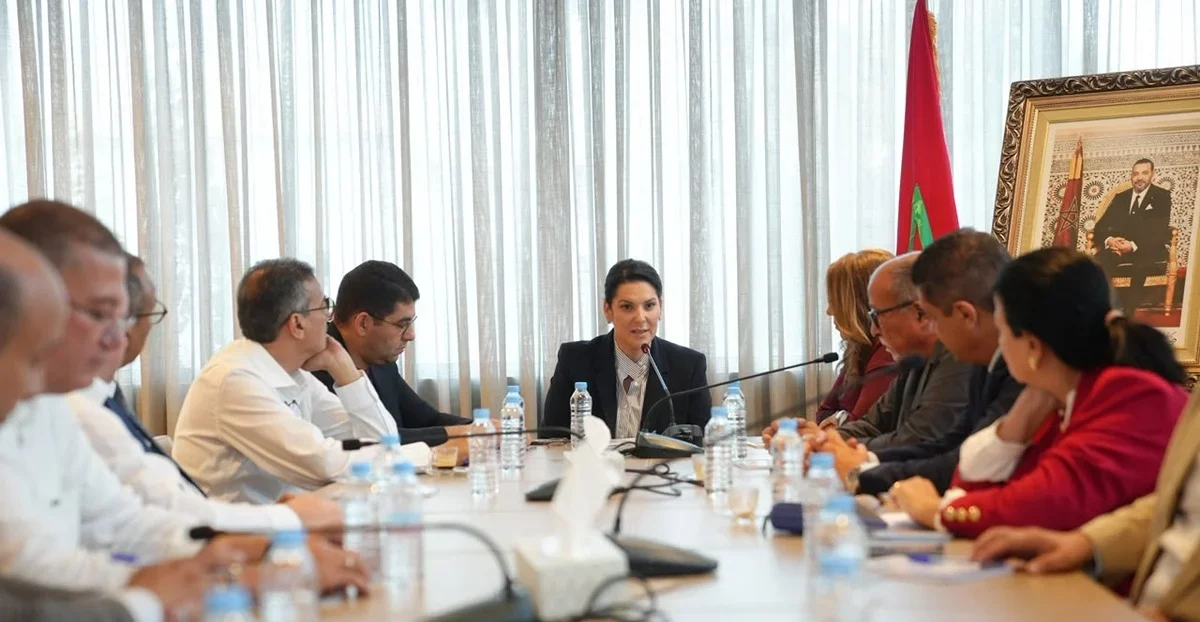
Morocco's designated prime minister, whose name has not been disclosed, has initiated discussions with two major political parties, the Rassemblement national des indépendants (RNI) and the Parti de l'Istiqlal (PI), in a bid to form a new government. The talks, which started on Wednesday at the party's headquarters in Rabat, aim to secure the necessary majority to obtain the investiture. With 97 seats, the party needs 198 votes, and the RNI and PI have 66 and 65 seats, respectively.
The arithmetic of the election results dictates the government's formation calendar. Given that no two-party alliance can secure the required majority, a third partner will be necessary. Both the RNI and PI are positioning themselves to rejoin the government and are negotiating for key economic portfolios. The potential partners for the new government have narrowed down, with the Parti de la justice et du développement (PJD) deciding to remain in opposition. The PJD's 54 seats could have been crucial in forming an alliance.
Other parties, including the Mouvement populaire, Union socialiste des forces populaires, Parti du progrès et du socialisme, and Union constitutionnelle, are now being courted as their support becomes increasingly important. The Union constitutionnelle and the Mouvement démocratique et social have discussed forming a common parliamentary bloc to strengthen their negotiation position. This development could impact the government's formation and the distribution of portfolios.
The designated prime minister has also extended an invitation to the Parti de la justice et du développement for a meeting, which is seen more as a gesture of institutional courtesy than a genuine attempt to include them in the government. The PJD's participation had been formally ruled out earlier. With the government formation underway, the focus shifts to the upcoming parliamentary session.
The parliamentary calendar is set, with the autumn session commencing on the second Friday of October, traditionally marked by a royal speech. The new government will then need to present itself before the Chambre des représentants to gain confidence in its program. Subsequently, it will engage in examining the draft finance bill, a critical step in its formation.
The talks between the designated prime minister and the RNI and PI are crucial in determining the government's composition. The negotiations will likely focus on the distribution of key portfolios and the overall direction of the government's program. As the discussions progress, it will become clearer which parties will form the new government and what their roles will be.
The formation of the new government is a critical process that will shape Morocco's political landscape in the coming years. The designated prime minister's ability to secure a majority and form a stable government will be closely watched, both domestically and internationally. The government's program and policies will have a significant impact on the country's development and its relations with other nations.
Key points
- The designated prime minister needs to secure 198 votes to obtain the investiture.
- The Parti de la justice et du développement has decided to remain in opposition.
- The new government will need to present itself before the Chambre des représentants to gain confidence in its program.