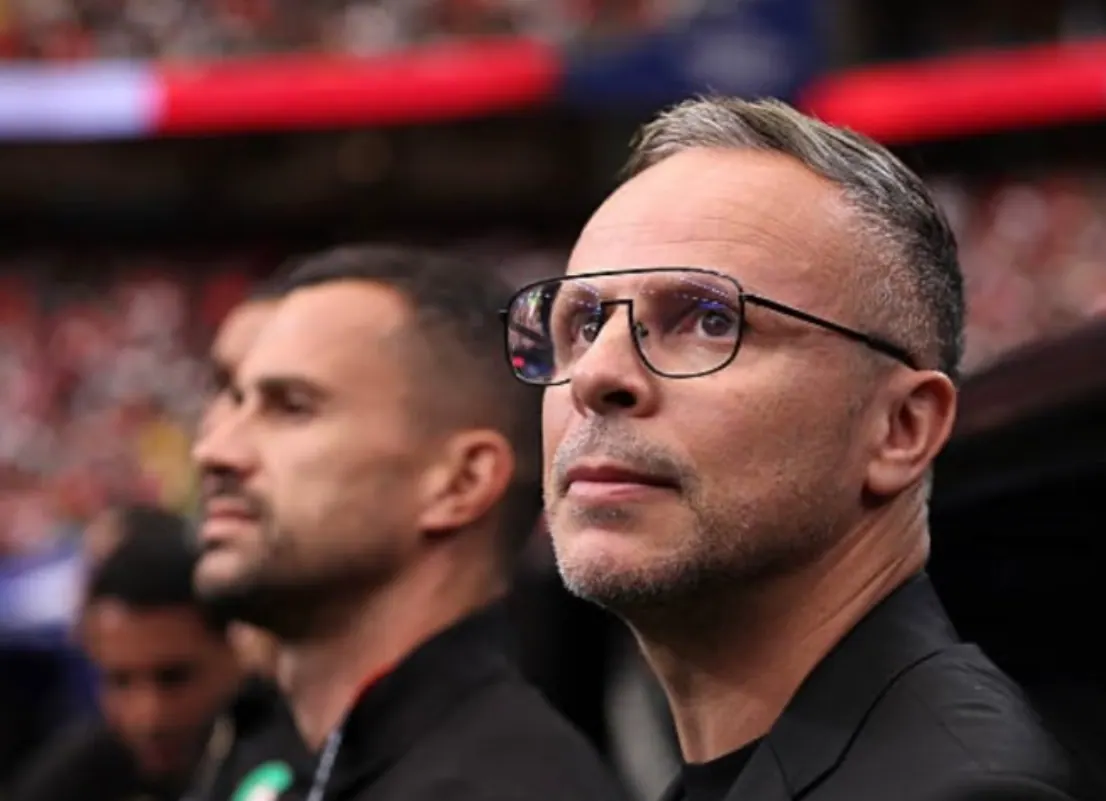
Morocco's national team, led by coach Mohamed Wahbi, has played three matches so far, with two wins and one draw. The team won against Gabon and Lesotho in the African Cup of Nations qualifiers, and then drew with Mali in a friendly match. These results are positive, but a deeper analysis is needed to understand the team's current situation. The team has gained six points in the qualifiers and is leading its group.
One of Wahbi's key decisions was to give opportunities to young players, including Ali Maamer, Yasser Zabiri, Abd al-Hamid Ait Boudlal, and Abdallah Wazan. This approach has shown promise, as these players have demonstrated their skills and potential. The team's project is not just about introducing new players, but also about creating a cohesive unit that can compete at a high level. Players like Bouadi have started to make a significant impact, while Jassim, Zabiri, and Abd al-Samad Al-Zalzouli have shown that they can provide different attacking options.
However, the team's performance against Mali raised some concerns. When faced with a well-organized opponent that closed spaces and defended with a solid block, Morocco struggled to create scoring opportunities and accelerate its pace. The team's inability to find solutions between the lines and its reliance on individual efforts were exposed. The absence of Al-Zalzouli, who was the most capable player in beating opponents one-on-one, was also felt.
Wahbi's next challenge is to find a way to make the team more convincing and able to win matches even when it doesn't have a lot of space to play. African teams that Morocco will face in the future will not always provide them with an open field, and the team needs to develop other strategies, such as building from the back, changing the direction of play quickly, and investing in its wingers. The team's ability to adapt to different situations will be crucial in its future matches.
Another key area for improvement is the team's defensive core. The return of Nayef Akard and his partnership with Issa Diop have provided stability, and the team's midfielders, including Bouadi, Tarqalyn, and Nabil Ainawi, have shown promise. However, Wahbi needs to define the roles of each player and ensure that the team remains balanced even when changes are made. In attack, the team has several options, including Ibrahima Diaz, Al-Zalzouli, and Rahimi, but it needs to find a way to use these players effectively without relying too heavily on individual efforts.
Morocco's next matches against Niger in November will be crucial in assessing the team's progress. The team needs to show that it can control matches, create scoring opportunities, and defend solidly. The matches against Niger will provide a tougher test than the previous ones, and Wahbi will need to make adjustments to ensure that the team is well-prepared.
Overall, Morocco's national team has made a promising start under coach Mohamed Wahbi, but there is still much work to be done. The team's ability to adapt to different situations, develop its defensive core, and use its attacking options effectively will be key to its success in the future. The matches against Niger in November will provide an important test of the team's progress and its ability to compete at a high level.
Key points
- Morocco's national team has started its new era under coach Mohamed Wahbi with a mix of results, showing promise but also areas for improvement.