The United Nations Mission for the Referendum in Western Sahara, known as MINURSO, has concluded its 35-year operation in Morocco. Established in 1991, the mission was initially tasked with organizing a referendum, which ultimately never took place. Despite this, MINURSO continued to operate, focusing on military monitoring, reporting incidents, and supporting political efforts. The mission's conclusion on October 31, 2026, has raised questions about its achievements and financial expenditures.
According to the United Nations, MINURSO's annual expenses ranged from $64.73 million to $70.69 million in recent years. A breakdown of the 2024-2025 financial year shows that over $25.15 million was spent on civilian staff, $18.62 million on aviation, and $8.32 million on military personnel and police. These expenditures have sparked concerns about the mission's cost-effectiveness and the lack of a clear outcome.
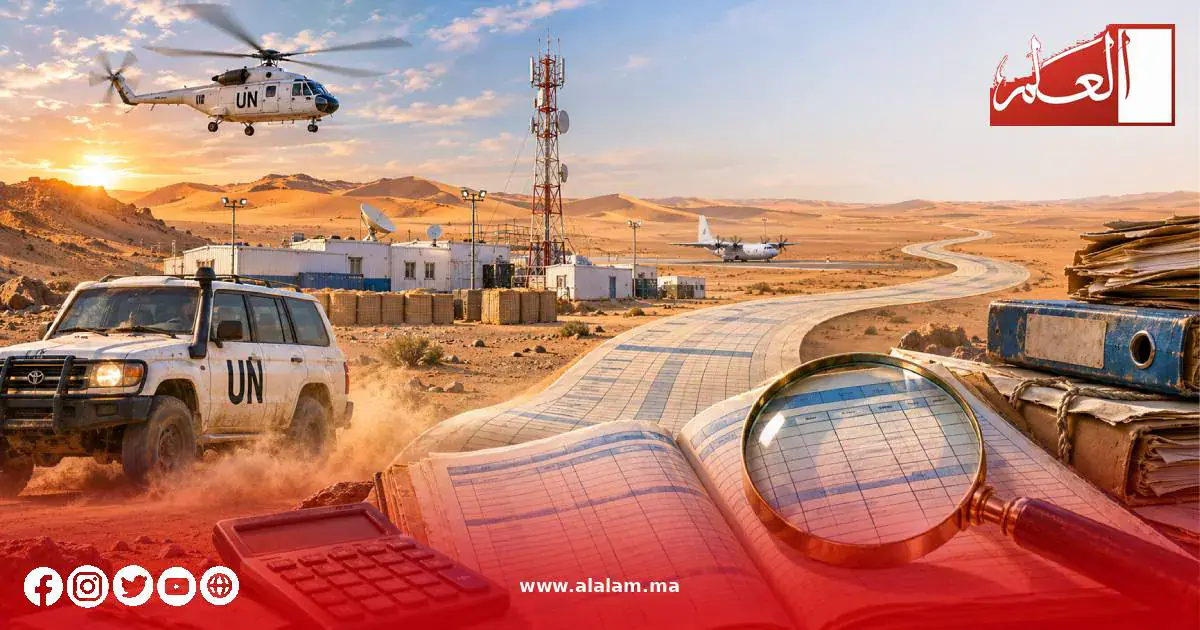
During its operation, MINURSO maintained a significant presence in Western Sahara, with a headquarters in El Aaiun and several monitoring sites. The mission employed a range of resources, including aircraft, helicopters, and vehicles, to monitor the region. However, the effectiveness of this monitoring and its impact on the local population remain unclear.
One of the notable aspects of MINURSO's operation was its limited mandate regarding human rights monitoring. Despite its extensive military presence, the mission did not have a broad mandate to monitor human rights abuses in the region. This limitation has raised questions about the UN's priorities in the region and the impact on the local population.
The issue of humanitarian aid to refugees in Tindouf, Algeria, has also been a subject of concern. While MINURSO was not responsible for managing aid distribution, the UN and donor countries have a responsibility to ensure transparency and accountability in the use of funds. Past reports of irregularities in aid distribution have highlighted the need for rigorous monitoring and evaluation.
The conclusion of MINURSO's mission has sparked a wider debate about the UN's role in Western Sahara and the need for a more comprehensive approach to addressing the region's challenges. As the UN considers its next steps, it will be essential to prioritize transparency, accountability, and the needs of the local population.
In the end, the legacy of MINURSO will be shaped by its impact on the region and its people. While the mission's military monitoring and humanitarian efforts have contributed to stability, the lack of a clear outcome and concerns about financial management have raised questions about its effectiveness.
Key points
- The MINURSO mission cost tens of millions of dollars annually, with a total expenditure of over $2 billion over 35 years.
- The mission's limited mandate did not include broad human rights monitoring, raising concerns about its impact on the local population.
- The UN and donor countries have a responsibility to ensure transparency and accountability in the use of funds for humanitarian aid in Tindouf.