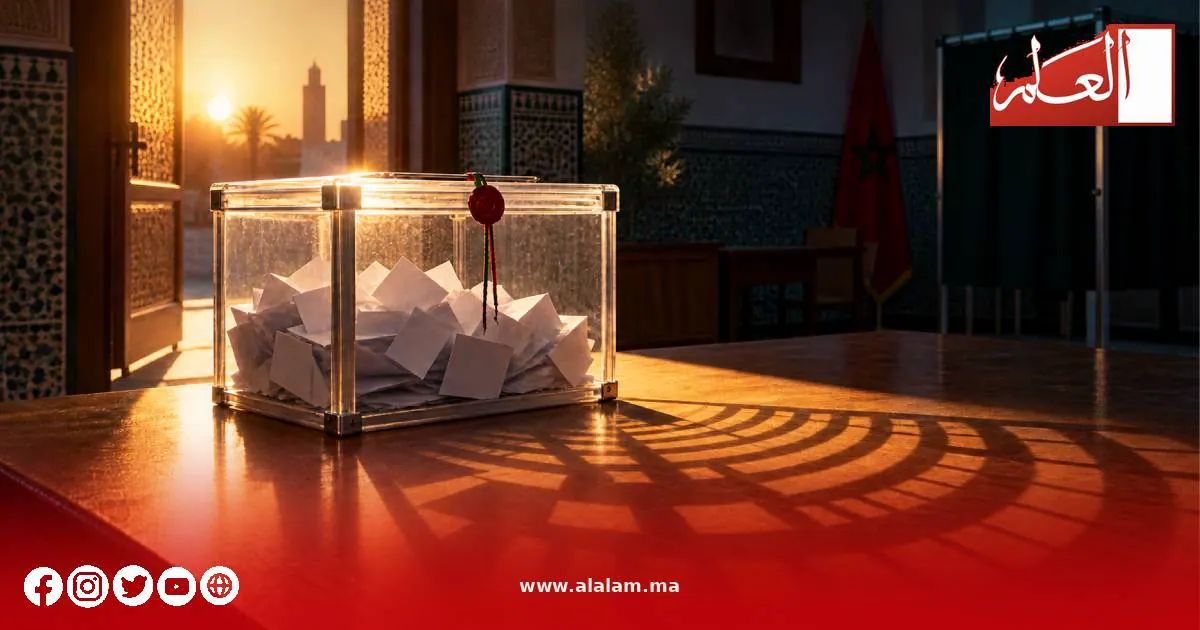
The voting process for Morocco's legislative elections ended on Wednesday, September 23, 2026, at 7:00 PM local time. According to the Ministry of Interior, the national voter turnout stood at 38.02%. The elections were held to choose members of the House of Representatives, the lower house of Morocco's parliament. The voting process was generally smooth, with isolated incidents reported at a few polling stations.
The Ministry of Interior reported that the elections took place in normal and stable conditions across different regions of the country. Although some isolated and limited incidents were recorded at a small number of polling stations, they did not affect the overall conduct of the electoral process. After the closure of polling stations, the counting of votes began in the presence of representatives from the competing lists.
The vote-counting process involved two stages: first, the local electoral district ballots, followed by the regional district ballots, which were reserved for female candidates. Once the counting is completed, the polling stations will prepare result sheets and submit them to the central offices. These offices will then compile the votes obtained by each list within each district.
The next stage involves the verification and statistical analysis of the results. This process will be overseen by judges who will examine the result sheets from the central offices in local districts and regional statistical committees in regional districts. The final results will determine the winners of the parliamentary seats.
The announcement of the voter turnout has marked the end of the voting phase, while the distribution of seats and the names of the winners will be determined once the counting, verification, and results announcement are completed. This final stage will reveal the parliamentary landscape that has emerged from the September 23 polls.
Morocco's legislative elections are crucial in shaping the country's political landscape. The elected representatives will serve in the House of Representatives, playing a significant role in lawmaking and governance. The voter turnout of 38.02% reflects the level of public engagement in the electoral process.
The outcome of the elections will have implications for Morocco's future development and policy direction. As the country looks forward to the announcement of the final results, citizens and international observers are keenly watching the proceedings. The elected officials will be tasked with addressing various challenges facing the nation, including economic development, social issues, and international relations.
Key points
- The voter turnout for Morocco's legislative elections was 38.02%.
- The elections were held to choose members of the House of Representatives.
- The vote-counting process and verification of results are ongoing to determine the winners of the parliamentary seats.