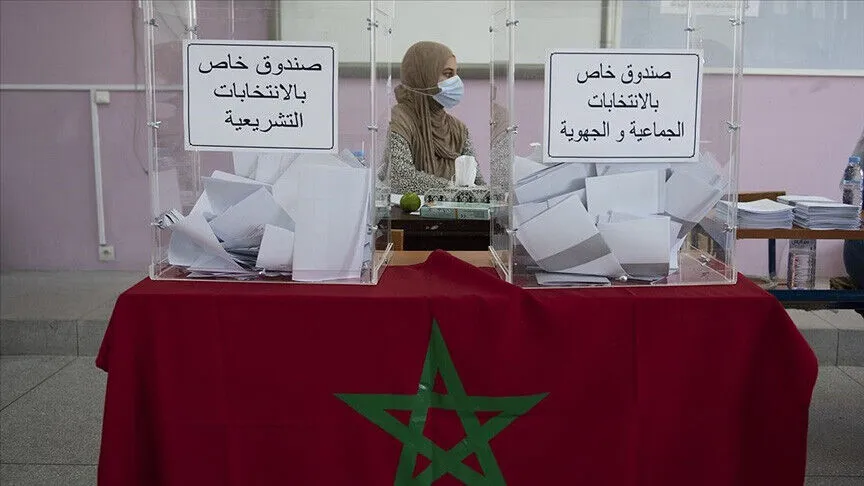
Morocco's legislative elections began at 8am local time on Wednesday, with voters heading to polling stations across the country to elect members of the House of Representatives. By midday, 11.34% of eligible voters had cast their ballots, according to data recorded at various polling stations. The electoral process was proceeding normally, with representatives from various candidate lists present at the polling stations.
A total of 28 parties are participating in the elections, with 1850 lists competing for 395 seats in the House of Representatives. These lists comprise 7288 candidates, including 2658 women. The elections will determine which party or parties will form the government for the next five years. The party with the most seats will likely be tasked with forming a coalition government.
The elections are being closely watched, as the outcome will determine the composition of the next government. The current government, led by Aziz Akhannouch, is a coalition of the National Rally of Independents, the Authenticity and Modernity Party, and the Independence Party. Akhannouch, leader of the National Rally of Independents, has been prime minister since 2021.
The next government will face numerous challenges, including economic and social issues, as well as preparations for Morocco's potential co-hosting of the 2030 FIFA World Cup. The country's constitution outlines the process for forming a government, with the king appointing the prime minister from the party with the most seats in the House of Representatives.
The electoral process is set to conclude with the announcement of preliminary results on Thursday morning. Once the results are announced, the party with the most seats will likely begin consultations to form a coalition government. A majority of at least 198 seats is required to form a stable government.
In the 2021 legislative elections, the National Rally of Independents emerged as the largest party, winning 102 seats. The Authenticity and Modernity Party secured 86 seats, while the Independence Party won 81 seats. The outcome of these elections will likely have significant implications for Morocco's future.
The king will appoint the prime minister from the party with the most seats, who will then propose a list of ministers for approval. The new government will need to address various pressing issues, including economic development, social welfare, and international relations. The elections are a crucial step in Morocco's democratic process.
Key points
- 11.34% voter turnout reported by midday on Wednesday
- 28 parties participating in the elections, with 1850 lists competing for 395 seats
- The outcome of the elections will determine the composition of the next government