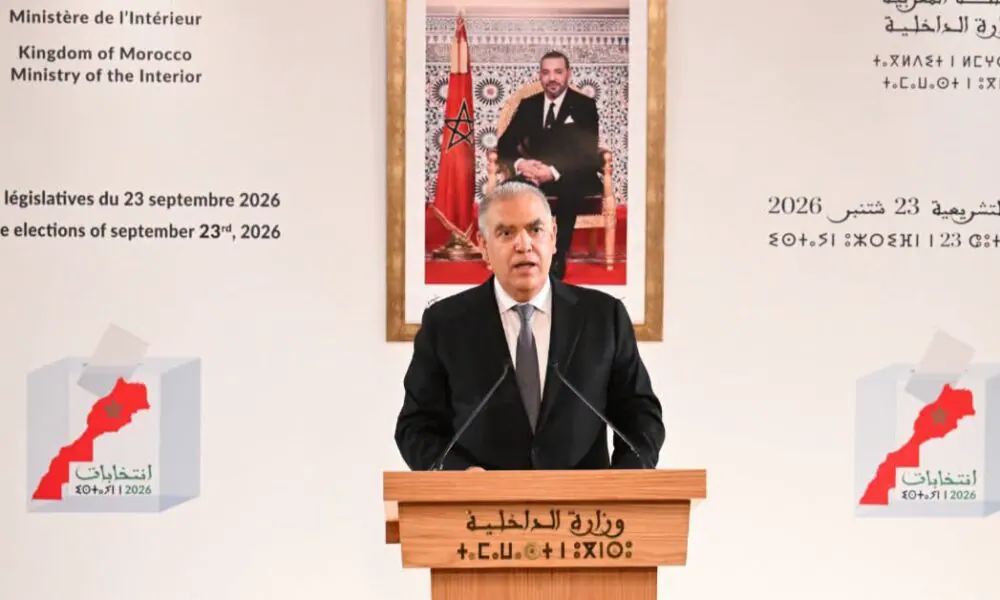
Morocco held its legislative elections on September 23, 2026, with a total of 15.8 million eligible voters. According to the provisional results announced by Interior Minister Abdelouafi Laftit, the elections saw a turnout of 38.08%, with nearly 6 million voters participating. This rate is lower than the 50.86% recorded in 2021 and 42.27% in 2016. The minister attributed the lower turnout to various factors, including the COVID-19 pandemic and changes in the electoral process.
The Parti Authenticité et Modernité (PAM) emerged as the leading party with 97 seats, followed by the Rassemblement National des Indépendants (RNI) with 66 seats and the Parti de l'Istiqlal with 65 seats. The Parti de la Justice et du Développement (PJD) secured the fourth position with 54 seats. Other parties, including the Mouvement Populaire and the Union Socialiste des Forces Populaires, also secured seats in the parliament. The elections saw a total of 28 parties and alliances participating, with 1,847 lists and 7,277 candidatures.
The elections were marked by a significant presence of women and young people, with 2,659 female candidatures, representing around 37% of the total. The minister noted that this reflects the dynamism of the Moroccan political scene and the opportunities offered by the new legal framework. The electoral process was observed by 3,006 observers, including 2,023 from civil society associations, 783 from the Conseil national des droits de l'Homme (CNDH), and 200 foreign observers.
The electoral campaign saw a remarkable mobilization of political parties and candidates, with over 21,000 communication initiatives and nearly 1.5 million participants. The minister described these numbers as unprecedented. The campaign also saw a significant use of public audiovisual communication means, with parties benefiting from equal and pluralistic access.
The voting process was generally smooth, with some isolated incidents reported. The minister attributed this to the mobilization of authorities and services, as well as the engagement of voters. The elections were preceded by legislative and organizational reforms aimed at improving the quality of the electoral process, promoting transparency, and encouraging participation.
The results of the elections will have significant implications for Morocco's political landscape. The PAM's lead and the RNI's second position are seen as reflecting the current balance of power in the country. The PJD's return to the political scene with 54 seats is also notable. The minister congratulated the elected candidates and praised the engagement of all parties and candidates.
The minister concluded by emphasizing that the electoral competition has ended, but the shared responsibility to serve the country and its citizens continues. He noted that while the elections have winners, Moroccan democracy is the true victor, given the stability, pluralism, and respect for the popular will. The government will now focus on forming a new cabinet and implementing its program.
Key points
- The PAM emerged as the leading party with 97 seats, followed by the RNI with 66 seats and Istiqlal with 65 seats.
- The elections saw a turnout of 38.08%, with nearly 6 million voters participating.
- The electoral process was observed by 3,006 observers, including 2,023 from civil society associations and 783 from the CNDH.