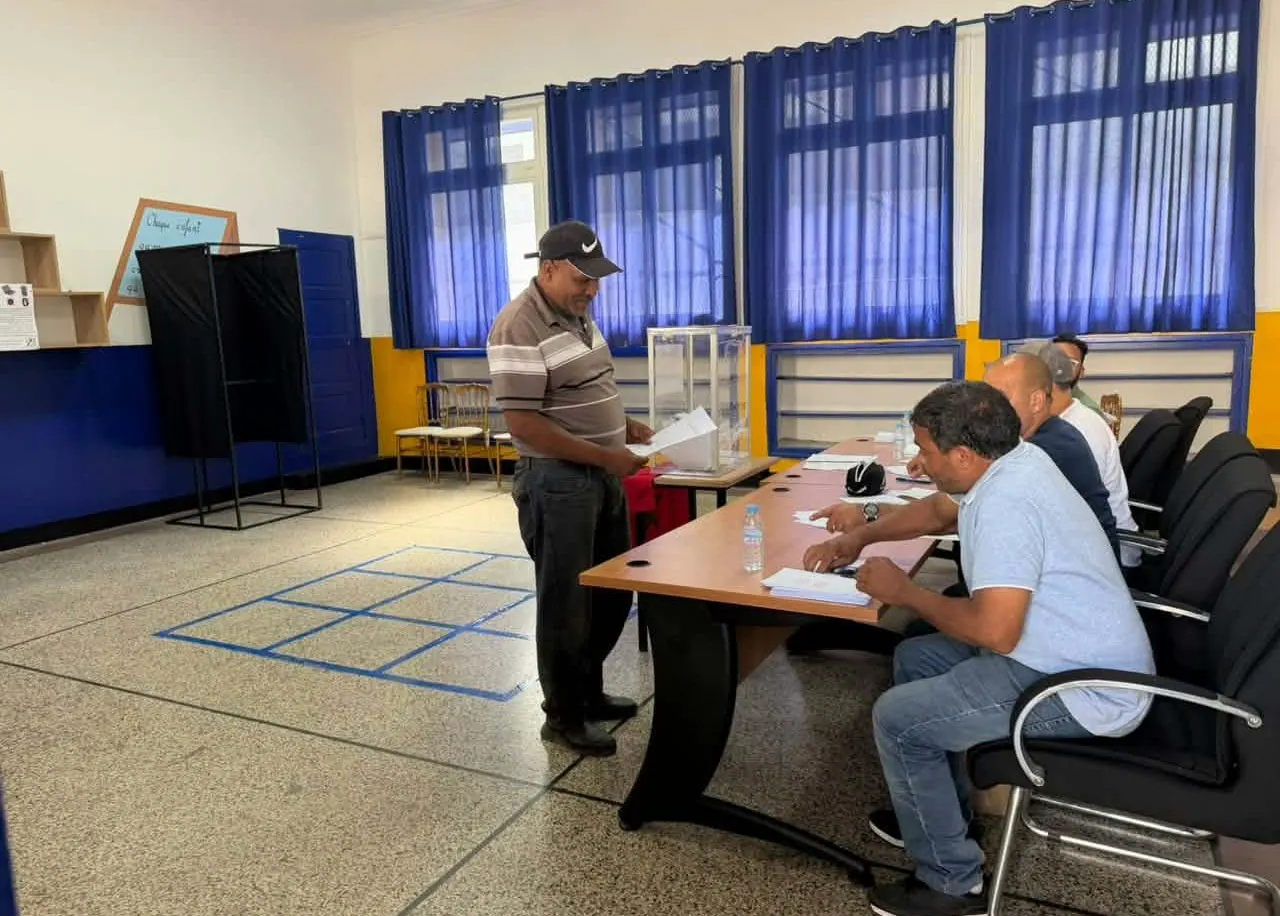
On Wednesday, September 23, Morocco began its legislative elections, with polling stations opening at 8:00 AM. In the Ain Sebaa district of Casablanca, the atmosphere was calm, with a limited presence of voters. Local authorities and police were on hand to oversee the process, ensuring a smooth start to the voting period. By 2:00 PM, the turnout at the primary school in the Shafshawan district was lower than expected.
According to Hanane Abu Nahi, director of the Shafshawan primary school, preparations had been made to facilitate voting for citizens. The school's polling station was set up to receive voters from 8:00 AM to 7:00 PM, allowing them sufficient time to cast their ballots. Observers noted that the voting process was conducted in a secure and confidential manner, with members of the electoral committee and monitors present throughout.
Conversations with voters revealed that many had come to exercise their right to vote, with some stating that they had made their choices based on personal conviction. A 60-year-old man said he had always voted and would continue to do so, adding that he was confident in the party he had chosen. Another voter, a retired man from Biyada, stated that his decision was not influenced by anyone, emphasizing the importance of a personal choice.
In contrast, a younger voter explained that she had taken the time to study the different party programs before making her decision. She stressed that her choice was her own responsibility and not influenced by anyone else. The presence of young people, particularly those from Generation Z, was noticeably absent, with most voters appearing to be older citizens.
According to observations, the participation rate in the Ain Sebaa district was around 45%, with men making up around 50% of voters and women around 30%. These numbers suggest a disparity in voter turnout between men and women. A elderly woman, who had come to vote with her family, stated that she had been voting since the colonial era and saw it as a civic duty.
As the day progressed, the atmosphere at the polling station remained calm, with a relatively low turnout. Despite the slow start, the hours leading up to the 7:00 PM closure of the polling stations remained open to the possibility of increased voter participation. The voting process was overseen by local authorities and electoral committee members, ensuring the integrity of the process.
The elections are a crucial aspect of Morocco's democratic process, with citizens exercising their right to choose their representatives. While the turnout in Ain Sebaa was subdued, it remains to be seen whether the rest of the country will follow a similar pattern. The voting process will continue until 7:00 PM, with citizens encouraged to participate and make their voices heard.
Key points
- Low voter turnout in Casablanca's Ain Sebaa district, particularly among young people and women.