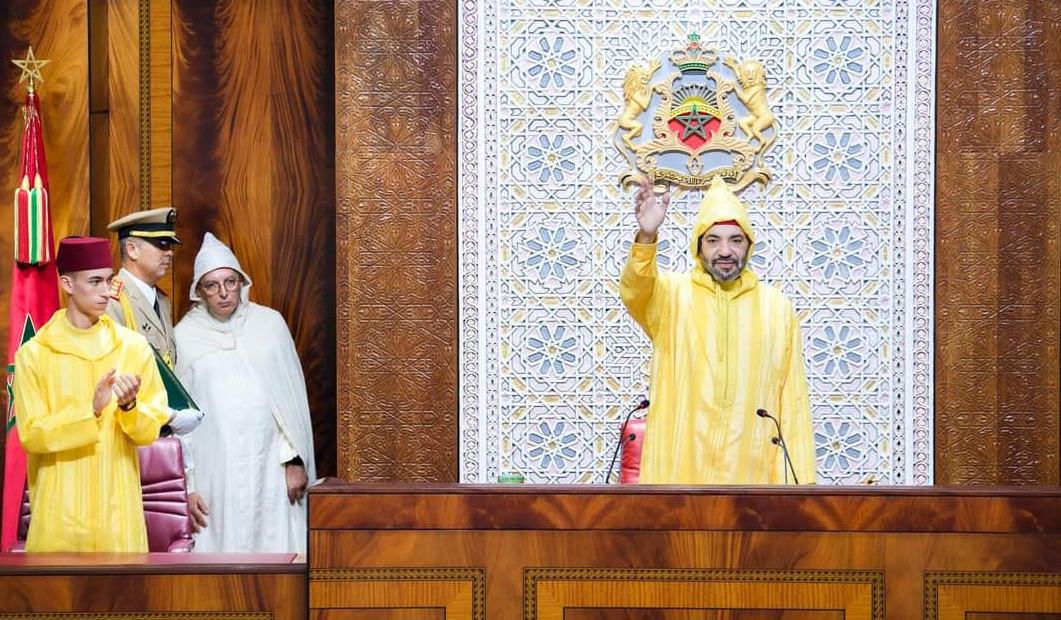
In his speech to the parliamentary session, King Mohammed VI of Morocco emphasized the need for a new approach to migration, stressing that it should be based on reciprocity and common interests. He highlighted that the partnership with Spain is a "sovereign choice and voluntary commitment" that should not be subject to pressure, threats, or blackmail. This approach aims to promote a more balanced relationship with European partners.
The King's speech comes amid the migration crisis at Sebta, which has shown how migration can be instrumentalized in European political and electoral debates. The crisis has also raised questions about the balance of partnership between Morocco and its European neighbors. The King qualified the partnership with Spain as a voluntary commitment that should not be reduced to externalizing European border control or making Morocco a simple barrier against irregular arrivals.
The King's speech also addressed the challenges faced in cooperation against irregular migration, particularly with regard to certain legal provisions and judicial decisions that complicate deportation procedures, especially for minors or asylum seekers. The speech announced a new strategic vision for Morocco's partners, which could open the way to a new stage of migratory cooperation. These issues are at the intersection of bilateral commitments, national legislation, and individual rights guarantees.
The announced document presenting a "clear and operational strategic vision" is a key element of the King's speech. This approach aims to inscribe cooperation in a broader perspective, associating shared development, economic competitiveness, and regional stability. The challenge is to go beyond the punctual management of crises to address the economic, social, and political factors that influence migratory movements.
Morocco is no longer just a transit country to Europe; it has also become a host and installation country for migrants, particularly from sub-Saharan Africa. The regularization operations carried out in recent years, which have benefited tens of thousands of people, testify to this evolution. This reality calls for an integrated migration policy, associating entry and stay management, integration, protection of rights, and cooperation with African and European countries.
European policies are confronted with a persistent contradiction: several economies need labor, while anti-immigration discourse occupies a growing place in political debates. The demographic aging and labor shortages in certain sectors lead governments to consider regularization or adapt their migration policies. However, part of the public debate continues to present immigration mainly in terms of risks and difficulties.
The reflection engaged by the Kingdom also responds to its own economic and demographic perspectives. The major development projects and the expansion of several sectors could increase the needs for skills and labor, while demographic changes require anticipating labor market transformations. In this context, migration policy can become an economic and social planning tool, rather than a simple response to European expectations.
Key points
- The King calls for a new approach to migration based on reciprocity and common interests.
- Morocco is no longer just a transit country to Europe but also a host and installation country for migrants.
- The new strategic vision aims to inscribe cooperation in a broader perspective, associating shared development, economic competitiveness, and regional stability.