Moroccan writer Bouchayeb Hamraoui has issued a scathing critique of the country's institutions, questioning their role in shaping the nation's future. In a recent article, Hamraoui argued that Morocco's institutions have lost sight of their primary purpose: to build a strong, cohesive society. He contends that the proliferation of institutions has not necessarily led to improved outcomes, as the focus has shifted from the human element to mere structures and formalities.
Hamraoui's criticism extends to various sectors, including education, where he argues that schools have become mere diploma factories rather than institutions that foster critical thinking, responsibility, and patriotism. He also questions the role of mosques, which he believes should serve as spiritual and educational centers that promote values such as honesty, tolerance, and justice. Furthermore, Hamraoui criticizes the prison system, which he claims often fails to rehabilitate inmates, and sports stadiums, which can become breeding grounds for violence and hatred.
The writer also explores the relationship between citizens and corruption, suggesting that Moroccans often contribute to the problem through their actions. When citizens bribe officials, cheat on taxes, or engage in other corrupt practices, they undermine the rule of law and perpetuate a culture of corruption. Hamraoui emphasizes that the responsibility for change lies not only with those in power but also with citizens, who must demand higher standards from themselves and their leaders.
Hamraoui's call for reform extends to the realms of politics, civil society, and culture. He argues that political parties, unions, and associations have become mired in self-interest and personal agendas, losing sight of their role in serving the public good. The writer also criticizes the cultural sector, which he believes has become overly commercialized and disconnected from the needs and aspirations of Moroccan society.
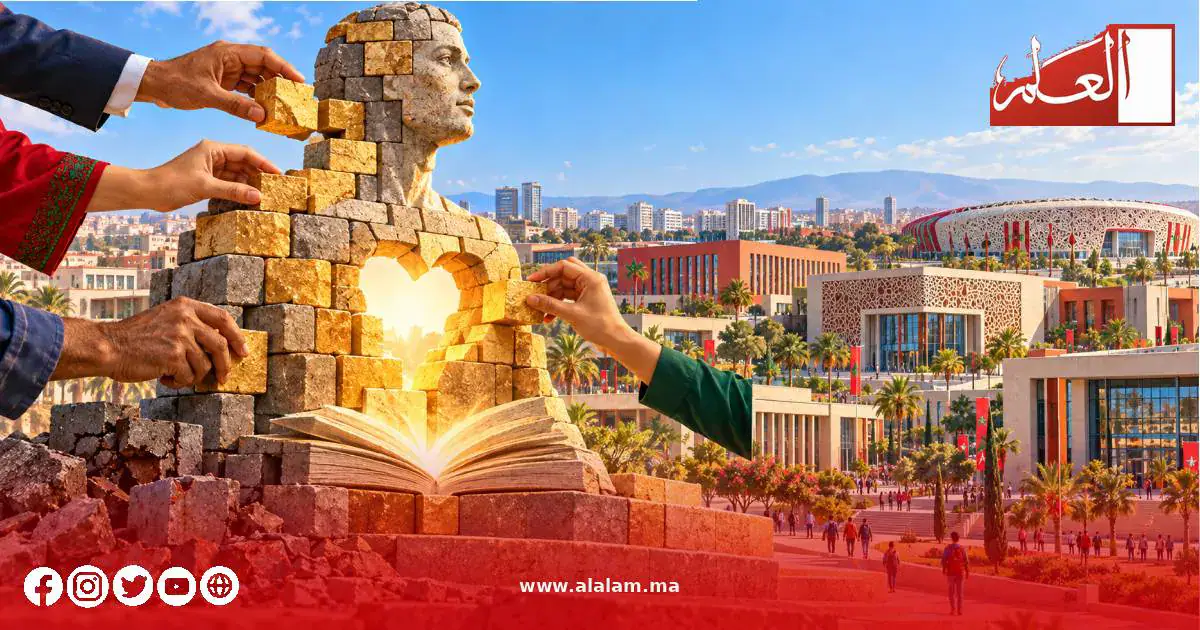
A key aspect of Hamraoui's argument is the need for a renewed focus on the human element in institution-building. He contends that institutions should be designed to serve the needs of citizens, rather than the other way around. This requires a fundamental shift in the way institutions operate, with a greater emphasis on transparency, accountability, and citizen participation.
Ultimately, Hamraoui's critique is a call to action, urging Moroccans to re-examine their values and priorities. He argues that the country's future depends on its ability to build strong, effective institutions that serve the needs of all citizens. By working together to address these challenges, Moroccans can create a brighter future for themselves and future generations.
To achieve this, Moroccans must prioritize the development of institutions that promote values such as integrity, justice, and equality. This will require a sustained effort to reform the education system, promote transparency and accountability in government, and foster a culture of civic engagement and participation.
Key points
- Moroccan writer Bouchayeb Hamraoui is calling for a re-evaluation of the country's institutions.
- Hamraoui argues that institutions have lost sight of their primary purpose: to build a strong, cohesive society.
- The writer emphasizes the need for a renewed focus on the human element in institution-building.