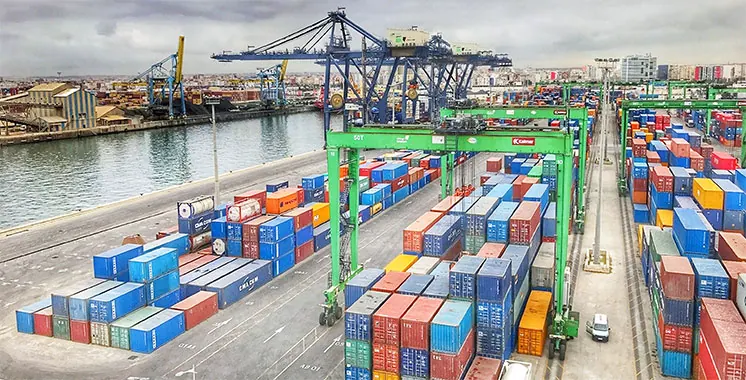
Morocco's import and export unit values have shown significant growth in the second quarter of 2026. According to the Haut-Commissariat au Plan (HCP), the import unit value index rose by 10%, while the export unit value index increased by 10.9%. This growth is attributed to various factors, including the rise in global commodity prices.
The HCP reported that the import unit value index was primarily driven by the increase in unit values of "energy and lubricants" by 53.1%, "mineral raw materials" by 97%, "semi-finished products" by 4.6%, "industrial equipment finished products" by 1.2%, "consumer finished products" by 0.8%, and "animal and vegetable raw materials" by 4.1%.
However, the import unit value index declined in certain sectors, including "food, beverages, and tobacco" by 0.6% and "agricultural equipment finished products" by 3.3%. This decline helped mitigate the overall increase in the import index. The HCP noted that these fluctuations are reflective of changes in global market trends.
The export unit value index also showed significant growth, driven by increases in unit values of "semi-finished products" by 23.4%, "food, beverages, and tobacco" by 16.2%, "industrial equipment finished products" by 5%, and "consumer finished products" by 3.6%. Additionally, the unit values of "energy and lubricants" rose by 44.5%, "mineral raw materials" by 7.6%, and "agricultural equipment finished products" by 14.4%.
The growth in import and export unit values is a positive indicator for Morocco's economy, suggesting increased trade activity and potential revenue growth. However, the fluctuations in unit values across different sectors highlight the complexities of global trade and the need for careful analysis.
The HCP's report provides valuable insights into Morocco's trade performance, highlighting areas of growth and decline. The data is expected to inform policy decisions and support businesses in making informed decisions about investments and trade strategies.
The Moroccan economy has been working to diversify its trade relationships and increase its global competitiveness. The growth in import and export unit values is a positive step towards achieving these goals, but challenges remain in navigating the complex global trade landscape.
Key points
- Morocco's import unit value index rose by 10% in Q2 2026, driven by increases in "energy and lubricants" and "mineral raw materials".
- The export unit value index increased by 10.9% in Q2 2026, driven by growth in "semi-finished products" and "food, beverages, and tobacco".
- The growth in import and export unit values suggests increased trade activity and potential revenue growth for Morocco's economy.