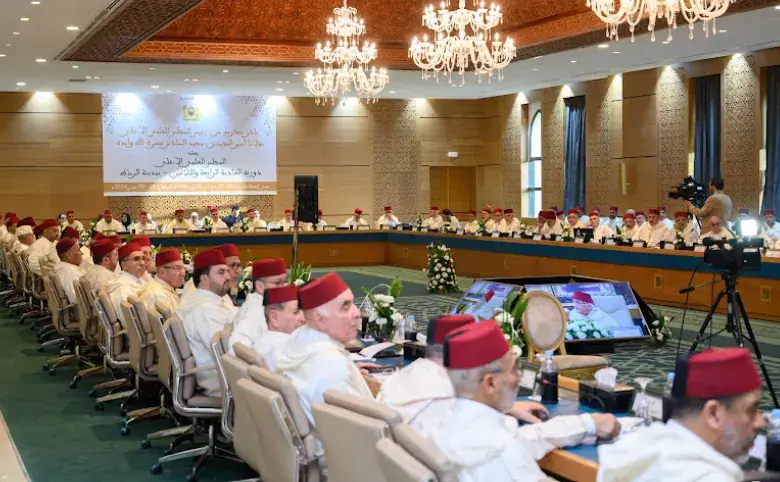
The Higher Religious Council of Morocco, under the leadership of King Mohammed VI, has emphasized the vital role of scholars in preserving the country's religious and territorial unity. During its recent autumn session, the council's Secretary-General, Yizid Razi, stressed the importance of scholars in promoting Islamic moderation and combating extremism. He also highlighted their responsibility in educating the public and promoting national unity.
The council's session coincided with Morocco's celebration of its Unity Day, the Green March, and Independence Day, underscoring the significance of these events in promoting national unity. Razi emphasized that scholars have a crucial role in promoting the country's values and defending its just causes. He also praised the council's efforts in promoting a moderate and tolerant form of Islam.
The council has implemented several initiatives aimed at promoting Islamic education and combating extremism. One of these initiatives is the "Tasdid al-Tabligh" plan, which aims to promote a moderate and tolerant form of Islam. The plan includes training programs for scholars and imams, as well as educational materials for schools and mosques.
The council's efforts have been praised by Minister of Awqaf and Islamic Affairs, Ahmed Toufiq, who emphasized the importance of adhering to the legal and regulatory frameworks governing the construction and management of mosques. He also highlighted the need for mosques to be built and managed in accordance with Moroccan architectural and cultural traditions.
The "Tasdid al-Tabligh" plan is expected to be expanded to cover 30,000 mosques by 2027, up from 636 mosques this year. The plan aims to promote a moderate and tolerant form of Islam and to combat extremism and terrorism. It also includes initiatives to promote interfaith dialogue and understanding.
The council's efforts are part of a broader strategy to promote national unity and combat extremism. The strategy includes initiatives to promote education, employment, and social cohesion. It also includes efforts to promote Morocco's cultural and religious heritage.
The Higher Religious Council's emphasis on the role of scholars in preserving national unity reflects the country's commitment to promoting a moderate and tolerant form of Islam. The council's efforts have been praised by Moroccan citizens and international observers, who see them as an important step towards promoting peace and stability in the region.
Key points
- The Higher Religious Council of Morocco emphasizes scholars' role in preserving national unity.
- The council implements initiatives to promote Islamic education and combat extremism.
- The "Tasdid al-Tabligh" plan aims to promote a moderate and tolerant form of Islam.
Reporting sources
- المجلس العلمي الأعلى يؤكد دور العلماء في صيانة الوحدة الدينية والترابية للمملكة · Al Ahdath Al Maghribia