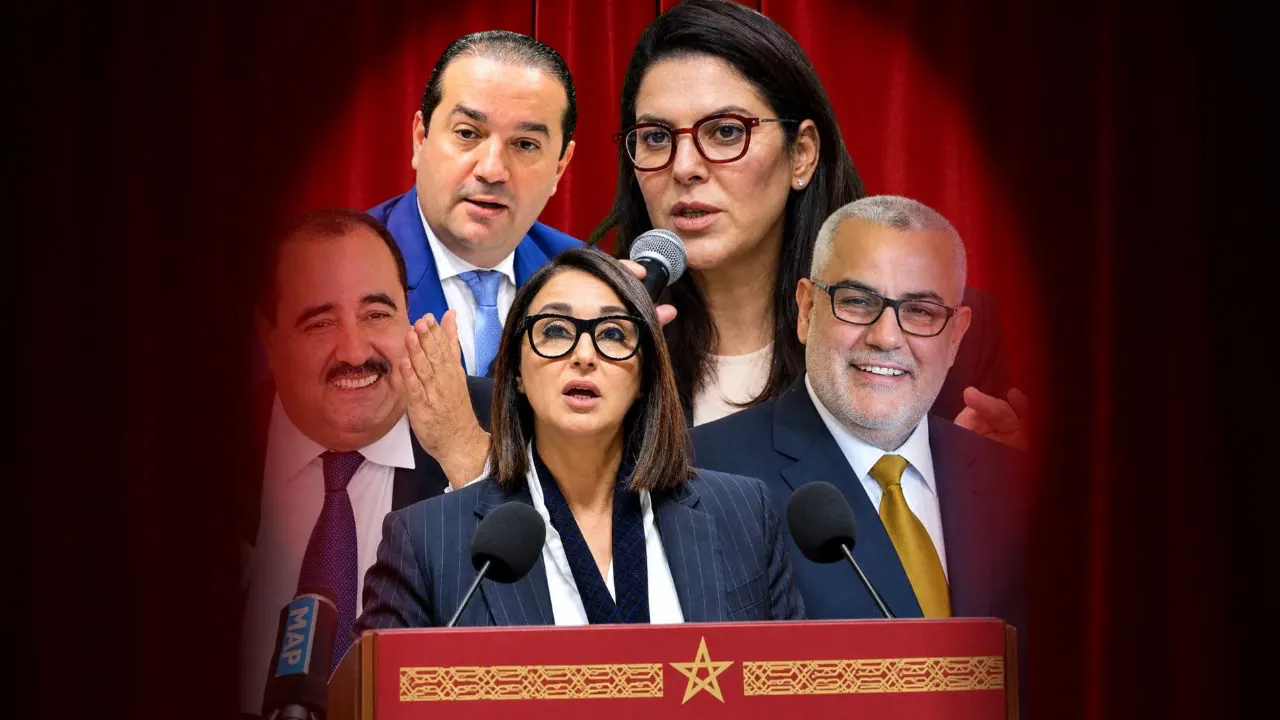
Morocco's government formation talks have taken a complex turn, with internal party tensions and power struggles emerging as significant challenges. The talks, led by appointed Prime Minister Fatima Zahra El Mansouri, aim to form a stable government following the recent elections. However, behind-the-scenes, parties are grappling with internal conflicts, and leaders are vying for influence.
The National Rally of Independents (RNI), a key party in the negotiations, has been plagued by internal tensions. According to sources, the party's leadership meeting was marked by heated discussions and a ban on mobile phones to prevent leaks. The tensions were palpable, with some leaders displaying visible signs of anxiety and frustration. This internal strife has raised concerns about the party's ability to play a cohesive role in the government formation talks.
The tensions within the RNI have also led to the suspension of Kamal Sabri's membership, following his demands for accountability from the party leadership. Additionally, a confrontation between Mohamed Saad Brada and Mohamed Chouki further highlighted the internal divisions. These incidents have cast doubt on the party's ability to present a united front in the government formation talks.
The tensions have not been limited to internal party conflicts, as disagreements have also emerged between parties. A meeting between El Mansouri and Idris Lachkar, the first secretary of the Socialist Union, was marked by a heated exchange between Abdel Latif Wahbi and Lachkar. The incident has raised concerns about the potential exclusion of the Socialist Union from the government.
Despite these challenges, the government formation talks are ongoing, with El Mansouri meeting with leaders of various parties represented in parliament. The talks are expected to follow a three-stage process, focusing on participation, government structure, and program, before finalizing the cabinet composition. The parties involved are navigating complex calculations, balancing their interests and agendas.
The parties' choices and the distribution of ministerial portfolios will be crucial in determining the government's composition and effectiveness. Analysts note that the talks will enter a more delicate phase, where the relationship between parliamentary strength and government representation will be a key factor. The outcome will depend on the parties' ability to find common ground and form a stable coalition.
The stakes are high, as the government formation talks have significant implications for Morocco's future. A stable government is essential for addressing the country's challenges and implementing its development plans. The talks' success will depend on the parties' willingness to compromise and prioritize the country's interests.
Key points
- Internal party tensions and power struggles are hindering Morocco's government formation talks.
- The National Rally of Independents is grappling with internal conflicts, which may impact its role in the government.
- The talks' outcome will depend on the parties' ability to form a stable coalition and prioritize the country's interests.