Morocco's national futsal team has achieved remarkable success, rising to sixth place in the FIFA world rankings and ahead of all African rivals. The team's journey began in 1995 with a 4-1 loss to Belarus in their first international match. For over a decade, they struggled to qualify for major tournaments, often overshadowed by Egypt, the dominant force in African futsal at the time. However, with the appointment of Hicham Dguig as coach in 2010, the team's fortunes began to change.
Dguig's 16-year tenure as coach has been a key factor in the team's success, allowing him to build a cohesive unit with a distinct playing style. He has instilled a culture of collective mastery, rotation of player blocks, high and aggressive defense, and effective use of the goalkeeper-player in the final minutes of matches. This approach has enabled the team to develop a strong identity and pass on knowledge and automatisms from one generation to the next.
Institutional support has also played a vital role in the team's success. The election of Fouzi Lekjaa as president of the Royal Moroccan Football Federation (FRMF) in 2014 marked a significant turning point, with increased investment in all national teams, including futsal. The team now benefits from better preparation conditions, regular training camps, and a busy schedule of friendly matches against top European and South American teams.
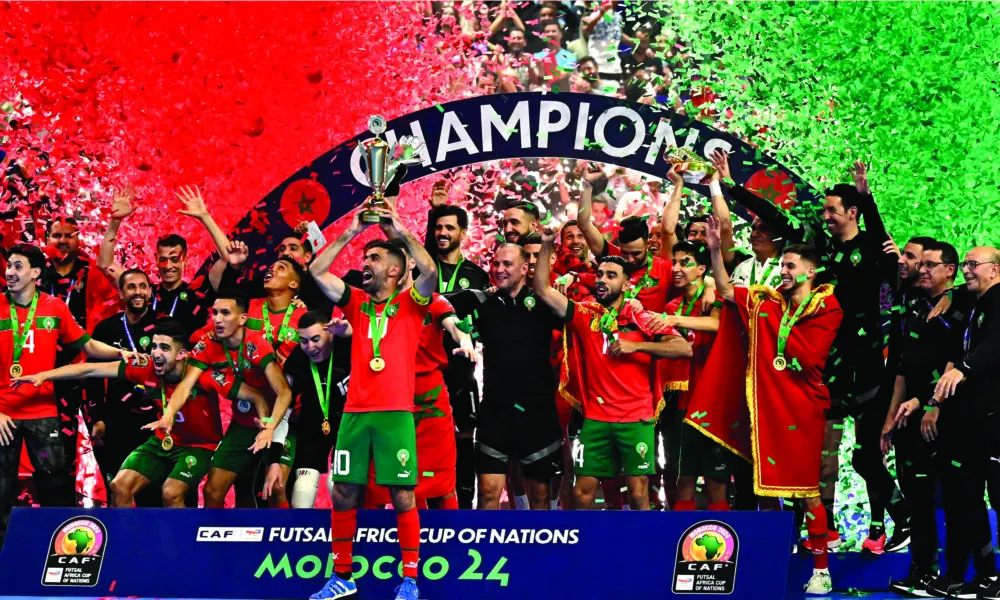
Morocco's dominance in African futsal has been underlined by their three consecutive Africa Cup of Nations titles in 2016, 2020, and 2024. The team has also excelled in the Arab Cup, winning three consecutive titles in 2021, 2022, and 2023. Their performances in the World Cup have also earned them recognition, reaching the quarterfinals in 2021 and 2024, where they were eventually eliminated by Brazil, the world's top team.
The current team has been led by a talented generation of players, including captain Soufiane El Mesrar, goalkeeper Reda Khiyari, and skilled players who have made a name for themselves in European leagues. The team's success has also been built on a strong connection with the Moroccan diaspora, with many players born or trained in Europe joining the team and bringing a different tactical culture.
As the team looks to the future, the focus is on renewal and maintaining their position at the top. Coach Dguig has begun to introduce younger players and new talents from Europe, ensuring a smooth transition and avoiding the generational dip that often affects successful teams. The team's immediate goal is to retain their African title, which they will defend in the 2026 CAN.
To sustain their success, Morocco must address the challenge of developing a more competitive domestic league, increasing their exposure to top international teams, and exporting more players to European leagues. With a strong foundation in place, the Moroccan futsal team is poised to continue its upward trajectory and become a major force in international competition.
Key points
- Morocco's futsal team has risen to sixth place in the FIFA world rankings.
- The team has won three consecutive Africa Cup of Nations titles.
- Coach Hicham Dguig has been in charge for 16 years, providing stability and continuity.