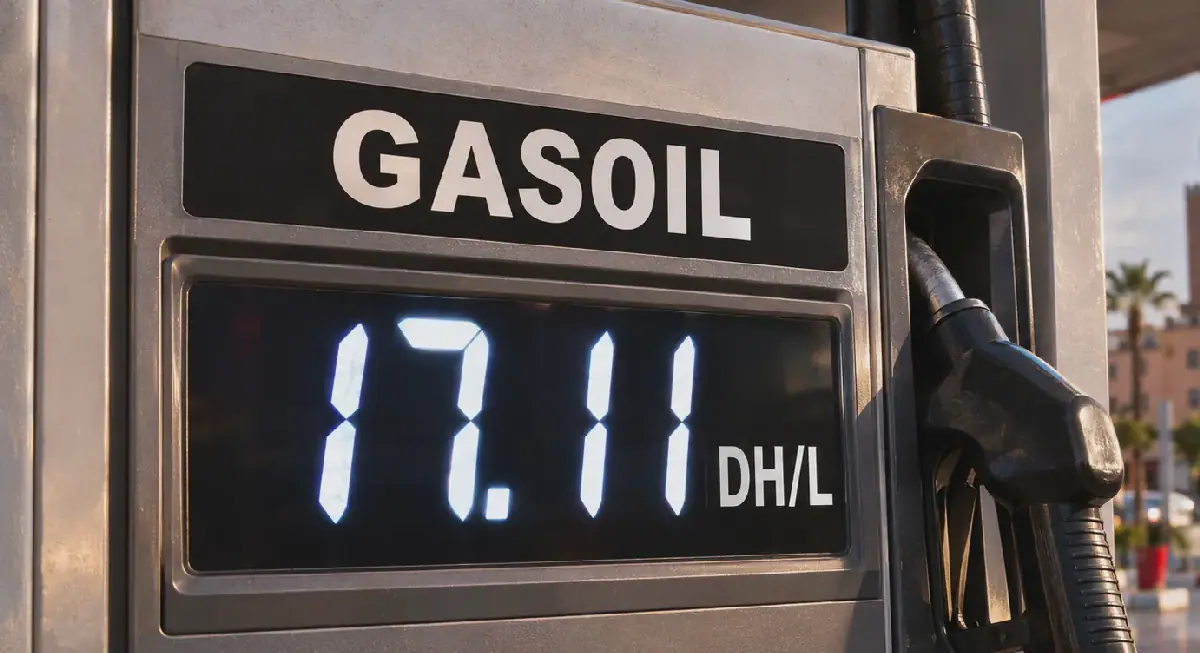
Morocco's Minister of Energy, Mines, and Sustainable Development, Charafat Afilal, recently presented the sectoral budget before the Infrastructure Committee of the House of Representatives. During the presentation, Afilal stated that the country has 77 days of gasoil reserves. The total storage capacity stands at over 3 million cubic meters, with 2.4 million cubic meters for liquid products connected to 90% of ports, and 805,000 cubic meters for gaseous products linked to 91% of ports.
The current fuel reserves in Morocco cover 94 days for super gasoline, 87 days for fuel, 77 days for gasoil, 61 days for aviation fuel, and 58 days for butane gas. Butane gas is the only product below the 60-day reference threshold. Afilal announced plans to increase storage capacity by over 1.7 million cubic meters between 2026 and 2030, with more than 700,000 cubic meters to be added by the end of 2027.
Since 2009, Morocco has seen significant growth in its liquid product storage capacity, which has increased by 129%, and butane gas capacity, which has risen by 127%. To ensure efficient management of fuel reserves, a vigilance system will be established, complete with dashboards and enhanced coordination between operators, ports, and administrations.
The composition, missions, frequency of meetings, and alert thresholds for the vigilance system remain to be defined. Additionally, an emergency plan for managing supply crises will be developed to address potential disruptions in fuel supplies. The plan will focus on enhancing preparedness and response mechanisms.
Morocco's gas sector plan consists of three main components, including port facilities at Nador West Med with a quay, mooring structures, and dredging. The plan also involves a floating unit for receiving, storing, and regasifying liquefied natural gas, as well as two gas pipeline connections. One connection will link Nador West Med to the Maghreb-Europe gas pipeline, and the other will connect the pipeline to industrial zones in Kenitra and Mohammedia.
Although the investment amounts for the gas sector plan have not been disclosed, the situation with butane gas reserves, which are below the threshold, warrants attention. Butane gas remains the primary item on the compensation charge, which is set at 19.4 billion dirhams in the finance bill. The government will need to monitor this situation closely to ensure energy security.
The Ministry of Energy, Mines, and Sustainable Development will oversee the implementation of these plans, ensuring that Morocco's energy infrastructure is enhanced to meet the country's growing demands. With these developments, Morocco aims to strengthen its energy security and improve its ability to manage fuel supplies effectively.
Key points
- Morocco has 77 days of gasoil reserves, with total storage capacity exceeding 3 million cubic meters.
Reporting sources
- 77 jours de réserves de gasoil selon la ministre · La Nouvelle Tribune