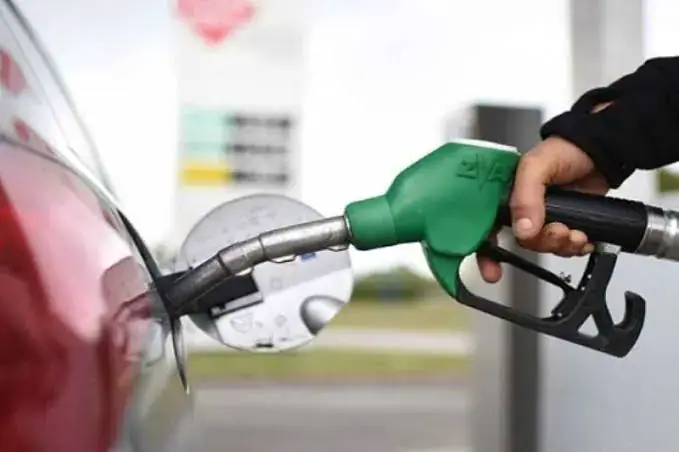
Morocco has witnessed a notable increase in fuel prices, with the cost of diesel rising by nearly one dirham per liter in November 2026, surpassing 17 dirhams in many fuel stations. This follows previous hikes in October, and has led to widespread criticism and discontent towards the government of Fatima Zahra Mansouri. The increases have been calculated in dirhams, while subsequent reductions are announced in smaller units, leading to accusations of inadequate relief for citizens.
The government's announcement of minor reductions in fuel prices, amounting to 20 cents per liter of diesel and 50 cents for gasoline, has been met with skepticism. Critics argue that these reductions are insufficient compared to the scale of previous increases, and have described them as "unfair" and "laughable." The disparity between the amounts taken in dirhams and returned in centimes has raised concerns about the government's approach to managing fuel prices and its impact on citizens' purchasing power.
The issue has shifted from a technical economic debate to a social and political one, testing the government's credibility in addressing inflation. In response to public pressure and rising costs, the Mansouri government has established an inter-ministerial committee to monitor price fluctuations and protect purchasing power. However, this move has not alleviated concerns, with many seeing it as an inadequate response to the crisis.
The required solution is not more rhetoric, but concrete actions that rebalance the market controlled by distribution companies, leaving consumers facing prices that rise rapidly and fall slowly. The Minister of Economy and Finance, Fouzi Lekjaa, has defended the measures taken, citing a decline in international market prices. However, this justification has not resonated with Moroccan citizens, who see the daily impact of fuel price hikes on their budgets.
The most concerning aspect of this situation is not only the scale of the increases but also the logic governing them. Whenever international market prices rise, fuel distribution companies quickly raise their prices in dirhams, but when prices fall, they are slow to pass on the reductions. If they do, it is in minimal amounts that do not significantly affect household budgets, highlighting a stark contradiction between increases in dirhams and reductions in centimes.
Various unions, political parties, and economic entities, such as the National Front for the Salvation of the Moroccan Petroleum Refinery, have called for the cancellation of the decision to liberalize fuel prices and cap profits. They argue that the market no longer operates under fair competition but is driven by corporate profit at the expense of consumers. The government risks underestimating the memory of Moroccans if it thinks it can placate public anger with unrealistic reductions and formal committees.
The discrepancy between the government's actions and the public's experience has led to widespread discontent. Moroccans, who pay the daily price of these policies, will not forget that what is taken in dirhams cannot be returned in centimes and expect gratitude. Unrealistic reductions are not merely technical errors in price calculations but a political message that the government either does not understand the suffering of its people or chooses to ignore it.
Key points
- The fuel price hikes have sparked criticism of the government's handling of the issue.
- The government's response has been seen as inadequate by many citizens.
- Various entities have called for the cancellation of the decision to liberalize fuel prices and cap profits.