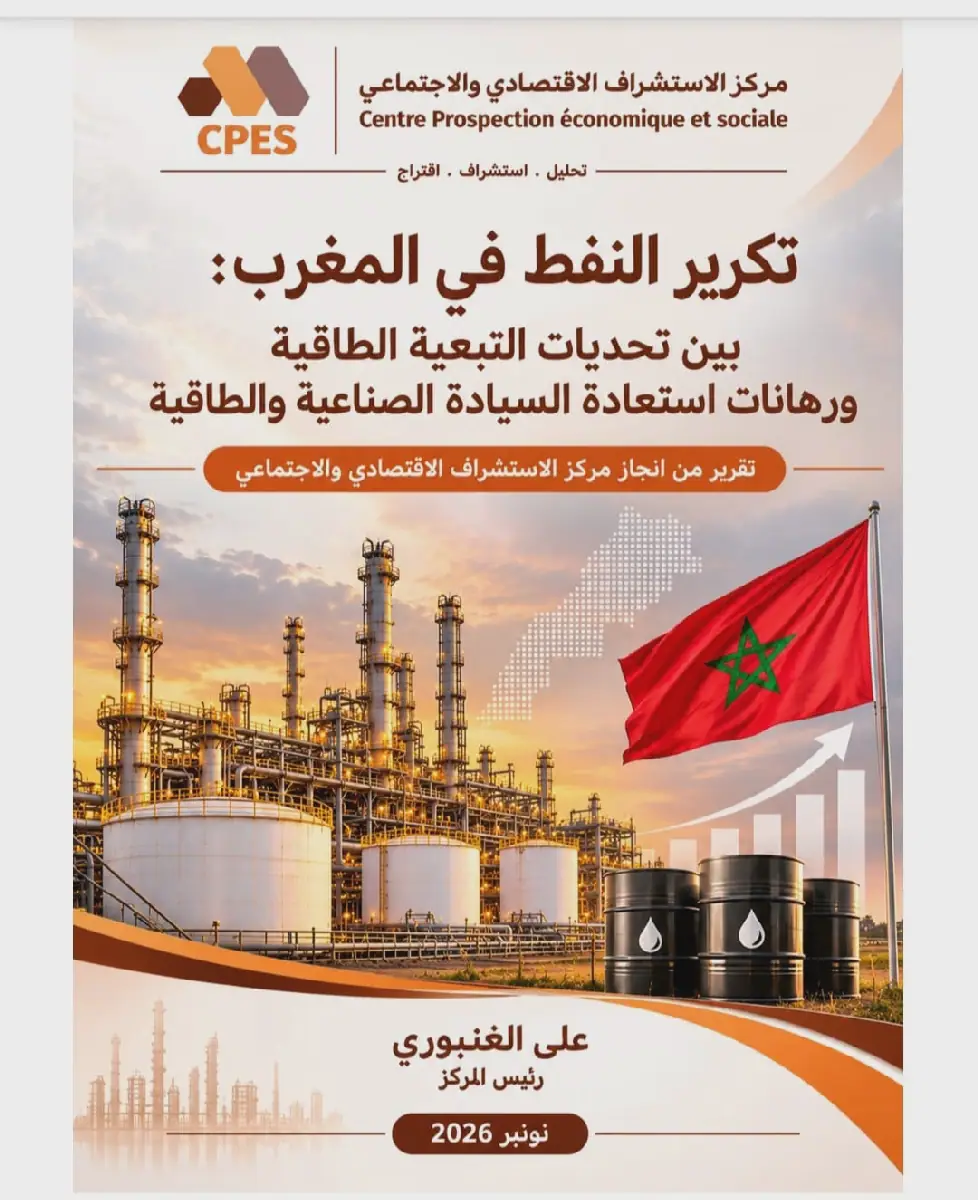
Morocco's dependence on imported refined petroleum products continues to be a pressing concern, with the country relying almost entirely on imports to meet its needs. In 2025, the country's consumption reached 12.867 million tons, with diesel fuel accounting for the largest share at approximately 52% of the total. The report highlights that the government's decision to halt the operation of the Samir refinery in Mohammedia has contributed to this reliance.
The report, prepared by the Economic and Social Observatory, notes that Morocco's energy bill stood at around 107.56 billion dirhams in 2025, down 5.5% from the previous year. However, this decrease is not reflective of a reduction in external dependence, as the quantities of imported diesel fuel and oil increased by 5.6%. The report warns that this dependence exposes the economy to external risks, including fluctuations in crude oil prices and the cost of refined products.
To mitigate this risk, the report proposes three scenarios. The first involves rehabilitating the Samir refinery, which would require a significant investment of between 300 and 350 million dollars. The second scenario involves building a new refinery with a capacity of between 100,000 and 150,000 barrels per day, with estimated costs ranging from 3 billion to 6 billion dollars. The third scenario involves continuing to import refined products while strengthening strategic storage and regulating the market.
The report also highlights the importance of developing storage capacity, with the current capacity standing at over 3.2 million cubic meters, including 2.4 million cubic meters for liquid products and 805,000 cubic meters for gaseous products. The government has announced plans to add over 1.7 million cubic meters of storage capacity by 2030. However, the report notes that the actual stock levels are not publicly disclosed, and it is essential to publish regular and accurate data on stored quantities.
The Minister of Energy Transition and Sustainable Development, Shafaqat Afilal, has stated that the file on the Samir refinery is complex and multifaceted, requiring a thorough scientific study before any decision can be made on its future. The refinery, which had a design capacity of 200,000 barrels per day, has been inactive since 2015 due to financial difficulties.
The report emphasizes that energy sovereignty does not necessarily mean complete self-sufficiency but rather the ability to make choices, negotiate, and proactively manage risks. It recommends launching a national assessment to study the feasibility of reviving the Samir refinery or building a new one, taking into account technical, financial, legal, and environmental factors.
The country's energy landscape is expected to evolve in the coming years, with a focus on renewable energy, energy efficiency, and electric transportation. The report suggests that these developments should be taken into account when assessing the future of the refining sector in Morocco.
Key points
- The report proposes three scenarios to address Morocco's fuel dependency, including rehabilitating the Samir refinery, building a new refinery, and continuing to import refined products while strengthening strategic storage.