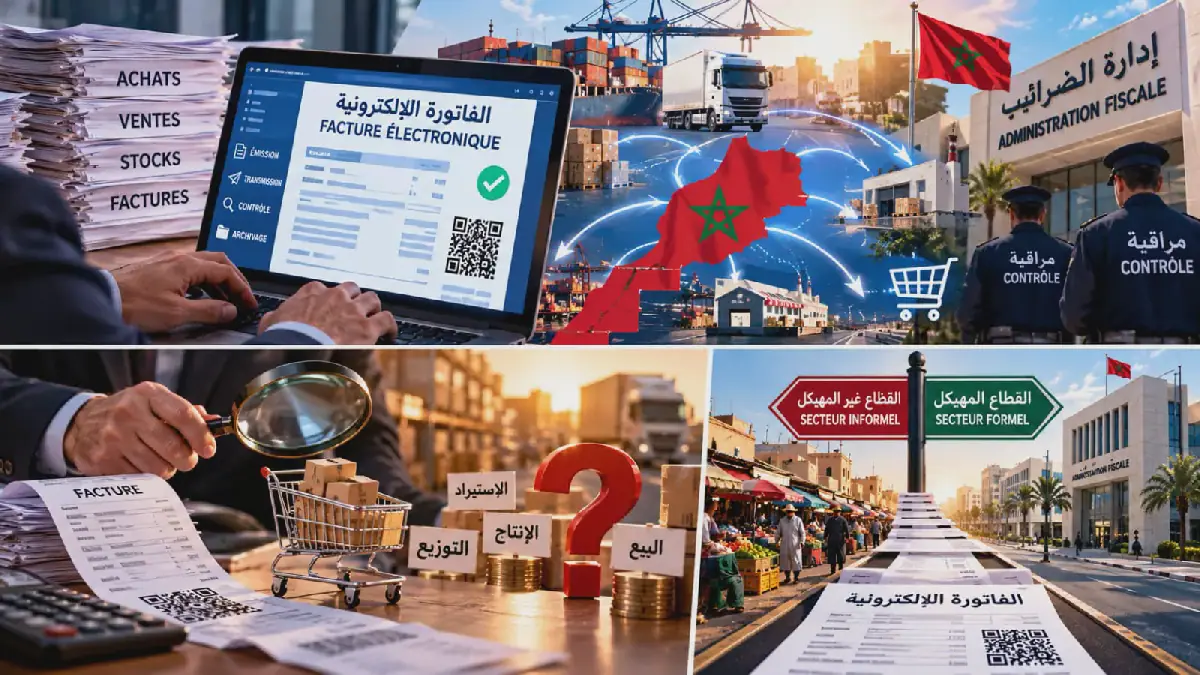
Morocco's tax administration is moving towards adopting electronic invoicing as a modern tool to improve tax control, enhance transparency in commercial transactions, and reduce tax evasion. This move is part of the digital transformation in the country's administration and economy. However, it raises questions about tax fairness and the system's ability to reach various economic actors without becoming an additional burden on structured businesses and traders.
The experience of France in implementing electronic invoicing provides a valuable lesson for Morocco. France's transition was not just a technical decision to replace paper invoices with digital ones but required legislative and regulatory preparation, as well as the development of platforms and mechanisms for electronic exchange. The French experience highlights the importance of providing suitable technical infrastructure, clarifying responsibilities, and ensuring interoperability between systems.
One of the main challenges in implementing electronic invoicing in Morocco is distinguishing between invoice control and monitoring the economic cycle. Invoice control allows the administration to verify reported transactions, compare sales and purchases, and detect potential discrepancies. However, monitoring the economic cycle requires tracking the movement of goods and services through various stages, from production or import to distribution and sales.
Morocco's experience with the tax marking system, which is used for manufactured tobacco products, alcoholic and non-alcoholic beverages, can be drawn upon in this context. This system, supervised by the customs and indirect tax administration, uses secure labels and unique tracking codes to monitor production, import, and verify product authenticity. It also helps regulate the number of units and quantities on the market.
The Pareto principle, or the 80/20 rule, can be applied to focus regulatory efforts on limited points with a wide impact. Controlling production, import, and the initial destination of goods can help monitor a significant part of the commercial and tax cycle. This approach can also help identify imbalances that may start from the first link in the distribution chain.
Large wholesalers pose a specific challenge, as they often struggle to comply with tax regulations and document their transactions. This issue is not solely related to a desire to evade taxes but also stems from the inadequacy of the current legal, regulatory, and tax framework for their activities. A special tax regime for large wholesalers, similar to the simplified system for small traders, could be considered to address this issue.
The implementation of electronic invoicing will require careful consideration of the costs and administrative burdens on small businesses and traders. If not properly managed, the new system could lead to increased costs and complexity for these businesses, potentially driving them to continue operating outside the formal economy.
Key points
- Electronic invoicing can enhance tax control and transparency in Morocco's economy.
- The system must be designed to address the needs of small businesses and traders.
- A special tax regime for large wholesalers could help improve compliance and reduce tax evasion.