The Moroccan Ministry of Digital Transition has announced a partnership with French artificial intelligence firm Mistral AI to develop tools that can understand and process Moroccan Arabic, also known as Darija. The partnership aims to launch open-source tools, including a speech recognition model called "Voxtral", which can comprehend the nuances of Moroccan Arabic. This development is expected to facilitate administrative transactions and digital services for citizens.
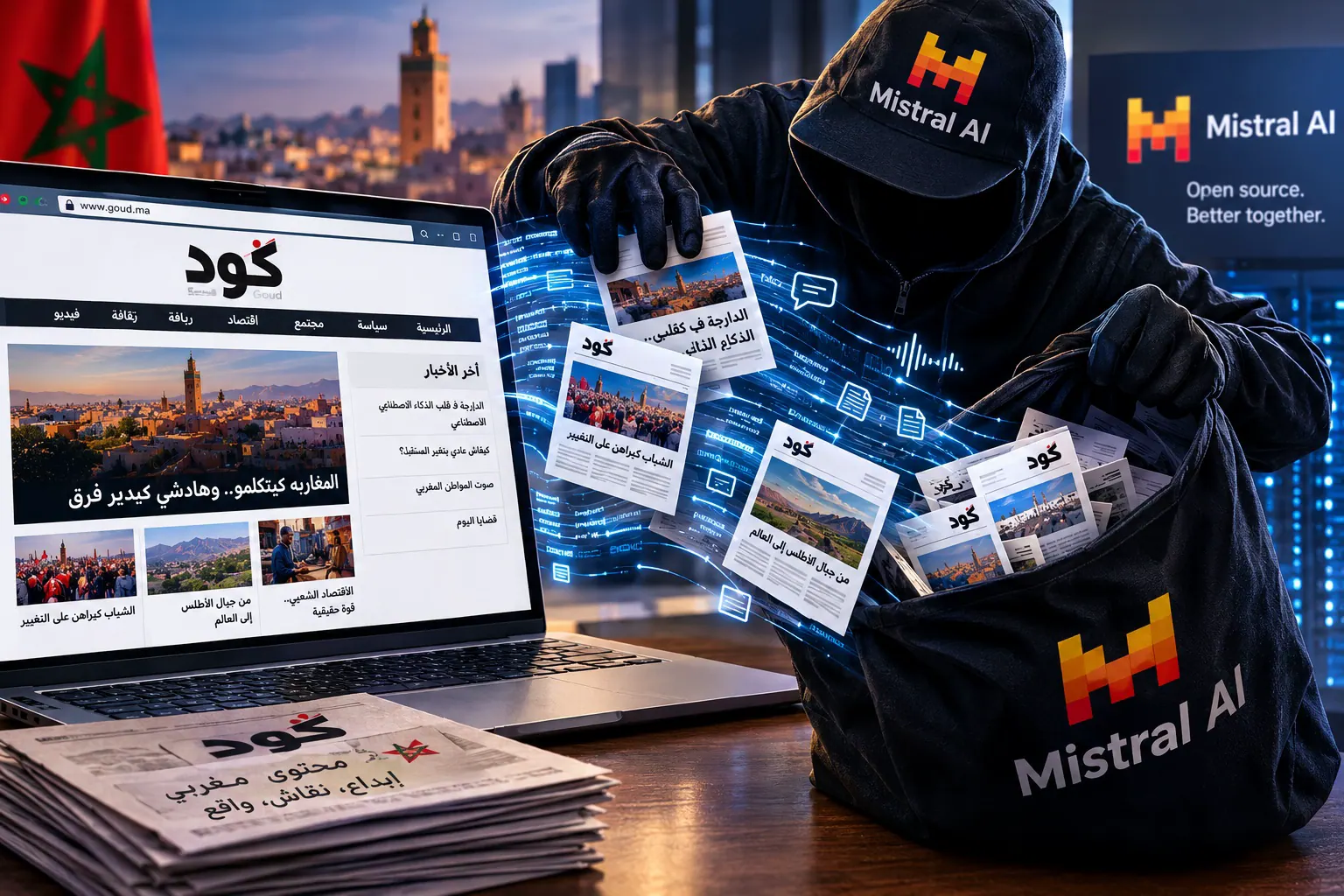
The partnership has sparked mixed reactions, with some questioning the role of Moroccan media outlets in feeding data to foreign AI systems. Moroccan media outlets, including news site Goud, have been generating high-quality content in Darija, which is then used to train AI models. Critics argue that the Ministry's partnership with a French firm may not adequately recognize the contributions of Moroccan media outlets, which have been providing valuable data to train AI models.
The development of AI models that can understand Moroccan Arabic is a significant challenge, requiring large amounts of high-quality data. Moroccan media outlets have been producing vast amounts of content in Darija, including news articles, interviews, and social media posts. This content is essential for training AI models that can comprehend the nuances of the language and culture.
Experts argue that the real challenge in natural language processing is not just translating text, but also understanding the cultural and social context in which it is written. AI models that can comprehend Moroccan Arabic require a deep understanding of the country's culture, customs, and way of life. This requires a significant amount of data, which must be collected, processed, and annotated to train AI models.
The partnership between the Ministry of Digital Transition and Mistral AI has raised questions about the ownership and control of data used to train AI models. Critics argue that the Ministry should prioritize partnerships with Moroccan media outlets and research institutions to develop AI models that are tailored to the country's specific needs. This would enable Morocco to maintain control over its data and ensure that AI models are developed in a way that benefits the country.
Moroccan researchers have already developed AI models that can understand Moroccan Arabic, including the "Atlas-Chat" model, which was developed using local resources. This model has achieved impressive results in AI tests, demonstrating that Moroccan researchers can develop AI models that are tailored to the country's specific needs.
The development of AI models that can understand Moroccan Arabic is an important step towards achieving digital sovereignty. However, experts argue that this requires a more comprehensive approach that involves the participation of all stakeholders, including Moroccan media outlets, research institutions, and the private sector. This would enable Morocco to develop AI models that are tailored to its specific needs and ensure that the country maintains control over its data.
Key points
- Moroccan media outlets have been providing valuable data to train AI models that can understand Moroccan Arabic.
- The partnership between the Ministry of Digital Transition and Mistral AI has raised questions about the ownership and control of data used to train AI models.
- Moroccan researchers have already developed AI models that can understand Moroccan Arabic, including the "Atlas-Chat" model.