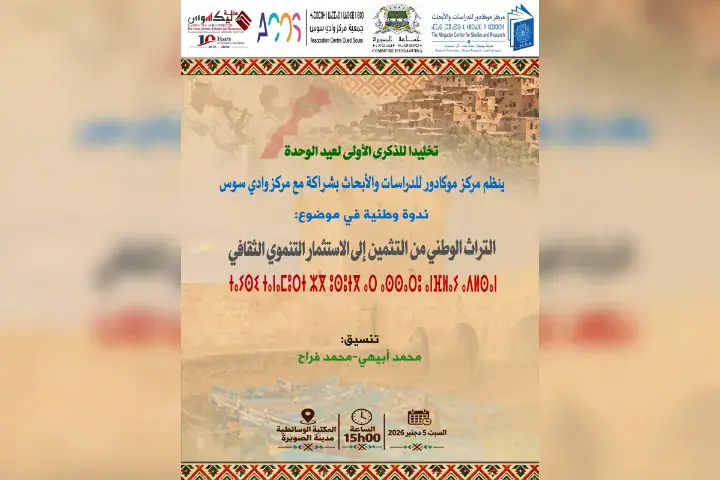
A national symposium on "National Heritage: From Valuation to Sustainable Cultural Development Investment" was recently held in Safi, Morocco. Organized by the Moukadour Studies and Research Center in partnership with the Oued Souss Center, the event brought together experts to discuss the future of investing in Morocco's cultural heritage. The symposium highlighted the importance of preserving the country's historical and cultural identity while exploring opportunities for local development through cultural tourism and traditional industries.
Morocco's national heritage encompasses a rich historical and cultural legacy, reflecting the country's diverse identity and regional specificities. The preservation of this heritage not only involves safeguarding memories and cultural legacy but also offers opportunities for local development. The symposium emphasized the need for a balanced approach that combines protection and documentation requirements with sustainable investment conditions. This approach aims to preserve cultural specificities and involve local stakeholders in managing heritage-related projects.
The symposium focused on several key areas, including the challenges and opportunities of protecting and valuing national heritage, the role of cultural tourism and traditional industries in local development, and the importance of scientific research, archiving, and digitization in preserving heritage. Experts also examined the experiences of local stakeholders in managing heritage projects and evaluating their cultural and economic impact.
The event took place on December 5, 2026, at the Safi Media Library, and was attended by various stakeholders, including researchers, policymakers, and local community representatives. The symposium provided a platform for participants to share their expertise and experiences, with the aim of promoting sustainable cultural development and investment in Morocco's national heritage.
The importance of cultural heritage in Morocco cannot be overstated. It is a vital component of the country's identity and plays a significant role in promoting cultural diversity and local development. The symposium highlighted the need for a collaborative approach to preserving and investing in cultural heritage, involving government institutions, local communities, and private sector stakeholders.
The discussions at the symposium underscored the potential of cultural heritage to drive economic growth and promote social inclusion. By investing in cultural heritage, Morocco can create new opportunities for local communities, promote cultural tourism, and preserve its rich cultural legacy for future generations.
The outcome of the symposium is expected to contribute to the development of policies and strategies for sustainable cultural development and investment in Morocco's national heritage. The event has sparked a renewed interest in the importance of cultural heritage and its role in promoting local development and cultural diversity.
Key points
- The symposium highlighted the need for a balanced approach to preserving and investing in cultural heritage, combining protection and documentation requirements with sustainable investment conditions.