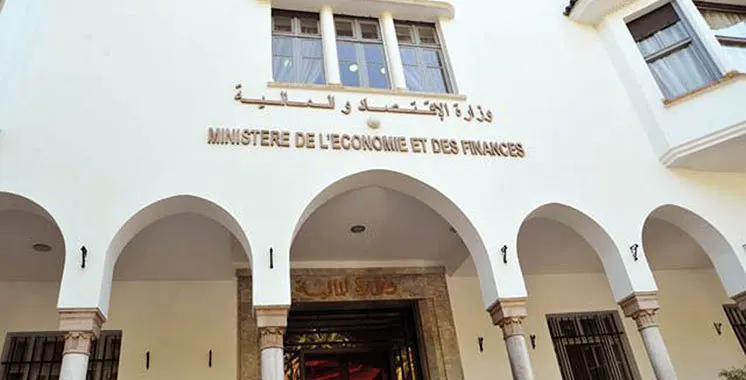
Morocco's budget deficit has decreased to 58.6 billion dirhams (MMDH) by the end of August 2026, compared to 59.5 MMDH during the same period last year, according to the Ministry of Economy and Finance. This improvement reflects a significant increase in revenues, surpassing the growth in expenditures, coupled with a notable enhancement in the balance of special treasury accounts.
The country's revenues, net of refunds, deductions, and fiscal restitutions, reached nearly 280.4 MMDH, achieving a realization rate of 64.8% compared to the finance law (LF) projections. Specifically, tax revenues, which accounted for 67.5% of the realization rate, amounted to over 247.5 MMDH, marking a 10.3% increase. Refunds, deductions, and fiscal restitutions, including those borne by local authorities, rose by approximately 3.3 MMDH to reach 19.6 MMDH.
Non-tax revenues totaled 29.5 MMDH by the end of August, primarily consisting of payments from public establishments and enterprises, such as 11.7 MMDH from Bank Al-Maghrib, ANCFCC, and OCP, as well as 9.9 MMDH from innovative financing mechanisms. The Ministry of Economy and Finance reported that ordinary expenditures reached 268.2 MMDH by the end of August, reflecting a realization rate of 70.7% and a 26.2 MMDH increase compared to the same period in 2025.
The increase in ordinary expenditures is mainly attributed to higher spending on goods and services (11.4%), debt interest (9.1%), and compensation charges (6.2%). The evolution of revenues and ordinary expenditures resulted in an ordinary surplus of 12.2 MMDH, compared to 12.9 MMDH the previous year. Meanwhile, investment expenditures reached 75.7 MMDH, marking an 11.4% increase and a realization rate of 65.9%.
The special treasury accounts (CST) recorded an excess of 4.9 MMDH, reversing the 4.5 MMDH deficit recorded at the end of August 2025. The Situation of Treasury Charges and Resources (SCRT) is a statistical document presenting the execution results of LF forecasts, compared to the previous year's achievements, while the situation produced by the General Treasury of the Kingdom (TGR) has a fundamentally accounting nature.
By the end of August, the cumulative effect of these developments led to a narrowed budget deficit. This improvement aligns with efforts to maintain macroeconomic stability and enhance the country's fiscal position. The Ministry of Economy and Finance monitors these trends closely to ensure alignment with projected financial targets.
Moving forward, Morocco's economic management will focus on sustaining this positive trend in revenue collection and expenditure management. The recent developments underscore the importance of continued fiscal discipline and strategic financial planning to address future economic challenges effectively.
Key points
- Morocco's budget deficit decreased to 58.6 billion dirhams by the end of August 2026.
- The country's revenues reached nearly 280.4 billion dirhams, achieving a realization rate of 64.8% compared to finance law projections.
- Ordinary expenditures rose by 26.2 billion dirhams, primarily due to higher spending on goods, services, debt interest, and compensation charges.