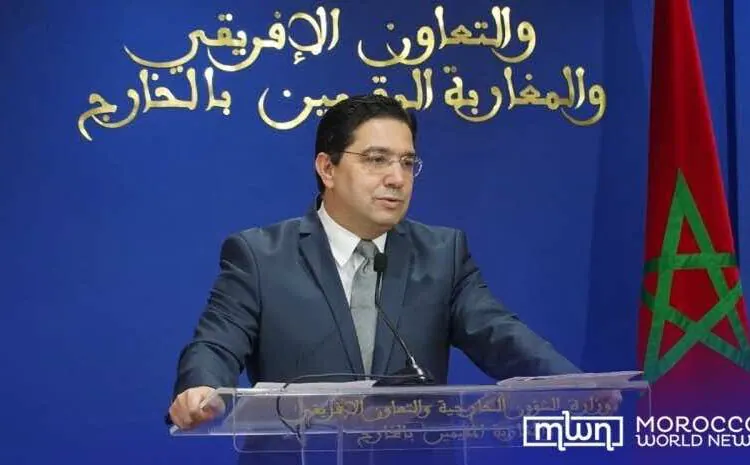
Morocco's Foreign Minister Nasser Bourita has stated that the Western Sahara dispute has reached a historic turning point, driven by a significant shift in the international approach to the regional conflict. Speaking at the 81st session of the UN General Assembly, Bourita highlighted the adoption of Security Council Resolution 2797 in October 2025 as a key development in efforts to achieve a political settlement. This new phase is characterized by a move beyond previous approaches, with Morocco seeking a definitive political solution.
Bourita emphasized that Morocco's position on the dispute remains centered on autonomy under Moroccan sovereignty, with the settlement process to be conducted within the UN framework. He stressed that there is no solution outside the framework of autonomy under Moroccan sovereignty and that negotiations should take place through the UN-led political process, based on Morocco's Autonomy Plan. This plan is considered by Morocco as the basis for a definitive political solution to the dispute.
The Moroccan minister also highlighted the responsibilities of the four parties involved in the UN political process, emphasizing that they must comply with the obligations set out in Security Council Resolution 2797. Bourita rejected any return to a prolonged status quo, arguing that the political process has already begun and should continue toward a final settlement. He criticized parties that Morocco accuses of violating the ceasefire and failing to comply with Security Council resolutions.
Alongside diplomatic efforts, Morocco is pursuing development projects in its southern provinces, including investments in infrastructure, higher education, healthcare, and airports. Bourita presented these projects as part of Morocco's parallel approach: advancing a political settlement while continuing development across the southern provinces. This approach aims to expand economic and social development in the region.
Bourita also raised concerns about the situation of people living in the Tindouf camps, calling for an end to their prolonged confinement and highlighting their situation under international and humanitarian law. He emphasized the need for a resolution to the dispute that takes into account the well-being of the people in the region.
In a related development, Bourita highlighted the participation of residents of the southern provinces in Morocco's legislative elections, scheduled for September 23. He said residents of the region would exercise their political rights through the vote, as they have done in previous elections, describing their participation as part of efforts to strengthen democratic representation and local involvement.
Bourita's address to the UN General Assembly reflects Morocco's continued focus on autonomy under Moroccan sovereignty as the basis for negotiations, while emphasizing development and political participation in the southern provinces. The Moroccan government's approach seeks to balance diplomatic efforts with development initiatives, aiming to achieve a definitive political solution to the Western Sahara dispute.
Key points
- Morocco's Foreign Minister Nasser Bourita says the Western Sahara dispute has reached a historic turning point, driven by a shift in the international approach.
- Bourita emphasizes that Morocco's position on the dispute remains centered on autonomy under Moroccan sovereignty, within the UN framework.
- Morocco is pursuing development projects in its southern provinces, while advancing a political settlement to the Western Sahara dispute.