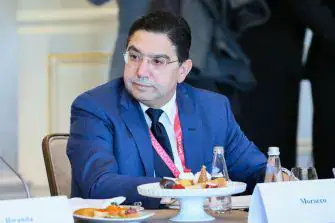
Morocco's Minister of Foreign Affairs, Nasser Bourita, attended a meeting of African foreign ministers in Moscow on Wednesday, part of the Russia-Africa ministerial meeting. The meeting, chaired by Russian Foreign Minister Sergey Lavrov, included foreign ministers from African countries that are members of the United Nations. Bourita also held a one-on-one meeting with Lavrov, although details of their discussion were not provided.
The meeting between Bourita and Lavrov comes as Morocco and Russia seek to strengthen their bilateral ties. The two countries signed a Declaration on Enhanced Strategic Partnership in 2016, during King Mohammed VI's visit to Moscow. Since then, they have maintained high-level diplomatic contacts, discussing trade, regional security, and international issues.
The timing of Bourita's visit is critical, given the upcoming UN Security Council vote on a new resolution concerning Western Sahara and the future of the United Nations Mission for the Referendum in Western Sahara (MINURSO). The Council is expected to vote before MINURSO's current mandate expires on October 31. The United States has drafted a new resolution that would strengthen the plan's position in the UN-led political process.
The US-drafted resolution retains a proposal to rename MINURSO as the United Nations Mission for Western Sahara (MINUSO), removing the reference to a referendum. It also keeps Morocco's Autonomy Plan as the sole basis for negotiations. However, the revised draft reportedly drops the initial proposal to end the mission's peacekeeping mandate in April 2027 and reduce its uniformed personnel by at least half.
Russia's position on the resolution is particularly important, given its veto power as a permanent member of the Security Council. Moscow abstained from the vote on Resolution 2797 in October 2025, which extended MINURSO's mandate for another year and supported negotiations based on Morocco's autonomy proposal. Lavrov has stated that Morocco's autonomy plan could offer a successful solution if accepted by the parties and supervised by the United Nations.
Despite this, Moscow has continued to describe its approach as balanced. The outcome of the upcoming Security Council vote could shape the next phase of the Western Sahara dispute. Morocco's diplomatic engagement with Russia is therefore crucial, as the two countries navigate their relationships with other global powers.
The meeting between Bourita and Lavrov highlights the complex diplomatic landscape surrounding the Western Sahara issue. As the UN Security Council prepares to vote on a new resolution, Morocco and Russia are working to strengthen their ties and navigate their positions on the issue. The vote's outcome will have significant implications for the future of Western Sahara and the role of the United Nations in the region.
Key points
- Morocco's Foreign Minister Nasser Bourita met with Russia's Foreign Minister Sergey Lavrov in Moscow ahead of the UN Security Council vote on a new Western Sahara resolution.
- The US-drafted resolution retains a proposal to rename MINURSO as the United Nations Mission for Western Sahara (MINUSO) and keeps Morocco's Autonomy Plan as the sole basis for negotiations.
- Russia's position on the resolution is crucial, given its veto power as a permanent member of the Security Council.